
.png) 3 months ago
59
3 months ago
59
ARTICLE AD BOX
By Douglas Baye-Osagie
The 2025/2026 European club football season concludes tonight in Budapest, where the English champions Arsenal will face the French champions Paris Saint‑Germain in the Champions League final. In a match where a single moment of brilliance, a defensive lapse, or a referee’s decision can change the outcome, form becomes irrelevant once the final whistle blows.
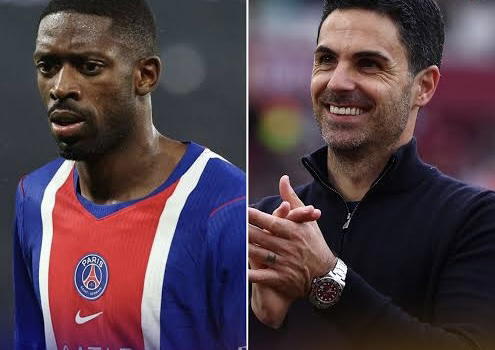
Among the players who have dominated pre‑final discussions is Ousmane Dembélé, the Ballon d’Or holder and PSG’s most decisive attacker under Luis Enrique. The 2025‑26 campaign has seen Dembélé play only 22 league matches, starting 11 and scoring 10 goals, while being substituted 11 times. Enrique’s approach has been to preserve the player, prioritising his fitness for European competition after PSG secured the league early.
That strategy has paid dividends in the Champions League. Dembélé has scored seven goals and provided two assists in 12 UCL appearances, delivering his best performances in high‑stakes matches. His early goal in the return leg against Bayern Munich earned a 1‑1 draw, allowing PSG to advance 6‑5 on aggregate and secure a second consecutive final.
Enrique’s system has moved away from reliance on individual brilliance, instead deploying PSG as a positional machine. Dembélé is given freedom on the right wing but also a clear defensive role, running more off the ball than ever before and leading the team’s pressing when possession is lost.
Over the past three seasons, PSG’s domestic dominance has been built on effective squad rotation, allowing the team to rest and rehearse patterns without the pressure of league matches. Enrique’s relentless rotation of the front line ensured that no player was overplayed, keeping the squad sharp and hungry for European success.
By the semi‑finals, PSG appeared as one of the most balanced sides in the competition, pressing as a unit, defending in a 4‑3‑3 formation, and counter‑attacking with speed. Dembélé’s contribution was central to this balance, offering both goal threats and defensive coverage.
Arsenal, meanwhile, arrive in the final with a contrasting narrative. Under Mikel Arteta, they have won the Premier League and entered the Champions League final unbeaten in Europe. Yet the club carries a historical weight: Arsenal have never won a European trophy, with past finals in 2006 and several near misses in the Europa League leaving a sense that something always goes wrong at the crucial moment. This curse, whether real or psychological, has to be broken, and the final offers that opportunity.
For players such as Declan Rice, Bukayo Saka, and Martin Ødegaard, this is uncharted territory. They have ended Arsenal’s 22‑year wait for a domestic league title, but the pressure of a European final is a different kind of challenge. PSG, for all their past failures, have experience on this stage, having reached the final in 2020 and again last year.
Enrique’s experience as a Champions League winner with Barcelona and PSG equips him to manage the mental aspects of a final. He will remind his players that history does not decide outcomes; moments—one press, one pass, one finish—do.
Paris Saint‑Germain’s bid to retain the Champions League pits them against a multifaceted Arsenal side intent on disrupting the Parisians’ parade. After a slow start to their title defence, PSG found a new gear following a closely fought knockout round against Monaco. Since then, they have defeated Chelsea, Liverpool, and Bayern Munich, the latter in a thrilling semi‑final.
Arsenal’s advantage lies in their unity and hunger. The squad has grown together over three years, believing in their process and dismantling better teams than PSG this season. However, belief without experience can fray under the weight of a final, whereas PSG’s players bring the sting of past European losses, a scar that can become a strength if managed well.
The tactical battle will focus on the wings and midfield. PSG’s Portuguese duo of Vitinha and Neves recall the legendary Spanish partnership of Xavi and Iniesta, while Declan Rice will have a significant defensive task. If Arsenal can contain PSG’s midfield with disciplined tactics, they can blunt the French side’s transition game.
Arsenal’s ability to win decisively is balanced by an innate capacity to dictate tempo in possession, as shown by their composed early goal against Atlético Madrid in the semi‑finals. By blending physical dominance from set pieces with sophisticated midfield rotation, Arteta has built a multifaceted machine capable of navigating any match scenario.
In contrast, PSG have built a team specifically for this night, sacrificing domestic minutes to remain fresh. Dembélé, even with fewer starts, remains capable of deciding finals, and Enrique’s knowledge of the competition is a significant advantage.
This evening in Budapest, PSG’s cold, calculated preservation will confront Arsenal’s relentless, emotional charge. One side will end a drought; the other will extend it.
In finals, history whispers but does not decide. The outcome will rest with 22 players, the endurance of Dembélé’s legs, and the strength of Arsenal’s belief.
The post PSG, the Dembélé effect and Arsenal’s unbroken curse appeared first on Vanguard News.




 English (US) ·