
.png) 2 months ago
47
2 months ago
47
ARTICLE AD BOX
By Ikechukwu Nnochiri
Women judges from across Africa gathered in Abuja to develop actionable solutions for improving judicial systems.
The four‑day conference, held at the Body of Benchers Complex, brought together Chief Justices and Heads of Courts from several countries. Participants agreed that Africa’s justice systems should be grounded in impartiality, accessibility and effectiveness.
Attendees noted that public trust in the rule of law reflects the overall performance of the justice system.
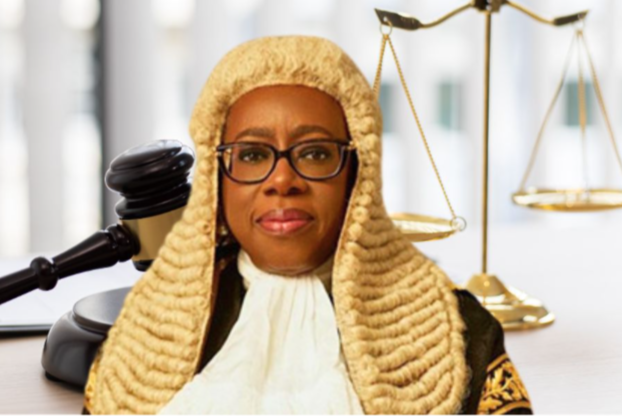
Views diverged on gender inequality, with Chief Justice of Nigeria (CJN) Justice Kudirat Kekere‑Ekun emerging as a leading advocate for greater female representation in judicial leadership, particularly in Nigeria.
Justice Kekere‑Ekun said that excellence in justice administration requires a careful examination of the link between gender equality and the legal system. She argued that women’s full participation in the Judiciary has broad implications for justice delivery.
“From broadening jurisprudential perspectives to reducing unconscious biases and strengthening public confidence in legal institutions, the presence of women on the Bench enriches the administration of justice in meaningful ways,” the CJN insisted.
Although she acknowledged improvements in women’s representation worldwide, Justice Kekere‑Ekun called for further progress. Speaking at the opening session of the International Association of Women Judges (IAWJ) African Regional Conference, she said: “While notable gains have been made, particularly at entry and intermediate levels, significant work remains to be done in ensuring equal representation within leadership positions and at the highest levels of judicial decision‑making.”
“The pursuit of gender equality within the Judiciary is not merely a matter of representation; it is fundamentally a matter of institutional legitimacy. A Judiciary that reflects the diversity of the society it serves is better positioned to command public confidence and to appreciate the varied experiences that come before it. Diversity strengthens judicial deliberation, enriches legal reasoning, and ultimately enhances the quality of justice delivered.”
She stressed that the Judiciary, like many institutions, emerged from historical structures that often limited opportunities for women. “While considerable progress has been achieved, we must remain vigilant to ensure that our institutions are not constrained by the very inequalities they are called upon to remedy. Ultimately, gender inclusion must be viewed as an indispensable component of the Judiciary’s commitment to fairness, equality, and the rule of law.”
Justice Kekere‑Ekun urged the development of strategic and enduring mentorship initiatives to create pathways for continuity, sustainability and intergenerational impact. “Those who have attained positions of leadership bear a responsibility to inspire, support and guide those who follow. The success of any institution is not measured solely by the achievements of its present leaders but also by its capacity to prepare the next generation to surpass them.”
She added that the conference’s cross‑jurisdictional exchanges would strengthen not only individual judiciaries but also the broader administration of justice across Africa. “The challenges confronting African Judiciaries may differ in form, but they are often united by common aspirations: the aspiration for independent courts, accessible justice, efficient case management, ethical leadership and enduring public trust.”
Chief Justice and President of the Supreme Court of Kenya, Lady Justice Martha Koome, noted that women judges have made a significant impact in family law, children’s cases and matters involving sexual and gender‑based violence. She emphasized the need for transnational collaboration among women judges in Africa and pledged Kenya’s support for women aspiring to leadership positions in international spaces.
She called on African countries to remain committed to building judiciaries that are independent, innovative, inclusive and transformative.
The Attorney‑General of the Federation and Minister of Justice, Prince Lateef Fagbemi, SAN, represented by the Solicitor‑General of the Federation, Mrs. Beatrice Jedy‑Agba, pledged Nigeria’s commitment to advancing judicial reforms that champion gender inclusivity. The AGF acknowledged that the role of women judges extends beyond the courtroom, describing the conference as a vibrant testament to the unwavering commitment of women judges across the continent to protect democratic institutions and dismantle systemic barriers.
He noted that Nigeria has broken the glass ceiling through the appointment of women to critical positions, with both the Supreme Court and the Court of Appeal currently led by women. He called on nations to deepen reforms to address the economic realities facing African people.
Nigeria’s First Lady, Mrs. Oluremi Tinubu, who attended the event as a special guest, asserted that women on the bench enrich the judiciary by widening perspectives and enhancing the depth of judicial reasoning in the administration of justice. Describing the conference theme, “Promoting Excellence in the Administration of Justice,” as both timely and important, Senator Tinubu said that the pursuit of excellence in the justice system is an obligation and a moral imperative.
“Across Africa, women judges have broken through long‑standing barriers and, by their resilience and excellence, paved the way for future generations of women in the legal profession. As a former Senator of the Federal Republic of Nigeria, I understand the challenges women face while aspiring to leadership positions. This is why I remain committed to initiatives that promote equitable access to opportunities for women and girls and strengthen our democracy,” she added.
In her welcome address, the President of the Court of Appeal, Justice Monica Dongban‑Mensem, who is also the President of the National Association of Women Judges of Nigeria (NAWJN) and organiser of the conference, noted that in a rapidly evolving global landscape characterised by complex legal challenges, technological advancements and increasing public expectations, the judiciary must continue to uphold the highest standards of integrity, competence, fairness and accountability.
“The judges of Nigeria, as hosts of this important regional gathering, remain firmly committed to advancing judicial capacity, promoting gender equality within the judiciary and fostering collaboration among women judges across Africa and beyond,” she added.
The President of the IAWJ, Lady Justice Mina Sougrati, represented by Justice Binta Nyako, said the conference provided an important opportunity for women judges from across Africa to share experiences, strengthen professional networks and exchange ideas on advancing justice, protecting human rights and promoting gender equality within judicial systems.
“Across the African continent, women judges continue to demonstrate outstanding leadership in upholding the rule of law and ensuring that courts remain accessible, fair and responsive to the needs of all members of society. The work being done by our members contributes significantly to strengthening public confidence in the judiciary and advancing justice for women, children and vulnerable communities,” the IAWJ President added.
As calls for the appointment of more women judges grow louder, the conference provided a rare opportunity for the cross‑fertilisation of ideas among legal scholars across Africa.
The post African female judges unite in Abuja to strengthen justice systems appeared first on Vanguard News.




 English (US) ·