
.png) 2 months ago
44
2 months ago
44
ARTICLE AD BOX
Ayodeji Ake
The Lagos State Government has announced comprehensive reforms in healthcare financing, workforce development, and infrastructure. The aim is to broaden health insurance coverage, enhance service delivery, and position Lagos as a leading healthcare hub in Africa.
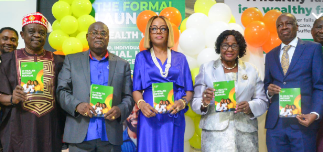
During the 2026 Ministerial Press Briefing at the Bagauda Kaltho Press Centre in Alausa, Ikeja, the state Commissioner for Health, Prof. Akin Abayomi, explained that the government is working to close an estimated N100 billion gap between current healthcare funding and the resources needed to meet the needs of Lagos residents.
The briefing was part of celebrations marking the seventh anniversary of Governor Babajide Sanwo‑Olu’s administration and Deputy Governor Obafemi Hamzat’s tenure.
Abayomi noted that Lagos allocates roughly eight per cent of its annual budget to healthcare, well below the 15 per cent benchmark recommended by the Abuja Declaration. He said this shortfall, combined with rising demand in a rapidly growing megacity, has made alternative funding sources essential.
The state has identified mandatory health insurance and stronger public‑private partnerships as key solutions for sustainable healthcare financing.
“There is a gap between what is available to us through our budget and what we ideally want to spend,” Abayomi said. “The difference is at least N100 billion. The answer for us is health insurance and public‑private partnerships.”
He revealed that Governor Sanwo‑Olu signed an Executive Order domesticating the National Health Insurance Authority Act on 16 July 2024, making health insurance compulsory for all Lagos residents.
Ministries, Departments and Agencies across the state have begun implementing measures that require residents seeking government services to provide proof of accredited health insurance coverage.
Abayomi said the move would significantly increase enrollment in health insurance schemes and create a sustainable pool of funds for healthcare infrastructure, medical services, and support for vulnerable groups.
Describing health insurance as a collective social responsibility, he said: “Health insurance is the umbrella through which the healthy take care of the sick and the rich support the poor.”
He disclosed that more than 1.46 million Lagos residents have already enrolled in the Lagos State Health Management Agency’s Ilera‑Eko health insurance scheme, although the state is still far from achieving universal health coverage.
The commissioner also highlighted Nigeria’s heavy reliance on out‑of‑pocket healthcare spending, noting that about 77 per cent of healthcare expenses are paid directly by citizens while only two per cent comes through insurance coverage.
Looking ahead, Abayomi said the Lagos Development Plan 2052 aims to transform Lagos into one of Africa’s top three healthcare destinations within the next decade.
He said the government is focused on reducing maternal mortality, strengthening primary healthcare, improving child nutrition, and curbing outbound medical tourism.
“We do not want Lagosians travelling abroad to seek medical care in Dubai, London, India, or South Africa. We want every specialty and subspecialty available right here in Lagos,” he said.
Abayomi also stressed the need to regulate and integrate informal healthcare providers—including patent medicine vendors, traditional medicine practitioners, and community pharmacies—into the broader healthcare system.
He noted that healthcare delivery in Lagos extends beyond public hospitals, with over 3,500 registered private healthcare facilities currently operating across the state.
The commissioner announced approval for a standalone University of Medicine and Health Sciences in Lagos to increase the production of doctors, nurses, pharmacists, and other medical professionals amid a rising global migration of healthcare workers.
He said the institution would decentralise clinical training and leverage both local and diaspora specialists to strengthen healthcare manpower in the state.
Also speaking, the Special Adviser to the Governor on Health, Dr. Kemi Ogunyemi, highlighted the role of the Health Facility Monitoring and Accreditation Agency (HEFAMAA) in ensuring patient safety and regulating standards across healthcare facilities in Lagos.
She urged residents to avoid unaccredited facilities and report cases of substandard medical practices to relevant authorities.
In his closing remarks, the Permanent Secretary of the Lagos State Ministry of Health, Dr. Dayo Lajide, commended healthcare workers across the state for their resilience and dedication despite growing pressure on the health sector.


 English (US) ·