
.png) 4 months ago
63
4 months ago
63
ARTICLE AD BOX
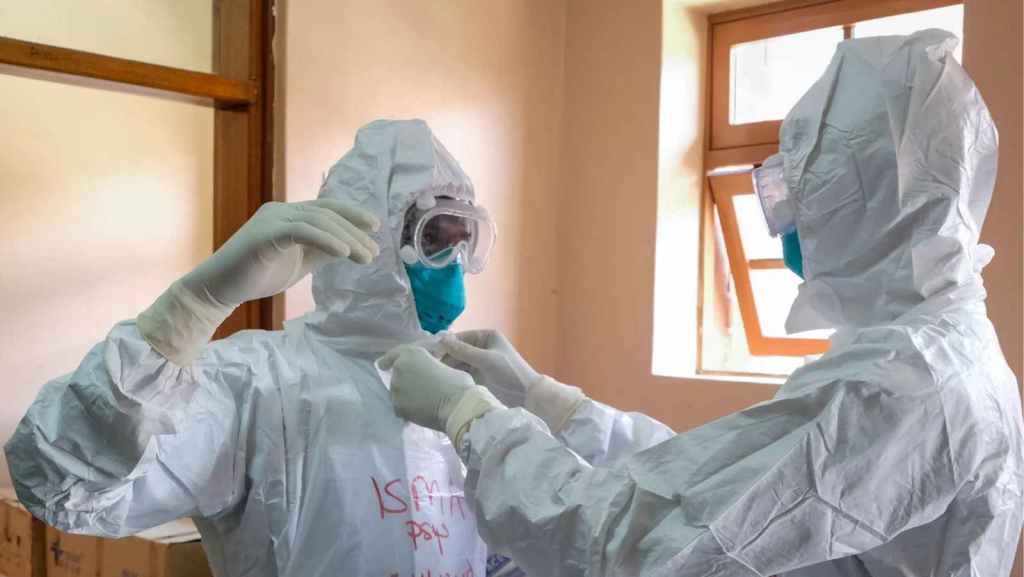
The World Health Organization (WHO) has stated that the ongoing Ebola outbreak in the Democratic Republic of the Congo (DRC) and Uganda does not constitute a global pandemic emergency, despite the high risk at both regional and national levels.
WHO Director‑General Tedros Ghebreyesus briefed journalists on the sidelines of the 79th World Health Assembly in Geneva on Wednesday.
Health ministers and diplomats were present in Geneva for the Assembly.
During his update on the rapidly evolving situation in eastern DRC, Ghebreyesus noted that, in addition to several dozen confirmed cases, there are almost 600 suspected cases of the Ebola Bundibugyo virus and 139 suspected deaths.
Uganda reported two confirmed Ebola cases in its capital, Kampala, he added.
With no vaccine or therapeutics available for the virus—which is extremely rare and was last detected in 2007—WHO teams are collaborating with community leaders in the epicentre province of Ituri to prevent wider transmission.
Decades of violence in mineral‑rich eastern DRC have left the population, including healthcare workers, chronically vulnerable amid ongoing insecurity.
“We always have a team in Goma, and we continue to provide support to the population. This is what we will keep doing during this outbreak,” said WHO’s Dr Marie Roseline Belizaire, Regional Emergency Director (ad interim) and Incident Manager.
“We never left Goma during all the insecurity happening, so we will continue staying to provide security to the community we serve,” she added.
Dr Mohamed Janabi, WHO’s Regional Director for Africa, highlighted the “inherently challenging” task of detecting Ebola outbreaks in Ituri, where April saw a new spike in civilian deaths. He explained that effective disease surveillance relies on reliable community reporting, open local health facilities, and laboratory confirmation.
“In remote or insecure areas, it can take time for cases to be recognised,” he said, noting that the Ebola Bundibugyo virus was identified only after samples were transported some 1,700 kilometres (1,056 miles) to the capital, Kinshasa.
“As soon as WHO was aware of the threat, support was provided to DR Congo to investigate as quickly as possible. This led to confirmation late last week,” said Dr Anais Legand, WHO Technical Officer for Viral Haemorrhagic Fevers.
“Investigations are ongoing to ascertain when and where exactly this outbreak started. Given the scale, we think it began probably a couple of months ago, but investigations continue, and our priority is really to cut the transmission chain.”
The briefing followed a meeting of the WHO Emergency Committee on Tuesday in Geneva, which confirmed that the Ebola outbreak is a public health emergency of international concern but not a pandemic emergency.
Chair of the panel, Prof Lucille Blumberg, emphasized that Ebola transmission occurs through direct contact with the blood and body fluids of an infected person. She cited a case in which a patient died on May 5 in Bunia, the capital of Ituri province, after their family chose to replace the coffin.
“So, it’s not casual contact; it’s not airborne. I think we need to be aware of that. And this relates to travel restrictions, which are not supported under the International Health Regulations (IHR) recommendations,” she insisted.
Blumberg also highlighted the difficulties of controlling the outbreak amid the ongoing humanitarian crisis, security challenges, a highly mobile population, and proximity to many borders.
“Resources, additional people…research and development of countermeasures (are) urgently required,” she said, calling for intensified surveillance and identification of potential contacts.
In accordance with IHR Article 12, Ghebreyesus declared a public health emergency of international concern on Sunday over the Ebola outbreak. (NAN)
The post Ebola risk high inside DR Congo, no pandemic emergency – WHO appeared first on Vanguard News.



 English (US) ·