
.png) 2 hours ago
1
2 hours ago
1
ARTICLE AD BOX
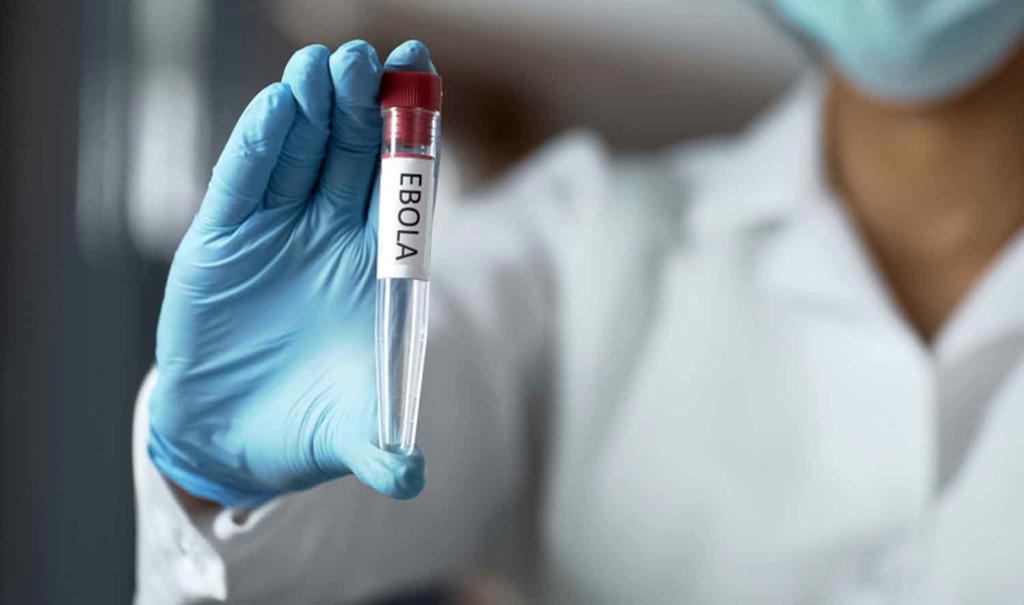
Several non‑profit organisations announced on Monday that they are intensifying efforts to develop a vaccine for the rare Bundibugyo strain of Ebola, which is causing a deadly outbreak in the Democratic Republic of Congo (DRC).
Nearly 250 people are suspected to have died and more than 1,100 have been infected with the strain in the DRC and neighbouring Uganda, although the true extent of the spread is feared to be much larger.
This marks the 17th Ebola outbreak in the DRC and only the third caused by the Bundibugyo strain, for which no approved vaccines or treatments exist.
The escalating outbreak has triggered a race to find a vaccine that can be quickly developed, manufactured and tested in humans through clinical trials in the affected region.
The World Health Organization (WHO) said on Saturday that its experts had identified the “most promising candidate vaccine” as a single‑dose shot using the rVSV platform.
The only licensed Ebola vaccine, which targets the more common Zaire strain, also uses the same platform.
The International AIDS Vaccine Initiative (IAVI) announced on Monday that it had reached a deal with the University of Texas Medical Branch to develop the rVSV candidate.
University of Texas Medical Branch’s Thomas Geisbert led work on both the Bundibugyo candidate and the licensed Zaire jab.
Geisbert told AFP last month that research from 2013 showed his jab provided very strong protection against Bundibugyo in monkeys.
However the vaccine “just sat there” for more than a decade because of a lack of interest, particularly from pharmaceutical firms, the virologist added.
The WHO estimates it would take seven to nine months before the rVSV vaccine is ready to be tested in humans.
– ‘Fast‑track’ –
Also on Monday, the Coalition for Epidemic Preparedness Innovations (CEPI) announced funding to “fast‑track” development of three Bundibugyo vaccine candidates, including $3.2 million toward the rVSV jab.
WHO chief Tedros Adhanom Ghebreyesus, who visited the epicentre of the outbreak in the DRC over the weekend, said in a statement that the funding was “an important step forward”.
Another vaccine candidate receiving CEPI funding was developed on the University of Oxford’s ChAdOx1 platform, which also underpinned AstraZeneca’s Covid vaccine.
This viral‑vector jab, which will be manufactured by the Serum Institute of India, could become available for clinical trials within two to three months, the WHO said.
CEPI also committed $50 million to a vaccine candidate being developed by US pharmaceutical giant Moderna, which uses the mRNA technology pioneered in its Covid vaccine.
In a preprint paper published online last week, researchers at France’s INSERM institute called for trials to determine whether the licensed Zaire vaccine could also help fight Bundibugyo.
– $50 million pledge –
Also on Monday, the Gavi vaccine alliance announced it would make up to $50 million available for Bundibugyo vaccine efforts.
“We need to act now to ensure that, once one or more vaccine candidates are ready, manufacturers are in a position to start producing doses at scale,” Gavi CEO Sania Nishtar said in a statement.
IAVI president Mark Feinberg told a press conference on Monday that Gavi’s new commitment could fund the production of roughly 500,000 doses.
He added that it also provides a “signal to manufacturers that they can make this investment without carrying excessive risk.”
Even once trial doses are ready, deploying them in the vast, remote areas of the DRC that are already suffering from hunger, malaria and conflict will present challenges.
Gaining the trust of communities where vaccines will be trialled will be crucial, the WHO emphasised.
And once a trial is finally carried out, there is no guarantee it will demonstrate the vaccine’s effectiveness.
“We have reasons to believe that we can generate effective vaccines, but we don’t want to downplay at all that we have to treat them as investigational products,” CEPI CEO Richard Hatchett said last week.
There are also several efforts to quickly trial several Bundibugyo treatments, including antivirals called remdesivir and obeldesivir, and the monoclonal antibody MBP134.
The post ‘We need to act now’: Race to develop Ebola vaccine heats up appeared first on Vanguard News.








/https%3A%2F%2Fmedia.afrik-foot.com%2Fen-ng%2F2026%2F05%2Fimago1046801215.jpg)


 English (US) ·