
.png) 4 months ago
55
4 months ago
55
ARTICLE AD BOX
Health stakeholders in Ogun State have urged that Persons With Disabilities (PWDs) be included in the state’s Sexual and Reproductive Health Rights and Safe Termination of Pregnancy (SToP) guidelines.
They highlighted the neglect of women with disabilities, noting that some die from complications of unsafe abortion.
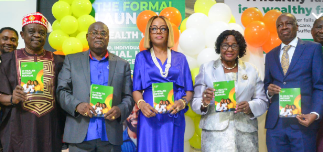
The group—comprising community representatives, civil society organisations, healthcare providers, advocates and others—met on Wednesday for a briefing and alignment session on inclusive SToP guidelines in Ogun State.
At the event in Abeokuta, Paul Bennett, Executive Director of The Rainbow Alive Hub Initiative (TRAHI), explained that the meeting’s purpose was to identify challenges faced by PWDs, close existing gaps and advocate for their welfare.
Bennett praised the Ogun state government for introducing the SToP guidelines to protect women, but warned that they do not yet extend to all categories of women, such as those with disabilities, mental challenges or drug addiction.

He said, “We advanced certain policies within the state that helped make sexual reproductive health and bodily autonomy for these women possible. But we also discovered that there was a group of women that were left behind, especially those living with disabilities.”
“Their issues are compounded; there’s a need to tighten policies to address these gaps, where you have people living with visual impairment or who cannot speak, being impregnated, they can’t point to who impregnated them. And then they cannot also procure abortion freely.”
“This is a huge gap that we need to address. It’s a collective effort and that’s why we are here to listen to your complaints.”
God’s Gift Udoh, Director of Programs at TRAHI, noted that while the SToP guidelines cover all women in Ogun State, awareness and implementation remain lacking for PWDs.
“When it comes to sexual and reproductive health and rights, no community should be left behind,” Udoh added, stressing that collaborative effort is needed to achieve the SDG 2030 agenda of leaving no one behind.
In his remarks, Dr. Michael Ebonhor, State Chairman of the Joint National Association of Persons with Disabilities (JONAPWD), called for PWDs to be included in the vulnerable group and provided with a free health insurance scheme.
He decried the inaccessibility of health centres, derogatory language and stereotypes from medical professionals, such as “with this condition who impregnated you?”, adding that these and other factors discourage them from visiting hospitals.
Ebonhor urged the training and retraining of medical professionals, emphasizing the need to address the information gap, as many women and girls with disabilities are unaware of where to seek help.
He added that the long route to justice when their rights are violated is another significant obstacle, as most people give up halfway because of financial constraints.
Adeosun Olufemi, another participant, called for greater awareness and partnership to spread information to rural communities.
Olufemi argued that many PWDs are dying in silence, citing an incident where a deaf and mute survivor of rape could not identify the perpetrator.
Responding, Executive Secretary of the State Primary Healthcare Board, Dr. Elijah Ogunsola, said the government is still working to provide sign language interpreters across PHCs in the state, and has installed ramps and accessible toilets in 75 health centres.
He noted that although people with special needs seem negligible in the population, the government is making them a top priority in the health sector, and that comprehensive sexual reproductive health interventions are also available for them.
“It’s your choice to have sex, your choice to have relationships, and it’s your choice to determine what you want to do about it.”
“We come with family planning. If you don’t want to be pregnant, it’s your choice to protect yourself. And if you get pregnant and you feel… don’t say because I have special needs I have to go to a quack. No, the state government has trained health workers to give you what you need, and the health centres will be waiting for you.”
Meanwhile, the Director of Rehabilitation Services, Ministry of Women Affairs, Mrs. Olekanma Funminiyi, stated that the government is doing all it can to ensure the wellbeing and safety of all women, including those living with disabilities.


 English (US) ·