
.png) 4 months ago
57
4 months ago
57
ARTICLE AD BOX
Omolabake Fasogbon
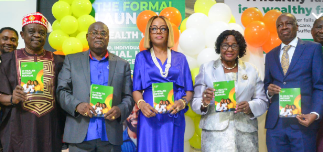
Concerned about the prevailing maternal death rate in Lagos State, health sector stakeholders gathered for a two‑day high‑level meeting to strengthen the state’s maternal health systems.
The programme was organized by the Maternal and Reproductive Health Collective (MRHCollective) in partnership with government health agencies and other collaborators.
Participants echoed the concerns of Lagos State Commissioner for Health, Akin Abayomi, who noted that the state’s maternal mortality ratio—estimated at about 400 deaths per 100,000 live births—remains unsatisfactory despite Lagos’s reputation as a model state in Nigeria and Africa.
Permanent Secretary of Lagos State Health District V, Oladapo Asiyanbi, observed that although maternal deaths are decreasing, the rate of decline falls short of expectations.
He explained that while the target annual reduction is between 15 and 20 points, Lagos is achieving less than a two‑point drop each year, highlighting urgent gaps that need to be addressed.
Asiyanbi attributed the slow progress to several factors, emphasizing fragmented operations among the agencies and stakeholders involved in maternal healthcare delivery.
“The fragmentation of agencies and stakeholders in maternal healthcare has meant that government institutions, NGOs and healthcare providers often work independently, designing and implementing interventions in silos without collaboration or community input,” he said. “While each group may believe it is making progress, the lack of coordination has led to gaps in service delivery, duplication of efforts and interventions that do not fully reflect the realities or needs of patients,” he added.
Permanent Secretary of Lagos State Health District III, Monsurat Adeleke, warned that the proliferation of unregistered traditional birth attendants and poor health‑seeking behaviour among patients continue to worsen maternal mortality in the country.
Permanent Secretary of the Lagos State Primary Health Care Board, Ibrahim Akinwunmi Mustafa, also spoke, stating that maternal mortality remains one of Lagos’s most urgent public health concerns and that structural gaps continue to undermine interventions.
He said that achieving the desired results would require coordinated and systemic action across the health sector.
“In pursuing our goals of increasing antenatal care attendance, facility delivery rates and health insurance coverage, we must ensure that all partner support is firmly rooted in our annual operational plan. Fragmented or uncoordinated interventions, no matter how well‑intentioned, limit impact and place unnecessary strain on our system,” he said.
Executive Director of MRHCollective, Olajumoke Oke, said the meeting was convened to address identified gaps by bringing together stakeholders across the maternal healthcare chain to chart a way forward.
She noted that available data showed a wide gap between antenatal care (ANC) attendance, hospital delivery rates and child immunisation figures.
“The number of women attending antenatal care is nowhere near the number delivering in health facilities, yet many still return for immunisation afterwards. That tells us these women are accessing care at some points but dropping out at critical stages, particularly during delivery. The same disconnect exists between ANC and family planning services,” she said. “We are looking at how to harmonise the entire continuum of care, from ANC to safe delivery, immunisation and family planning,” she added.


 English (US) ·