
.png) 3 months ago
59
3 months ago
59
ARTICLE AD BOX
By Emma Nnadozie, Crime Editor; and Clifford Ndujihe, Politics Editor
When President Bola Ahmed Tinubu took the oath of office on 29 May 2023, he inherited an economy under severe strain and one of the most complex security crises in Nigeria’s modern history.
From insurgent attacks in the North‑East to banditry in the North‑West, separatist violence in the South‑East, and oil theft in the Niger Delta, insecurity had become deeply woven into everyday life for millions of Nigerians. Nearly three years later, the question remains: has the country become safer under Tinubu’s leadership? The answer depends on where one looks.
A Nation Battling Multiple Wars
Nigeria’s security challenges are unlike those faced by many other countries because they are not driven by a single conflict. Instead, the country has been forced to confront several violent threats simultaneously. In the North‑East, remnants of Boko Haram and ISWAP continue to launch attacks despite years of military operations. In the North‑West, heavily armed bandit groups have terrorised rural communities through kidnappings and raids. Across parts of the Middle Belt, farmer‑herder clashes have escalated into deadly communal violence, while separatist tensions remain active in parts of the South‑East.
The Tinubu administration responded by promising a tougher and more coordinated national security strategy. Government officials insist the strategy is producing results.
Military Gains, Persistent Fear Reigns
The Nigerian military has recorded several tactical victories since 2023. Officials claim insurgent commanders have been eliminated, weapons caches destroyed, and hundreds of kidnapped victims rescued from criminal camps. Security cooperation with international partners has also expanded. Joint intelligence operations involving Nigeria and foreign allies, especially the United States of America, reportedly contributed to the elimination of senior ISIS‑linked figures operating within the Lake Chad region. Yet despite these gains, many Nigerians say daily life still feels unsafe.
Joint operations with foreign partners led to the killing of a top Islamic State commander in 2026, a development Tinubu described as a milestone in counter‑terrorism efforts.
On Christmas Day in 2025, the United States of America, with the imprimatur of Nigeria, bombed parts of Sokoto State and neutralised many terrorists.
Between 7,000 and 8,500 terrorists/bandits have reportedly been neutralised since Tinubu took office.
However, these gains have not fundamentally altered the security landscape. Deadly attacks, including mass killings in some states, and recurring kidnappings continue to define daily reality.
Critics argue that frequent leadership changes, inadequate intelligence coordination and poor welfare for troops have weakened the fight. Others point to governance gaps, unemployment and porous borders as drivers of violence.
Widening Killing Fields
Despite these changes, insecurity remained stubborn. Data indicates that within Tinubu’s first year alone, over 9,000 Nigerians were killed, including no fewer than 278 soldiers and 122 police officers, highlighting the heavy toll on security forces.
Conflict trackers estimate that nearly 30,000 people have died in violent incidents since 2023, while Amnesty International reported over 10,000 deaths in just the first two years of the administration.
Over‑stretched Security Forces
The scale of the crisis reflects structural weaknesses. Nigeria’s military, though one of Africa’s largest with about 230,000 personnel, is overstretched across multiple theatres: insurgency in the North‑East, banditry in the North‑West, farmer‑herder clashes in the Middle‑Belt and separatist tensions in the South‑East. The police are also under‑capacitated, with a ratio of roughly one officer to 600 citizens, far below global standards.
Security Emergency
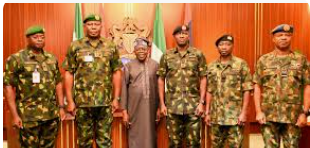
Tinubu has acknowledged the challenge, declaring a nationwide security emergency in November 2025. He ordered the recruitment of 20,000 police officers, redeployment of personnel from VIP protection to combat zones and expansion of forest guards to flush out terrorists.
He vowed that there must be “no compromise” in restoring peace, even as he commended troops for rescue operations and urged greater coordination among agencies.
Way Forward: Security Experts Speak
Going forward, experts insist that beyond military action, Tinubu must deepen intelligence gathering, decentralise policing through state police, improve welfare and equipment for security personnel, and tackle root causes such as poverty and weak local governance.
Three years or 1095 days on, the verdict is clear: while Tinubu has shown intent through reforms and operations, insecurity remains Nigeria’s most stubborn crisis demanding not just force, but strategy, stability and sustained political will.
A cross‑section of practitioners in the country’s private security space have spoken their minds on how they perceive the current security situation with relevant recommendations.
A pioneer officer of the National Intelligence Agency (NIA) who retired a few years ago from the Presidency, Mr. Jude Mekwunye, says “If there is going to be any workable solution, Nigeria should return to a “true secular state. Once we are in a secular state, we can see that what Nigeria is currently experiencing is Islamic terrorism. Let me say this clearly, not all Muslims are bad, but the root cause of the insecurity in our country is religious fundamentalism. Now, we are hearing of state police which to me should be enforced. Its creation should be actualised and enforced. Every state in the federation should be able to establish its own state police and maintain it effectively despite what the politicians are doing.”
To the Managing Director of Transworld Security and President of Association of Industrial Security and Safety Operators of Nigeria (AISSON), Mrs. Victoria Ekhomu, security remains the foundation upon which economic development, foreign investment, education, healthcare, and national unity are built. No nation can truly prosper where citizens live in fear.
The Director‑General of the Institute of Security, Nigeria (ISN) at the University of Lagos, Barr. Adebayo Akinade, posits that the government has made gains in reducing large‑scale insurgent control in the Northeast, but insecurity remains widespread through banditry, kidnapping, and communal clashes in other regions, so progress is mixed. According to him, to improve the situation, there is the need to strengthen local policing and intelligence as security starts at the community level. He also advised the government to tackle economic drivers by creating jobs and livelihoods in hotspots to cut recruitment into armed groups.
A Professor of Security and currently the Managing Director/Chief Executive Officer of Citiserve Security Limited, Warri, Emmanus Odikaesieme insists that nothing has changed as far as insecurity in Nigeria is concerned. In his words, the federal government has not shown the political will to seriously address the spate of terrorism, banditry, kidnapping, otherwise Nigerians would have seen it. “The country has installed all the equipment and yet, ransom is still being paid through the bank. We have NIN, BVN and yet security agencies cannot dictate anything. We do not even have a database to obtain quick information relating to persons who may be criminals.”
A former Commissioner of Police, Chief Innocent Okeanonife posits that the only solution to the myriads of insecurity situation is the effective sharing of intelligence through what he called “a fusion centre” where all the security agencies would have access on the need to know basis.
“What we need to do to solve the current insecurity in Nigeria is to empower the police” says Mr. Matthew Ibadin, Managing Director of Badinson Security, a private outfit. According to him, “as far as we do not have a functional police, we cannot have a functional security architecture for Nigeria. Government must go back to the drawing board to address the issue of not having a functional police as a result of lack of training, lack of equipment.”
I’m Determined to Conquer – Tinubu
Speaking on the issue penultimate Wednesday, at the launching of the book: “The NADECO story” written by Chief Ayo Opadokun, in Lagos, Tinubu fingered oil subsidy and exchange rate cabals for the dangerous bent insecurity has taken in the country.
Former Ogun State Governor, Aremo Olusegun Osoba, who represented Tinubu at the event, said:
“As for security, he says, I should let you know, that he is aware that there is a deliberate attempt to disrupt the peace of this country by people whom he knew he had offended by canceling multiple exchange rates and by canceling oil subsidies. And that those cabals who are doing round‑tripping will wish him dead any time.
“But he is determined that if that is the only thing he would do to make sure he rearranges the economy, he would do so. No matter what, he is determined to face it.”
The next 365 days offer ample room for a more decisive war on insecurity. How far the president will go is a question of time.
The post INSECURITY: 1095 DAYS AFTER: Tinubu’s Long War appeared first on Vanguard News.




 English (US) ·