
.png) 13 hours ago
3
13 hours ago
3
ARTICLE AD BOX
By Providence Ayanfeoluwa
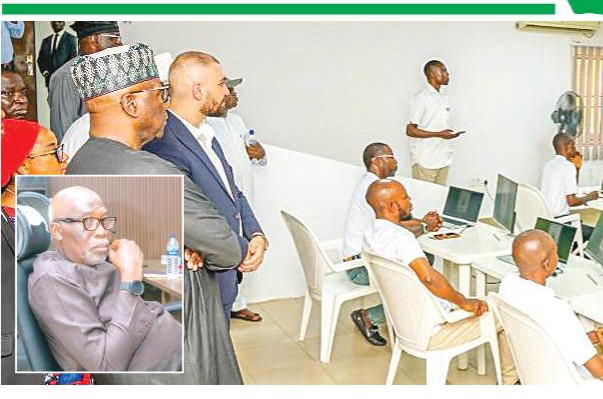
The European Union (EU) has donated a 200 kW solar photovoltaic power system to the Standards Organisation of Nigeria (SON).
At the commissioning ceremony in Lagos, Massimo De Luca, Head of Cooperation for the EU Delegation to Nigeria and ECOWAS, explained that the EU and Germany have collaborated closely with SON to bring the solar project to fruition.
He added that the EU has supported SON in developing innovations that enhance energy performance across Nigeria, and that the donation underscores the ongoing partnership between the two organizations.
Luca noted that SON plays a vital role in domestic trade and reaffirmed the EU’s commitment to backing Nigeria’s energy transition plan.
Dr. Karin Jansen, Head of Development at the German Embassy, also spoke at the event, stating that the commissioning reflects efforts to foster an enabling environment that enhances business resilience.
“We are building strong bridges between both countries, as this facility will help SON verify energy performance standards. It is also an opportunity to strengthen the next phase of Nigeria’s energy future,” she said.
Earlier, Mr. Ifeanyi Okeke, Director‑General of SON, described the project as a further milestone in the long‑standing partnership between SON and the Nigerian Energy Support Programme (NESP).
He described the partnership as a collaboration that has continually strengthened Nigeria’s quality infrastructure to support sustainable energy.
He noted that the partnership began in 2018 when SON and GIZ signed a Memorandum of Understanding to develop and implement renewable energy and energy‑efficiency standards.
He added that the collaboration has since expanded beyond standards development to encompass laboratory infrastructure, conformity assessment, capacity building, and support for emerging sectors such as electric mobility.
Okeke disclosed that, with NESP’s support, SON has developed Minimum Energy Performance Standards (MEPS) and energy‑labeling requirements for key electrical appliances, paving the way for a mandatory energy‑labeling scheme.
“This initiative will empower consumers to make informed choices while ensuring that only energy‑efficient products gain access to the Nigerian market,”
“When fully operational, it will be the first facility of its kind in Nigeria and a reference testing centre for the West African sub‑region.”
“On average, we spend close to N80 million on diesel annually and about N6.7 million on electricity. This is money we can save by having an alternative energy source,” he said.
“As an agency that is not primarily revenue‑generating, whatever money we can save will be very helpful.”











 English (US) ·