
.png) 5 hours ago
1
5 hours ago
1
ARTICLE AD BOX
By Ibrahim Hassan-Wuyo
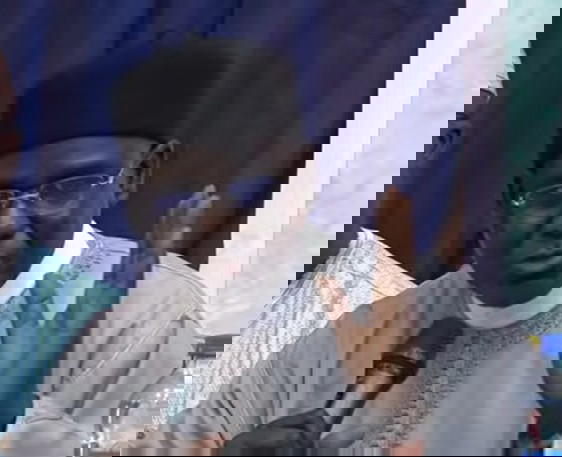
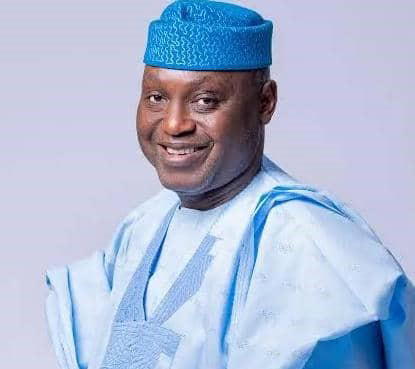
A former Director of Army Affairs at the Ministry of Defence, Dr. Hassan Abdullahi, has argued that recent security incidents across Nigeria confirm the long‑held view of former Chief of Army Staff Lt‑Gen. Tukur Yusuf Buratai (retd.) that the country’s insecurity cannot be solved solely through military action.
In a piece titled “Reinforcement of Lt. Gen. T.Y. Buratai’s Frank and Patriotic Advice on Nigeria’s Escalating Security Crisis,” Abdullahi contends that events between 2025 and 2026 validate Buratai’s assertion that Nigeria’s security challenges stem from governance failures, political interests and weak institutions.
He notes that Buratai has consistently warned that insurgency and violent extremism are adaptive threats that require long‑term strategies rather than short‑term military responses.
Abdullahi cites recent attacks, including the killing of worshippers in Katsina State and coordinated assaults on communities in Plateau State, as evidence that armed groups continue to evolve despite sustained military offensives.
“Each military operation may temporarily displace these groups, but without effective governance, policing and community engagement, they regroup and return,” Abdullahi said.
The former defence official also echoed Buratai’s view that insecurity in Nigeria has a political dimension, pointing to recent remarks by the Chief of Defence Staff, General Christopher Musa, that some individuals benefit from instability and therefore have little interest in lasting peace.
He observed that attacks often intensify during election periods and in areas with weak local governance, creating what he described as a “shadow economy” sustained by conflict and criminality.
Abdullahi warned that the continued deployment of the military for internal security operations has overstretched the Armed Forces and weakened civil institutions, particularly the Nigeria Police Force.
“As of 2026, military personnel remain deployed across all 36 states of the federation. This has created a cycle of dependency in which the military increasingly performs policing functions, while the police are unable to build the capacity required for intelligence‑led law enforcement,” he said.
He argued that this situation diverts military resources away from core constitutional responsibilities such as territorial defence and counter‑insurgency operations.
Abdullahi also endorsed Buratai’s call for a whole‑of‑society approach to security, noting that coordinated national responses, such as those witnessed during the COVID‑19 pandemic, demonstrated the effectiveness of collaboration among government, citizens, traditional institutions, the media and the private sector.
According to him, communities where local vigilante groups, traditional rulers and local authorities work closely with security agencies have recorded better outcomes than areas lacking such partnerships.
“Military force can contain and degrade threats, but without political will, effective policing, grassroots governance and youth inclusion, containment simply becomes a permanent state of war,” he stated.
To address the crisis, Abdullahi recommended declaring a national security emergency and establishing a National Security Mobilisation Council chaired by the President and comprising governors, traditional rulers, civil society groups and private‑sector stakeholders.
He also called for a gradual transfer of internal security responsibilities from the military to the Nigeria Police Force and the Nigeria Security and Civil Defence Corps within the next two years, alongside greater investment in intelligence gathering, forensic capabilities and community policing.
Other recommendations include prosecuting political actors found sponsoring violence, dismantling illegal mining and arms‑trafficking networks, expanding youth empowerment programmes and implementing a nationwide counter‑radicalisation campaign involving religious leaders, schools and the media.
He further advocated restoring civilian administration in conflict‑affected and ungoverned communities.
“Buratai’s advice was never pessimistic. It was realistic,” Abdullahi concluded.
“Nigeria must decide whether to continue managing insecurity indefinitely through military deployments or tackle its root causes by rebuilding the state’s capacity to govern, police and include its citizens. The second option is more difficult, but it is the only path to lasting peace.”
The post Buratai’s security warnings vindicated by recent events — Ex‑Army Director appeared first on Vanguard News.







 English (US) ·