
.png) 1 hour ago
1
1 hour ago
1
ARTICLE AD BOX
At 61, and with one year left in office, Babajide Sanwo‑Olu continues to shape Lagos in the manner he knows best: calmly, deliberately, and with a clear focus on the future. Konye Chelsea Nwabogor writes …
Governors are often remembered for the moments that define their tenure. Some of those moments arise from crises, others from projects, and still others from the ideas they leave behind. In Governor Babajide Sanwo‑Olu’s case, all three elements have played a role. His time in office has coincided with some of the most significant events in Lagos’s recent history, including a global pandemic, the EndSARS protests, and an ambitious push to expand infrastructure, strengthen public services, and position Lagos for its next phase of growth. With one year remaining in office and his 61st birthday offering a natural moment for reflection, his record is now substantial enough to be evaluated on its own terms.
No assessment of seven years in office is complete without considering the man at the centre of it.
Projects, policies, and performance indicators tell only part of the story. Over the years, Sanwo‑Olu himself has become the most familiar figure in the Lagos landscape.
His round glasses are instantly identifiable, as are the blue suits and agbadas that have become something of a signature over the years.
Together, these elements have become part of a public image that many Lagosians associate with his years in office.
But image alone does not explain his place in the state’s history. Sanwo‑Olu is, above all, a people person. He works a room. He remembers names. He can deliver a policy speech to bankers in the morning and trade easy Yoruba banter at a market in the afternoon without changing gears. That ease in moving between different audiences has become one of his most recognisable political strengths. The quality is unsurprising when viewed against the path that brought him to the governor’s office.
Long before he became governor, Sanwo‑Olu built a career that spanned both the private and public sectors. His years in banking were followed by appointments covering economic planning, commerce and industry, establishments and pensions within the Lagos State Government. He later served as Managing Director of the Lagos State Development and Property Corporation, adding urban development to a portfolio that already offered a broad understanding of how Lagos functions.
By the time he was elected governor in 2019, he was not approaching Lagos as an outsider. He had spent years inside the system, observing its strengths, frustrations and possibilities. That familiarity shaped both his governing style and the framework he introduced upon taking office.
Known as T.H.E.M.E.S, and later expanded into T.H.E.M.E.S Plus, the agenda served as the blueprint for his administration’s priorities, covering transportation, health, education, economic growth, security, governance and social inclusion. More importantly, it provided a structure through which the administration sought to connect individual projects to a broader vision for Lagos.
Seven years later, those projects form the strongest argument for his record.
The clearest example can be found in transportation.
For decades, rail transport in Lagos existed largely as a promise. Under Sanwo‑Olu, that promise became reality. The Blue Line transformed a long‑standing ambition into a functioning rail service, while the Red Line reinforced the state’s commitment to mass transit and reduced dependence on roads alone.
The rail projects have understandably attracted the most attention, but they represent only one part of a broader infrastructure story. Roads have been rebuilt, bridges have improved connectivity, housing projects have continued across the state, and urban renewal efforts have sought to improve both functionality and aesthetics in a city that continues to grow at a remarkable pace.
Education has been another major focus. The reconstruction of the Tolu Schools Complex in Ajegunle stands as one of the administration’s most ambitious investments in public education. Equipped with modern classrooms, laboratories and sports facilities, it represents a significant effort to improve educational opportunities in one of Lagos’s most densely populated communities.
The same commitment can be seen across healthcare, technology, youth development and public services. Together, they reflect an administration that has attempted to build across multiple sectors simultaneously.
Looking back, two events continue to stand apart from every other chapter of Sanwo‑Olu’s administration: COVID‑19 and EndSARS.
When COVID‑19 reached Nigeria in 2020, Lagos immediately found itself at the centre of the country’s response. As the nation’s commercial capital and busiest gateway, the state carried enormous responsibility during a period of uncertainty and anxiety.
As Incident Commander, Sanwo‑Olu became the public face of Lagos’s response. Through regular briefings and coordinated interventions, his administration guided the state through one of the most challenging periods in its recent history. The pandemic tested governments around the world, but many Lagosians would agree that Sanwo‑Olu handled the crisis with a steady hand, helping to maintain public confidence during a period when fear and uncertainty were widespread.
If COVID tested governance, EndSARS tested leadership.
The protests and their aftermath remain among the most painful chapters in Lagos’s recent history. The memory continues to sit between government and a generation that once saw protest as hope before it became trauma. Whatever conclusions people draw from that period, it remains an unavoidable part of the Sanwo‑Olu story and one of the greatest tests of his years in office.
Those episodes remain central to understanding his administration. They challenged institutions, tested public trust and shaped how many Lagosians remember those early years in office.
But they are only part of the story.
The other part lies in the Lagos that continued to evolve during that period: a city seeking to strengthen its economy, nurture its creative industries, expand opportunities for young people and position itself for a more competitive future.
Some of the clearest signs of that progress can be found beyond concrete, steel and kilometres of road.
According to the 2025 Dealroom Global Tech Ecosystem Index, Lagos emerged as the world’s fastest‑growing tech ecosystem, outperforming cities such as Istanbul, Mumbai and São Paulo. The state was also ranked Nigeria’s best‑performing state in the 2025 Phillips Consulting State Performance Index, becoming the only state to achieve a five‑star rating.
Young people have also featured prominently in his vision. Through investments in technology, digital skills, innovation and entrepreneurship, the administration has sought to prepare a new generation for an economy increasingly shaped by knowledge, creativity and enterprise.
Beyond business and technology, Sanwo‑Olu has also placed greater emphasis on one of Lagos’s most valuable assets: its cultural influence.
Lagos is not only Nigeria’s commercial capital; it is also its cultural engine. Music, fashion, film, theatre, hospitality and entertainment have become central to the city’s identity and global appeal. Under his administration, the creative economy has received greater recognition as a contributor to growth, employment and tourism rather than merely a source of entertainment.
Taken together, these efforts point to a governor increasingly focused on positioning Lagos for its next phase of growth.
That thinking was evident at Invest Lagos 3.0, where Sanwo‑Olu stood before investors, business leaders, development finance institutions and government representatives to make the case for
Related

CCB verifies asset declarations for 108 high‑risk public off...

Rivers Assembly Receives Fubara’s Fiscal Framework for 2026‑...
Catholic Priest Says “Prophet Wasn’t Recognized” After Nnamd...

Building Collapse: REDAN Chairman Blames Compromise and Gove...


Oyebanji: Tinubu Simplified Governance in Ekiti
RIGHT SIDEBAR TOP AD
Popular


Thoughts on a Questionable Conference
Cross River mystery killer: I waited 27 years to revenge

Delta pilgrim board splits over alleged marginalization
/https%3A%2F%2Fmedia.afrik-foot.com%2Fen-ng%2F2026%2F05%2Fimago1076580365.jpg)
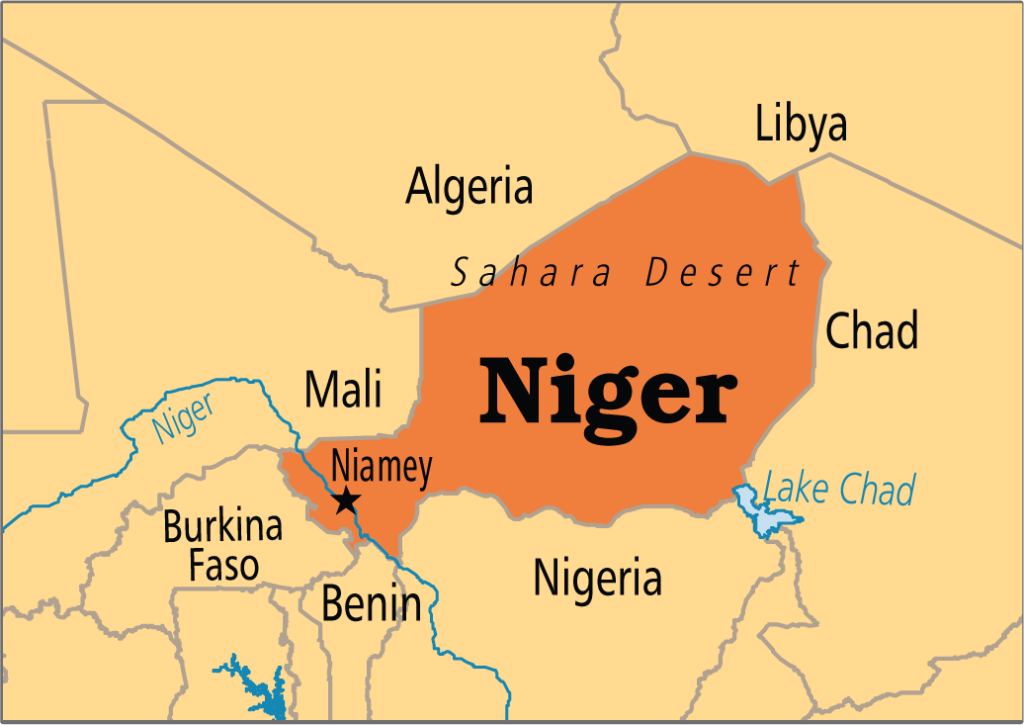
Niger airport strengthens security after attack
RIGHT SIDEBAR BOTTOM AD
 English (US) ·
 © Nigeria Views & News Update 2026. All rights are reserved