
.png) 3 months ago
50
3 months ago
50
ARTICLE AD BOX
By Kingsley Omonobi
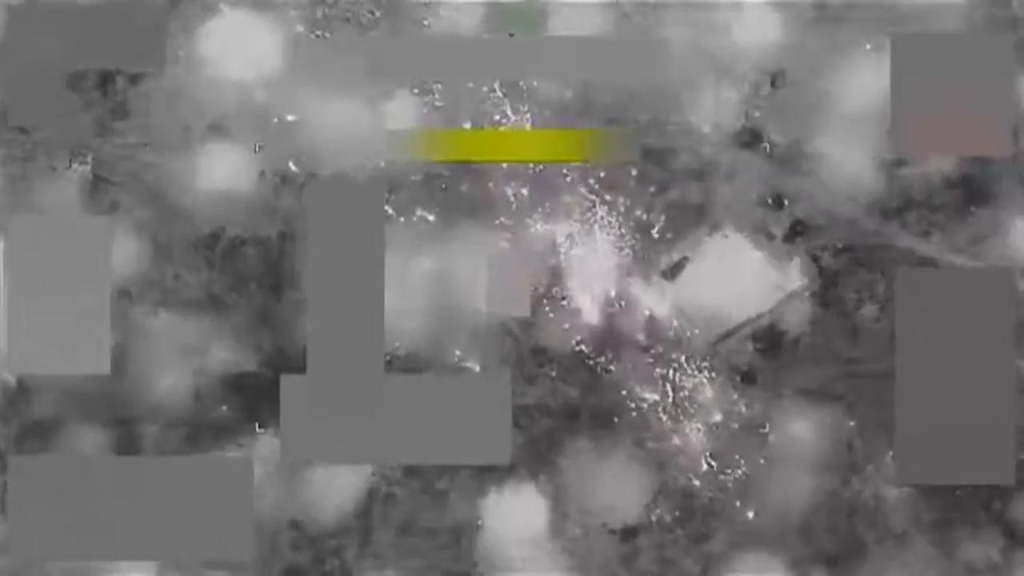
A joint operation carried out by Nigeria and the United States Africa Command (AFRICOM) resulted in the killing of 21 suspected ISWAP terrorists during a precision airstrike on a terrorist camp in Arege, Borno State.
Sources confirmed that three of the 21 casualties were mid‑level ISWAP commanders who had been coordinating raids on Monguno and Damasak.
Col. Timothy Antigha Rtd, a specialist in military public information and counter‑terrorism and a member of the minister of defence media team, confirmed the operation. He said the strike “marks another dividend from a defence relationship that has shifted from training‑only to direct, intelligence‑driven action against terrorist networks.”
He explained that “intelligence, surveillance and reconnaissance assets observed that terrorists were assembling in Arege for possible attacks on targets within the locality. Expectedly, operations coordination with friendly forces was activated. The data was fused with US AFRICOM satellite imagery and signals intelligence. Once a cluster of 21 armed terrorists was confirmed in a concealed staging area, a joint strike was authorised. The result is that all 21 targets were neutralised with no civilian casualties reported.”
Antigha added that “that precision matters. It shows improved targeting, better coordination, and reduced collateral damage — the exact outcomes the partnership was redesigned to achieve.”
He further noted that Arege sits on a key ISWAP supply route between Nigeria, Niger, and Chad. Eliminating fighters there disrupts three things: ISWAP logistics, as Arege is a hub for moving fuel, food, and ammunition to fighters in the Sambisa and Mandara corridors; recruitment, as the community has been a recruitment pool for young fighters lured by cash and coercion; and command and control, as Arege was also a command and control centre for the terrorists. By degrading ISWAP in Arege, Nigerian forces have reduced the group’s ability to launch attacks on military outposts and civilian communities in northern Borno. The operation also sends a signal that border areas long considered safe havens for terrorists are now within strike range.
Expanding on the shift from training to targeting, which is the new phase of the US‑Nigeria cooperation, Col. Antigha said, “For years, US‑Nigeria security cooperation focused on capacity building: training Nigerian troops, donating equipment, and sharing general intelligence. Since President Bola Ahmed Tinubu assumed office in May 2023, that partnership has entered a more operational phase. The emphasis moved to real‑time intelligence fusion, precision strikes, and the targeting of high‑value terrorist commanders.”
Commenting on criticisms of US involvement in the war on terror, Antigha said it’s a question of precision over volume. “The Nigeria‑AFRICOM model answers that question differently. It’s not about the volume of strikes but the precision of strikes. In 2022, Nigeria recorded over 400 airstrikes with a reported precision rate of 41%. In 2024, the number of strikes dropped, but precision rose to 67%, according to Nigerian Air Force data.”
He added, “The Arege operation fits that pattern; fewer bombs, higher accuracy, and better intelligence. The goal is to degrade leadership, cut supply lines, and force surrenders. Since 2023, over 104,000 former Boko Haram terrorists and dependents have surrendered under Operation Safe Corridor. Many cite sustained pressure and loss of commanders as reasons for laying down arms.”
Antigha also said, “The real yield of the AFRICOM partnership is intelligence. US surveillance assets — drones, satellites, and signals collection — cover terrain that Nigerian forces can not patrol round the clock. Nigerian human intelligence provides ground context that satellite data cannot. The ensuing operational synergy creates a formidable fighting force.”
Under the 2024 revised security cooperation framework, data now flows faster. “Response time from ‘target identified’ to ‘strike authorised’ has dropped significantly. The Arege operation was planned and executed within an acceptable combat operation timeframe.” He said. “The speed achieved saves lives. Faster strikes mean fewer chances for terrorists to disperse, for hostages to be moved, or for improvised explosive devices to be planted. It also increases the psychological pressure on ISWAP fighters, who can no longer assume that the cover of darkness or remote locations guarantees safety.”
The post 21 terrorists killed in joint Nigeria-US strike appeared first on Vanguard News.





 English (US) ·