
.png) 4 months ago
39
4 months ago
39
ARTICLE AD BOX
By Juliet Umeh
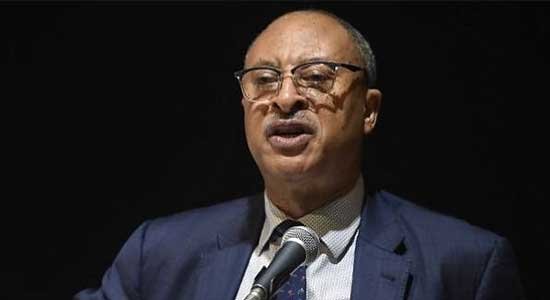
Prof. Pat Utomi‑led Big Tent Coalition has criticised former Vice President Atiku Abubakar for recent remarks opposing zoning, accusing him of distorting political history and tailoring facts to serve personal ambition ahead of the 2027 presidential election.
In a statement released on Wednesday by the coalition’s Director of Media and Communications, Charles Odibo, the group described Atiku’s position on rotational presidency as “selective opportunism” and maintained that he has consistently benefited from zoning arrangements throughout Nigeria’s Fourth Republic.
The statement was prompted by comments attributed to Atiku in a ThisDay interview published on 12 May 2026, where he reportedly called the continued insistence on power rotation to Southern Nigeria in 2027 “self‑defeating” and “intellectually dishonest.”
The coalition wrote: “Atiku’s criticism of zoning contradicts his past political actions and alliances. Let us begin with the obvious truth that Atiku Abubakar has been one of the greatest beneficiaries and practitioners of zoning and rotational presidency in Nigeria’s Fourth Republic.
“It is therefore astonishing that the same man who repeatedly relied on zoning to advance his own presidential aspirations now seeks to demonise the very principle simply because it no longer favours his personal ambition.
“In 2014, Atiku Abubakar led some Northern PDP leaders to stage a dramatic walkout at the PDP National Convention because they insisted the presidency should return to the North after the death of President Umaru Musa Yar’Adua and the emergence of President Goodluck Jonathan from the South.”
The coalition further recalled that Atiku later defected to the All Progressives Congress ahead of the 2015 elections when the party zoned its presidential ticket to the North.
“He participated in the party’s primaries exclusively reserved for the North. Again in 2019, Atiku emerged as PDP presidential candidate under a clear political understanding that power had returned to the North to enable the region to complete its eight‑year tenure.
“At no point during these periods did Atiku describe zoning as ‘self‑defeating’ or ‘intellectually dishonest.’ Why has zoning suddenly become unacceptable now that it is the South’s turn? This is precisely the selective opportunism Nigerians can clearly see through,” the statement added.
On the issue of North‑South power balance, the coalition accused Atiku of presenting misleading figures regarding the years both regions had occupied the presidency.
It stated that from 1999 to 2027, Southern presidents—including Olusegun Obasanjo, Goodluck Jonathan and President Bola Tinubu—would have spent 17 years in office, while Northern presidents—including Umaru Musa Yar’Adua and former President Muhammadu Buhari—would have spent 11 years.
“The actual figures are straightforward. At the end of President Buhari’s tenure in 2023, the South had held power for 13 years, while the North had held power for 11 years, a manageable and acceptable balance within the spirit of rotational presidency.
“By convention and political stability, the South is expected to complete its full eight‑year cycle before power rotates back to the North. That is the understanding that has helped sustain political equilibrium since 1999,” the coalition stated.
The statement also challenged Atiku’s argument that it would be difficult for a Southern opposition candidate to defeat a Southern incumbent in 2027.
It pointed out that Atiku himself contested against Buhari, a fellow Northerner, during the 2019 presidential election.
“If it was legitimate for a Northerner to challenge another Northerner in 2019, why is it suddenly impossible for a Southerner to challenge another Southerner in 2027?” the coalition queried.
“This contradiction exposes the inconsistency and self‑serving nature of his position.”
The coalition further claimed that Atiku’s electoral strength declined markedly after the exit of Peter Obi from his political alliance.
It noted that Atiku secured nearly 12 million votes in the 2019 election with Obi as running mate but polled about 6.9 million votes in 2023 without him.
“These numbers tell a clear story that Peter Obi significantly expanded Atiku’s electoral reach in 2019. Without Peter Obi, where exactly is Atiku’s Southern coalition today? Which Southern state structure guarantees him 25 percent in any state across the seventeen states of the South? These are the hard electoral realities he conveniently ignores,” the statement said.
According to the group, the emerging alliance between Obi and Rabiu Kwankwaso represents a more balanced and grassroots‑driven national coalition.
“Conversely, the emerging Obi–Kwankwaso alliance represents the most organic and balanced national coalition currently visible in Nigerian politics.
“It brings together a strong Southern grassroots movement, a formidable Northern political structure, youth mobilisation, urban middle‑class support, and grassroots populist energy nationwide. This is what real coalition‑building looks like and not elite transactional politics recycled every election cycle,” the statement added.
The coalition also dismissed Atiku’s competence argument, insisting that Obi and Kwankwaso possess stronger executive credentials due to their experience as governors with direct constitutional authority.
“Compared to the other leading contenders in both 2023 and 2027, Atiku is arguably the least experienced in exercising actual executive authority.
“He served as Vice President—a position that exercises delegated powers at the discretion of the President. By contrast, Peter Obi served as Executive





 English (US) ·