
.png) 4 months ago
51
4 months ago
51
ARTICLE AD BOX
Abdulgafar Mumuni
When Senator Uba Sani was sworn in as Governor of Kaduna State on 29 May 2023, he inherited a state on the brink of fiscal collapse. Kaduna was burdened by heavy domestic and foreign debts, plagued by insecurity, and suffering from a lack of confidence in its economic prospects. Many observers predicted a bleak future, with the state caught between insolvency and instability.
The debt figures were staggering. Kaduna carried more than $587 million in foreign debt, N85 billion in local obligations, and over N115 billion in contractual liabilities. Debt servicing was so heavy that, in his first month, the state received only N3.6 billion from the Federation Account after deductions exceeding N7 billion to cover debt payments, while the monthly salary obligation was over N5 billion.
“We cannot even pay salaries without borrowing,” Governor Sani said at a stakeholders’ town‑hall meeting held at the Yar’Adua Indoor Sports Hall in Kaduna shortly after taking office.
Instead of taking on new loans, Sani pursued fiscal discipline, institutional reform, careful resource management, and aggressive revenue mobilisation. Three years later, the outcomes have reshaped Kaduna’s trajectory in unexpected ways.
Against formidable odds, Governor Sani revealed that the state has repaid more than N90 billion of inherited debts without taking fresh loans. In a political culture where borrowing often replaces innovation, this move to stabilise public finances through prudence marked a significant departure from convention.
Equally notable is the restoration of confidence in Kaduna’s financial management. Under Sani, transparency and accountability moved from rhetoric to measurable practice. For two consecutive years, Kaduna ranked as Nigeria’s most transparent and accountable state in the Transparency and Integrity Index released by the Centre for Fiscal Transparency and Public Integrity, supported by the MacArthur Foundation.
“Our administration has prioritised transparency and accountability as pillars of sustainable development,” the governor emphasised.
The ranking was earned through open procurement systems, strengthened citizen engagement frameworks, expanded fiscal transparency mechanisms, and a deepened Open Government Partnership framework via State Action Plan III for 2024–2027. Governance became increasingly participatory rather than opaque.
Revenue generation reforms are a clear illustration of the administration’s reformist approach. When Sani took office, Kaduna’s monthly internally generated revenue (IGR) was about N5 billion. Through tax reforms, automation, an expanded tax net, and improved ease of doing business, Kaduna quickly became the leading IGR performer in Northern Nigeria.
The figures illustrate the progress: N62.48 billion in IGR in 2023; N71 billion in 2024; N86 billion in 2025; and projections near N90 billion by 2026.
These gains stem from systemic reforms rather than arbitrary taxation. The PAYKADUNA integrated tax administration portal automated revenue collection, reduced leakages, and enhanced compliance. Financial inclusion initiatives and innovative taxpayer complaint systems further strengthened public confidence.
Payments are processed through the PAYKADUNA portal or via pay‑direct channels that deposit directly into the Treasury Single Account.
The result has been a shift from fiscal fragility to financial resilience, allowing the government to pay salaries, execute projects, and attract investment without mortgaging the future.
Investor confidence has also returned. The administration has attracted investments worth over $2.5 billion—a remarkable achievement for a state that, only a few years earlier, was more associated with instability than opportunity.
Perhaps the most consequential achievement of the Uba Sani administration is the restoration of relative peace and security across Kaduna State. In 2023, the state was effectively under siege, with banditry, kidnappings, communal conflicts, and violent extremism disrupting communities, shutting down schools and hospitals, displacing thousands, and crippling economic activity.
Today, the situation has improved markedly. More than 500 previously closed schools have reopened, and nearly 300,000 children whose education was disrupted by insecurity are back in classrooms. Markets, hospitals, and farming communities that once stood deserted have resumed activity, and the atmosphere of fear that once defined many rural communities has eased considerably.
International partners have taken notice. The United Kingdom moved Kaduna State from “red” to “amber” in its travel advisory classification, citing measurable improvements in security and governance.
“Kaduna has weathered periods of heightened security challenges. Governor Sani has recorded real achievements with the improved security situation in Kaduna State,” the Head of UK Development Cooperation, Foreign, Commonwealth and Development, Ms Cynthia Rowe, said at a recent Kaduna State Mutual Accountability Framework Dialogue.
The UK Government subsequently selected Kaduna to host its Strengthening Peace, Resilience and Inclusive Governance (SPRiNG) programme, a major endorsement of the state’s peace‑building trajectory.
What distinguishes Governor Sani’s approach is not merely the use of coercive security measures but a broader peace architecture rooted in inclusion, dialogue, rural transformation, and rebuilding trust across ethno‑religious divides. His style has been less confrontational and more consensus‑driven, reducing tensions in a state historically fractured by polarisation.
Education has also been a central focus of the reconstruction agenda. The administration has built 102 new schools and renovated 170 existing schools and learning centres across Kaduna’s 23 local government areas under the Reaching Out‑of‑School Children project.
Within two years, the number of out‑of‑school children in Kaduna fell from about 550,000 to under 190,000. The state has also constructed dozens of secondary schools, supplied over 81,000 units of classroom furniture, upgraded water and sanitation facilities, and expanded vocational education infrastructure.
Three notable Institutes of Vocational Training and Skills Development were established in Rigachikun, Samaru Kataf, and Soba. Commissioned in 2025 by President Bola Ahmed Tinubu and certified among Nigeria’s best‑equipped skills centres, they offer training in welding, solar technology, information technology, artificial intelligence, and other technical trades designed to prepare Kaduna’s youth for a rapidly changing global economy.
Meanwhile, the iconic Panteka Market, Africa’s largest informal skills hub, has undergone extensive modernisation, preserving traditional craftsmanship while introducing modern techniques and certification systems for over 38,000 apprentices.
What has emerged in Kaduna under Governor Sani is not merely a recovery programme but a redefinition of governance itself: less theatrical, more methodical; less populist, more institutional.
Three years ago, Kaduna stood dangerously close to the precipice. Today, while challenges remain, the state has regained fiscal stability, improved investor confidence, restored relative peace, and revived public optimism.
The rescue of Kaduna from the brink may ultimately stand as one of the most compelling subnational governance stories in contemporary Nigeria—a reminder that prudence, transparency, restraint, and strategic leadership remain potent instruments of transformation in public office.
Dr. Mumuni, a development economist and
Related




Why OPay is dominating conversations on social media

Digital Finance growth outpaces confidence — Bridgforte
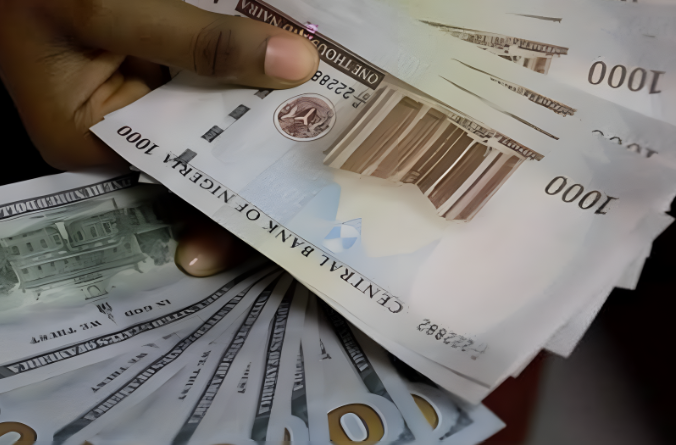
Dollar to Naira exchange rate today, July 31, 2026
RIGHT SIDEBAR TOP AD
RIGHT SIDEBAR BOTTOM AD
 English (US) ·
 © Nigeria Views & News Update 2026. All rights are reserved