
.png) 3 months ago
54
3 months ago
54
ARTICLE AD BOX
By Johnbosco Agbakwuru, Abuja
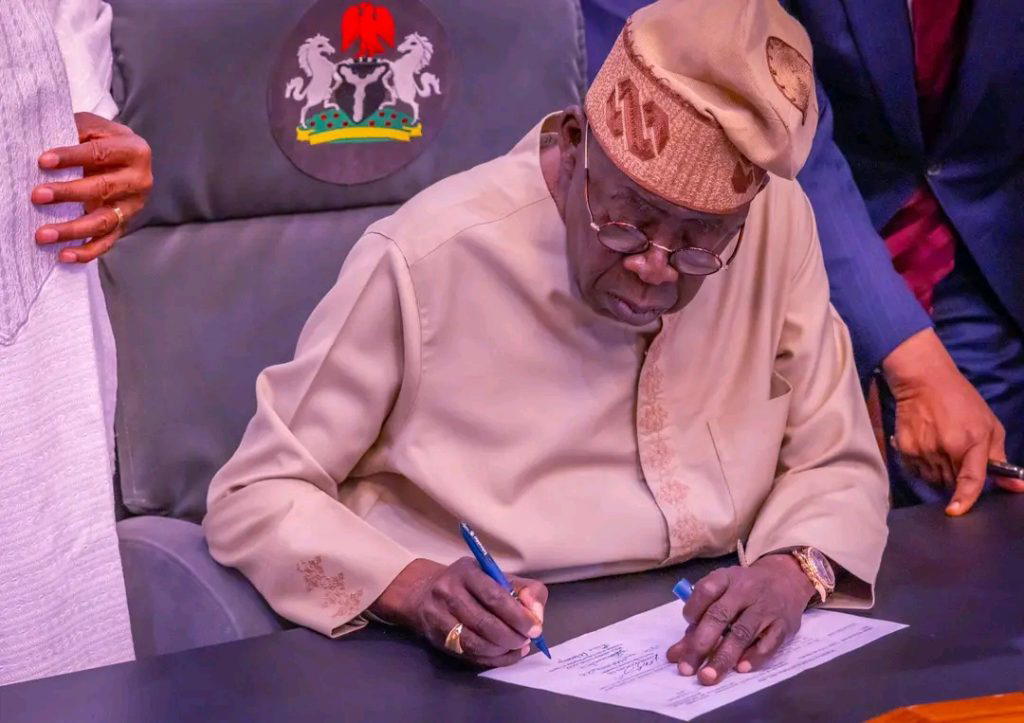
President Bola Tinubu commissioned four major Compressed Natural Gas (CNG) infrastructure projects across Lagos, Abuja and Owerri on Friday, marking a significant expansion of Nigeria’s clean transport network.
All four projects were delivered under the Midstream and Downstream Gas Infrastructure Fund (MDGIF) and represent the federal government’s accelerated response to the petroleum subsidy reform. They also form part of a broader strategy to increase domestic gas utilisation, lower transport costs and accelerate the country’s transition to cleaner fuels.
In Lagos, the President opened the Portland Gas CNG Mother Station at Ojota. The facility can dispense 96,000 standard cubic metres of CNG per day and includes two skid trucks for distribution, a 54‑tonne liquefied CNG storage unit, and an associated CNG Daughter Station at Kubwa, Abuja.
Also in Ojota, the President inaugurated the IGBILE Oil and Gas Corporation (IOGC) CNG Refuelling Station, the flagship of Lagos State’s most extensive clean‑transport rollout. The station is part of a network of 15 IOGC‑MDGIF refuelling stations being installed across Lagos, located at Ogudu, Ikota, Agege, Ojota, Oko‑Oba, Ajah, Idimu, Ogolonto, Abule Egba, Badagry, Ayobo and four additional sites throughout the city.
The network aims to offer a cost‑effective alternative to petroleum motor spirit for millions of Lagosians, reduce transport costs for commercial fleets and private vehicle owners, and cut vehicular emissions in the country’s largest urban centre.
In Abuja’s Jahi District, the President opened the High‑Capacity CNG Daughter Booster Station, developed by Rolling Energy Limited in partnership with the MDGIF. The station is described as the most advanced of its kind in West Africa. It features the fastest CNG dispensers ever deployed in the country, a 1,000 standard cubic metre‑per‑hour compressor, a 3,200 standard cubic metre cascade storage system, two 8,500 standard cubic metre tube skids, and a 150‑kiloamp CNG‑powered backup generator.
The refuelling system includes four dual‑nozzle dispensers with a total daily sales capacity of 20,000 standard cubic metres, capable of serving 900 to 1,000 cars and tricycles and up to 50 trucks and buses each day. The facility also houses a mass conversion centre with eight conversion pits, using high‑technology kits and Standards Organisation of Nigeria‑certified cylinders to convert up to 20 cars and 25 tricycles daily.
At the Federal University of Technology, Owerri (FUTO) in Imo State, the President commissioned the FEMADEC CNG Daughter Station and Conversion Centre. This project is the flagship of the nationwide 20‑Universities CNG Ecosystem Initiative, delivered under the Special Palliative Relief on University Transportation (SPROUT) Programme, which the President approved to mitigate the impact of the petroleum subsidy reform on tertiary students and staff.
The station includes a 1,000 standard cubic metre‑per‑hour integrated refuelling unit, a CNG storage skid, four‑way dispensing units, a CNG‑powered on‑site generator, and a fully functional vehicle conversion workshop and training centre.
The project also involves deploying CNG‑powered buses and tricycles for intra‑university transport, and providing CNG conversion kits and tricycles under the Presidential CNG Initiative for Electric Vehicles (PiCNG‑EV) programme.
To encourage wider adoption and simplify vehicle conversion, the federal government, through the Presidential Initiative on Compressed Natural Gas and Electric Vehicles (Pi‑CNG & EV), has partnered with the Nigerian Consumer Credit Corporation (CrediCorp), Moniepoint Microfinance Bank and the National Credit Guarantee Company Limited (NCGC). The partnership offers structured consumer credit for CNG conversion under the Credit Access for Light and Mobility (CALM) Fund. Motorists, commercial transport operators and fleet owners can now convert their vehicles without paying the full amount upfront, with financing options backed by credit guarantees at rates as low as 9 per cent and repayments spread over six months.
During the virtual commissioning, President Tinubu said the country’s energy transition will rely on its own gas resources, not on imports. He added that the four projects represent a turning point for clean transport in Nigeria.
“Nigeria is a gas nation. Our energy future will not be borrowed. It will be built from what we have, and every project we are commissioning today is proof that we are building it. Lagos moves the country, and when Lagos can fuel itself with our own gas, at our own prices, the whole country benefits. Abuja today receives one of the most advanced CNG facilities in West Africa. This is what our gas reform looks like when it leaves the policy paper and arrives at the pump,” the President said.
“Our students, too, must not bear the heaviest weight of the reforms we have undertaken. The SPROUT programme is our deliberate response, and FUTO today joins a national network that will, in time, change the cost of mobility on every Nigerian campus,” he added.
Minister of State for Petroleum Resources (Gas), Ekperikpe Ekpo, said the projects mark a decisive step in operationalising Nigeria’s Decade of Gas agenda and underscore the federal government’s commitment to making domestic gas the backbone of the country’s energy transition.
“Nigeria sits on more than 210 trillion cubic feet of proven gas reserves, a resource that, properly harnessed, can fuel our industries, power our homes, move our vehicles and lift millions of our people out of poverty,” the Minister said.
Minister Ekpo praised the MDGIF, Pi‑CNG & EV, the financial institutions and the joint‑venture partners for the speed and discipline of delivery. He assured Nigerians that the Ministry of Petroleum Resources will continue to enable the regulatory and fiscal environment for domestic gas investment.
The Executive Director of the Midstream and Downstream Gas Infrastructure Fund, Oluwole Adama, said the day’s projects demonstrate what is possible when government, regulators, investors and technical partners unite around a shared purpose.
“These projects are clear examples of what is possible when government, regulators, investors and technical partners unite around a shared purpose. They demonstrate that real progress happens when vision is translated into action,” he said.
He thanked the President for the enabling incentives for gas investments and for the inauguration of the MDGIF Governing Council. He also commended the National Assembly, the NMDPRA, and the Fund’s joint‑venture partners for their roles in delivering the projects.
The post Tinubu commissions 4 MDGIF-supported CNG projects appeared first on Vanguard News.




 English (US) ·