.png) 2 hours ago
1
2 hours ago
1
ARTICLE AD BOX
Chuks Okocha in Abuja
The Socio‑Economic Rights and Accountability Project (SERAP) has issued a seven‑day ultimatum to the leadership of the National Assembly, demanding that investigations be launched into the alleged diversion and failure to account for more than N6.3 billion in constituency project funds.
The organisation warned that it would pursue legal action if the Assembly does not respond.
Specifically, SERAP urged Senate President Godswill Akpabio and Speaker of the House of Representatives Tajudeen Abbas to refer the allegations contained in the 2022 Annual Report of the Auditor‑General of the Federation to the relevant anti‑corruption agencies for investigation and possible prosecution.
It also called on the National Assembly to prosecute any individual found culpable where evidence is sufficient, and to recover and return all misappropriated or unaccounted public funds to the national treasury.
The demands were set out in a letter dated 27 June 2026, signed by SERAP’s Deputy Director Kolawole Oluwadare. The letter was made public in a statement issued yesterday.
According to SERAP, the allegations stem from findings in the Auditor‑General’s 2022 Annual Report, which was published on 9 September 2025.
The organisation also urged the Assembly leadership to disclose the identities of contractors and companies that were allegedly awarded constituency projects that were abandoned or never executed, including information on their shareholders and beneficial owners.
“We would be grateful if the recommended measures are taken within seven days of the receipt and/or publication of this letter.”
“If we have not heard from you by then, SERAP shall take all appropriate legal actions to compel you and the National Assembly to comply with our request in the public interest,” the letter read.
SERAP said the Auditor‑General’s report uncovered widespread financial irregularities involving several federal ministries, departments, and agencies that managed constituency projects.
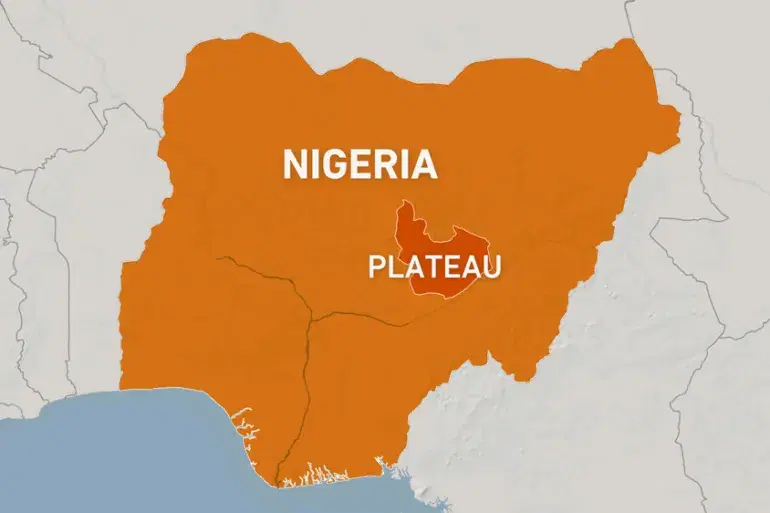
Among the agencies named were the Environmental Health Registration Council of Nigeria (EHORECON); the Federal College of Animal Health and Production Technology, Vom, Plateau State; the Federal Polytechnic, Ukana; the National Agency for the Prohibition of Trafficking in Persons (NAPTIP); and the National Institute of Legislative and Democratic Studies (NILDS).
According to SERAP, the report highlighted multiple cases of payments into private bank accounts, procurement violations, inflated contracts, undocumented expenditures, payments for contracts that were either not executed or for services not rendered, and failures to properly account for public funds.
The organisation stated that the Auditor‑General recommended that all affected sums be recovered and remitted to the federal government’s treasury.
Citing specific findings, SERAP said the report alleged that EHORECON paid N22.94 million from its constituency projects account into private bank accounts belonging to some staff members without evidence showing how the money was used or the purpose of the payments.
The council was also accused of awarding consultancy contracts worth more than N12 million in 2021 for the design and supervision of modern abattoir projects in Kebbi and Jigawa States. However, the report alleged that the expected project deliverables, including architectural and engineering designs, could not be located.
SERAP said the cumulative questionable constituency project transactions linked to EHORECON exceeded N1.8 billion.
The organisation also pointed to findings involving the Federal College of Animal Health and Production Technology, Vom, where over N279.7 million was reportedly paid to three contractors for youth and women empowerment programmes in Niger and Plateau States without supporting documentation.
It added that another N279.7 million was allegedly released as mobilisation fees without proper records, while more than N629.4 million was paid to contractors despite the absence of evidence of competitive bidding, contract advertisements, or proof that the contractors met procurement requirements.
SERAP further alleged that the Auditor‑General identified several irregularities at the Federal Polytechnic, Ukana, Akwa Ibom State, including over N407 million paid as mobilisation without supporting documents, more than N399 million allegedly awarded to unqualified contractors, contract inflation exceeding N192 million, payments of over N279 million for partially executed projects, N50 million paid for an unexecuted borehole project, and over ₦83 million disbursed without the required approvals or documentation.
According to the organisation, the report also accused NAPTIP of irregularly awarding contracts worth over N21.8 million, spending more than ₦176.8 million on logistics and consultancy services without supporting records, and paying over N94 million for projects that were allegedly never executed.
It added that NILDS was cited for failing to submit audited financial statements covering the period from 2012 to 2022, failing to remit over ₦15 million in stamp duties, and spending N1.6 million without the approval of the Office of the Accountant‑General of the Federation.
The organisation maintained that corruption involving constituency projects deprives citizens, particularly poor and vulnerable Nigerians, of essential infrastructure and public services intended to improve their living conditions.
It argued that, as the institution constitutionally empowered to oversee public expenditure, the National Assembly has a responsibility to ensure transparency and accountability in the management of constituency project funds.
SERAP also contended that if the allegations are established, they would amount to violations of the provisions of the 1999 Constitution, the Fiscal Responsibility Act, 2007, and the Public Procurement Act, 2007, all of which require prudent management, transparency and accountability in the use of public resources.








 English (US) ·