
.png) 2 months ago
37
2 months ago
37
ARTICLE AD BOX
By Joseph Erunke
When the National Examinations Council (NECO) was founded in April 1999, many Nigerians regarded it as a bold experiment. Critics questioned whether a second examination body was necessary beside the West African Examinations Council (WAEC) and whether NECO could manage the vast responsibility of administering credible national exams.
Twenty‑five years later, those doubts have largely faded. From a modest start, NECO has grown into one of Africa’s largest and most influential examination institutions, assessing tens of millions of candidates, expanding beyond Nigeria’s borders, adopting technology‑driven reforms, and becoming a key pillar of the country’s educational system.
Today, the Council is more than an exam body; it represents Nigeria’s educational sovereignty, institutional resilience, and growing global relevance.
One of NECO’s most significant achievements has been breaking the long‑standing monopoly of WAEC in Nigeria’s secondary‑school examinations.
Before NECO’s emergence, WAEC was effectively the sole major body conducting senior secondary school exams in Nigeria. Although respected across West Africa, critics argued that relying on a regional institution limited Nigeria’s ability to align assessments with national educational priorities and to accommodate a rapidly expanding student population. NECO changed that narrative.
By introducing the Senior Secondary Certificate Examination (SSCE) for both internal and external candidates, alongside the Basic Education Certificate Examination (BECE) and the National Common Entrance Examination (NCEE), the Council dramatically widened assessment opportunities for Nigerian students. From about 890,000 candidates in its first SSCE in 2000, NECO has cumulatively seen more than 35 million candidates sit for its SSCE exams.
This rapid expansion was driven by policies aimed at increasing accessibility, especially in rural and underserved areas where students previously struggled to reach examination centres. NECO expanded accredited centres nationwide and aligned its timetable with WAEC’s, giving students greater flexibility and broadening certification opportunities across the country.
A defining feature of NECO’s evolution has been its steady embrace of technology and digital transformation. Over the years, the Council has introduced reforms to improve efficiency, curb malpractice, and strengthen public confidence in its certificates. Digital registration, biometric verification, electronic result checking, and online certificate verification have fundamentally changed how examinations are administered in Nigeria.
These reforms have positioned NECO as a technology‑driven institution capable of competing in the global assessment arena.
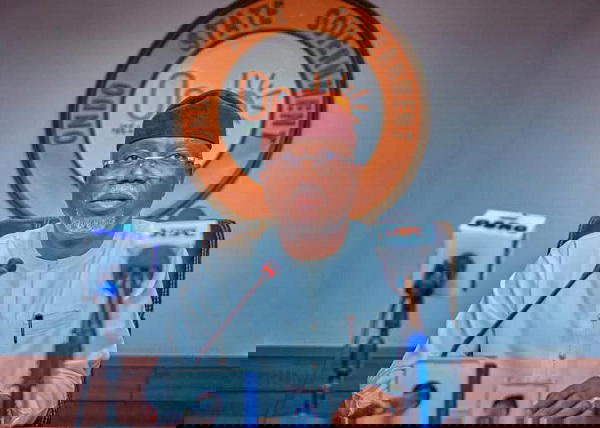
Under the leadership of the current Registrar and Chief Executive, Professor Ibrahim Dantani Wushishi, the pace of modernization and institutional reform has accelerated. His tenure has focused on investments in logistics, operational efficiency, staff welfare, and digital innovation.
The Council acquired dozens of operational vehicles—including Mitsubishi single‑cabins, Toyota Hilux trucks, buses, and speed boats—to secure the distribution of examination materials across Nigeria’s challenging terrains and riverine communities.
State offices received modern 3‑in‑1 computer systems, and infrastructure upgrades strengthened the Council’s nationwide network. Staff welfare also received attention: workers benefited from salary increases, regular promotions, productivity awards, and improved retirement packages, all aimed at boosting morale and productivity. These reforms have contributed to smoother coordination and stronger institutional confidence.
Perhaps the most remarkable development in NECO’s history is its emergence as an international examination institution. What began as a national response to Nigeria’s assessment needs has evolved into a transnational system serving candidates in multiple countries.
Today, NECO conducts exams in at least nine countries, including Benin Republic, Niger Republic, Equatorial Guinea, Côte d’Ivoire, Gabon, Togo, Burkina Faso, Saudi Arabia, and the United Kingdom.
This expansion reflects the mobility of Nigerians and the demand for continuity in Nigerian curriculum‑based education abroad. For many diaspora families, NECO provides an educational bridge that keeps students connected to the Nigerian system while studying overseas.
Success in highly regulated environments such as the United Kingdom marks a significant institutional milestone, demonstrating confidence in NECO’s standards, integrity, and administrative processes.
International recognition of NECO certificates has continued to rise. The Council now receives verification requests from universities and institutions in Canada, the United States, South Africa, and the United Kingdom, indicating broader global acceptance of its qualifications.
Membership in international professional organisations such as the International Association for Educational Assessment (IAEA) and the Association for Educational Assessment in Africa (AEAA) has further strengthened its global standing.
Examination malpractice remains a major challenge for Nigerian exam bodies. NECO has implemented reforms to strengthen integrity and reduce fraud, including biometric verification, tighter monitoring, digital tracking, and enhanced supervision. Professor Wushishi’s administration has emphasised restoring confidence through intelligence‑driven monitoring and stronger accountability systems. The Council’s growing credibility is now one of its strongest assets.
Beyond the exam hall, NECO has created employment for thousands of Nigerians—supervisors, invigilators, data entry personnel, cybercafé operators, drivers, security staff, and administrators. The Council also contributes to community development through scholarships for indigent students and borehole and water projects in communities hosting NECO facilities. Capacity‑building programmes for teachers and exam officers have helped strengthen assessment standards nationwide. In many ways, NECO is woven into Nigeria’s educational and socio‑economic fabric.
Wushishi’s Vision 2050
Since becoming Registrar, Professor Ibrahim Dantani Wushishi has pursued an ambitious reform agenda to position NECO for the future. His vision is to transform NECO into a globally competitive, technology‑driven










 English (US) ·