
.png) 2 months ago
18
2 months ago
18
ARTICLE AD BOX
By Cynthia Alo
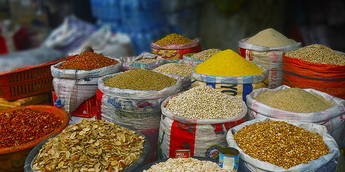
Stakeholders in the agriculture sector have attributed Nigeria’s worsening food crisis to insecurity, inadequate implementation of government policies, and insufficient infrastructure.
Speaking at the 2026 Nigerian‑British Chamber of Commerce Agriculture and Agro‑Allied Summit in Lagos, they said that recurring attacks on farmers, weak monitoring of intervention funds, and poor policy execution are undermining food production nationwide.
Group Managing Director of Xtralarge Farms & Resorts, Dr. Mrs. Moji Davids, stated that insecurity has discouraged many farmers from returning to their farms, thereby reducing the country’s food‑production capacity.
She noted that some farmers in Benue State who were kidnapped and forced to pay ransoms exceeding N50 million each have abandoned farming activities.
“What farmers need today is confidence and assurance on security, access to finance, stable pricing, infrastructure and fertilizer distribution,” she said.
Davids added that, although government policies on agriculture appear commendable, implementation remains a major challenge. She also identified post‑harvest losses as a key factor driving rising food prices.
Consultant to the Ogun State Governor on Agriculture and Managing Director of Bama Farms Limited, Prince Wale Oyekoya, also described insecurity as a major obstacle to food production.
He observed that many farmers in crisis‑prone areas have stopped farming because of repeated attacks and kidnappings.
“When farmers go to the farm and their lives are not secured, there will be discouragement and that leads to shortage of food production,” he said.
Manager of Agribusiness and Non‑Oil Export at Union Bank, Mr. Utomi Ezinwa, blamed politics and weak accountability for the poor performance of intervention programmes in the sector.
“We should remove politics from policies. Nigeria is not void of systems. The problem is that we have systems that are not working,” he said.
Ezinwa emphasized that agriculture requires long‑term, patient capital and called for stronger collaboration among government agencies, development finance institutions, and commercial banks.
Corporate Communications, Public Affairs and Sustainability Lead at Nestlé Nigeria, Victoria Uwadoka, urged stakeholders to adopt practical and sustainable agricultural practices, warning against harmful environmental methods and indiscriminate fertilizer use.
The post Food crisis driven by insecurity, weak policy implementation — Stakeholders appeared first on Vanguard News.










/https%3A%2F%2Fmedia.afrik-foot.com%2Fen-ng%2F2026%2F06%2Fimago1077419787-1.jpg)



 English (US) ·