
.png) 1 month ago
29
1 month ago
29
ARTICLE AD BOX
By Tunde Rahman
Twenty‑seven years into uninterrupted democracy, Nigeria’s federal structure remains the most effective means of managing diversity and delivering development. Federalism, however, is not a contest between Abuja and the sub‑nationals, nor a zero‑sum game for relevance. It is a covenant—an agreement to cooperate, to keep certain powers within the states while granting others to the central government for proper coordination.
Constitutional scholars such as A.V. Dicey and K.C. Wheare describe federalism on three pillars: devolution of powers, supremacy of the constitution, and non‑centralisation.
In Nigeria, this division of power is reflected in the Exclusive, Concurrent and Residual Lists. Defence, immigration, currency and foreign policy belong to the centre, while education, health, land and local roads are the responsibility of the states and Local Government Councils.
Critics often claim that Nigeria is over‑centralised and that the centre in Abuja wields excessive powers. While this may be difficult to refute, devolution of power is not a division of purpose. When the centre and sub‑nationals work at cross‑purposes, citizens suffer. When they collaborate and align, real development can occur. Alignment does not mean surrender of autonomy; it is the exercise of joint responsibility so that roads can be well paved, schools can be built and stocked with learning materials, and society can improve overall.
The days when a state government would refuse a central project because of different party affiliation—as happened in some states during the Second Republic—should be a thing of the past.
The importance of collaboration, strategic partnership and alignment between the centre and states was highlighted last week during the Renewed Hope Ambassadors’ National Media Tour of legacy projects undertaken by the Federal and State Governments in the South East. The tour, which took the team to Ebonyi, Enugu and Abia States, illustrated the gains of centre‑state collaboration and alignment.
Three landmark projects inspected during the South East tour demonstrate the value of strategic partnership between the centre and sub‑nationals.
In Enugu State, for example, the President Bola Tinubu administration, under the Renewed Hope Agenda on road infrastructure, launched a 23‑span flyover bridge at Eke Obinagu Junction on the busy Enugu‑Abakaliki Expressway to eliminate traffic gridlock. The 345‑metre bridge, with a 1.05‑kilometre dual service road, cost N25.3 billion. To complement the Tinubu government’s project, Enugu State is dualising the 21.5‑kilometre section of the Enugu‑Abakaliki Highway and constructing five bridges.
It is also noteworthy that the flyover project and the dualisation of the same highway prompted Ebonyi State Governor Francis Nwifuru to construct the Ezillo‑Ezzaegu road. This road branches from the Abakaliki‑Enugu dual carriageway in Ishielu Local Government and has opened up four rural communities.
In Abia State, a slightly different but equally remarkable story of alignment unfolded. The 50‑kilometre Umuahia‑Ohafia road, which cuts through Bende, is a Federal Government road. While the Tinubu administration was constructing the road, Abia State Governor Alex Otti intervened by building a new bridge across the Asaga area in Ohafia to strengthen the route. The new bridge replaces the old Omenuko Bridge, where, in 1985, Reverend Uma Ukpai—who passed away on 6 October 2025 at age 80—lost two of his children and a cousin in a tragic accident while travelling to a Christian crusade.
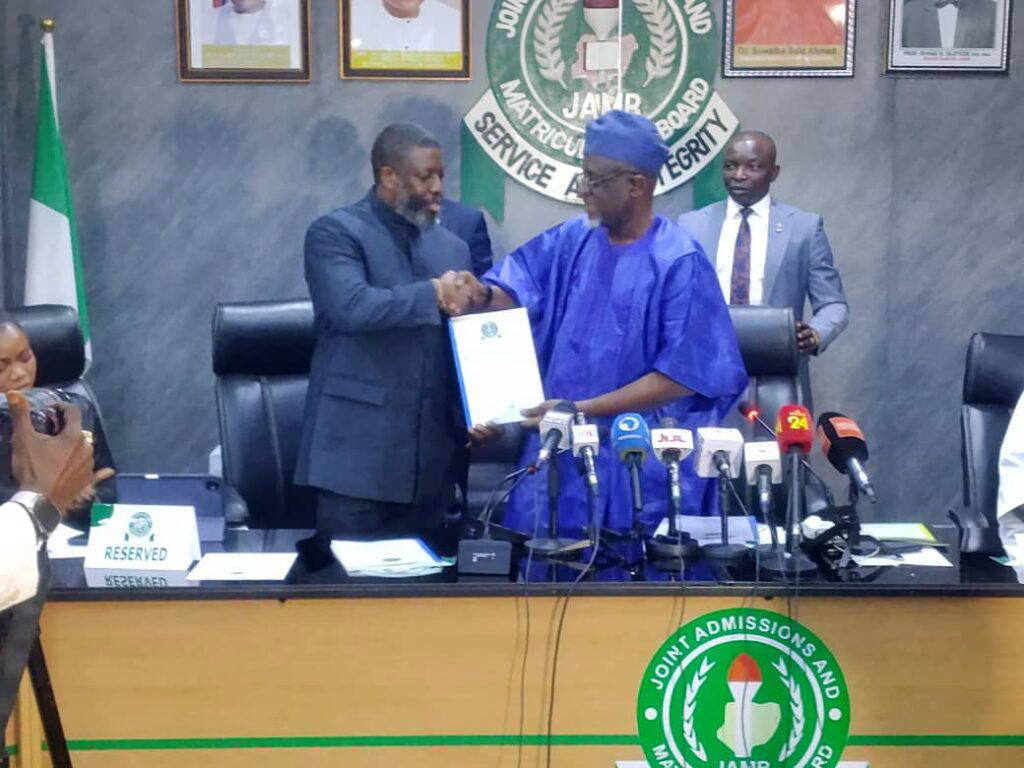
During the tour, it also emerged that President Tinubu has approved the concessioning of the Akanu Ibiam International Airport, the first of its kind to be so concessioned. The concessioning documents were signed in Abuja by the Minister of Aviation, Mr Festus Keyamo, and the concessionaire on the day the team visited the abandoned international wing of the Enugu airport. The presidential gesture aims to revive the international wing built by former Minister of Aviation Stella Oduah during President Goodluck Jonathan’s regime. The facility has remained dormant since then.
We inspected many projects across the three states. Governor Peter Mbah of Enugu has been intentional with the projects he is implementing under a broad vision, where one project logically connects to another to create a modern, efficient and prosperous Enugu.
The team examined the 40‑kilometre Owo‑Ubahu‑Amankanu‑Umualor‑Ikem dual carriageway, a virgin road created by cutting through forested areas; the New Enugu City, a 10,000‑hectare smart city designed to decongest Enugu metropolis with dual carriage road infrastructure already in place; the modern Enugu International Hospital; a tractor assembly and service plant; Smart Green School GTC Campus I; and the Command and Control Centre, where movement and security within the entire Enugu city and its forests are monitored via AI‑embedded cameras to nip crime in the bud.
Governor Nwifuru has turned Ebonyi State into a large construction yard with ongoing projects such as the iconic Vanco Junction Flyover/Tunnel Bridge, ICT University, Oferekpe in Izzi LGA, the Aeronautic and Aerospace University in Ezza South LGA, Amanze Housing Estate, the 24‑kilometre Umuogudu Oshia‑NIGERCEM road, and the International Trade Centre, which has been redeveloped into a 182‑bed international hotel, among others.
Abia State is no different in terms of infrastructure and legacy projects. Among the projects inspected were the strategic 67.6‑kilometre Umuahia‑Uzuakoli‑Akara‑Ohafia Road, a major transportation corridor linking several communities across the state; the Ohafia‑Umuahia Federal Road; the newly commissioned Nnenna Oti Bus Terminal in Umuahia, a modern transportation hub designed to transform public transportation in Abia State; and the Renewed Hope Housing Estate in Umuahia, a flagship Federal Housing Authority project comprising 1,200 housing units. The initiative represents one of the largest housing development schemes under President Tinubu’s Renewed Hope Housing Programme. The Abia State Government provided the land and paid compensation to affected landowners, while the Federal Housing Authority is undertaking the construction.
What all the highlighted projects show is that Nigerians do not experience “federalism”; they experience roads, hospitals, schools and markets. A federal highway that stops at a state border, or a Primary Health Centre without drugs, helps no one. The Universal Basic Education Act requires states to provide counterpart funding. Where states align or provide matching funds, classrooms appear. Where they don’t, federal allocations lie unused.
Terrorism, banditry, kidnapping and climate displacement do not respect state boundaries. The Nigerian Armed Forces can degrade terrorist command centres, but sustainable peace requires state intelligence, community policing and local reintegration programmes such as Operation Safe Corridor. No single level of government can secure Nigeria alone.
Even on the economy, investors see “Nigeria,” not “Rivers or Lagos State.” Conflicting taxes, permits and regulations raise the cost of doing business. That is why the Tinubu government has reformed the tax system, collapsing multiple taxes and eliminating several outdated ones.
That is why alignment through PEBEC and state Ease of Doing Business reforms has helped push non‑oil exports to $12.8 billion, a 21 % increase.
Misalignment produces duplication, abandoned projects, court battles and “us‑versus‑them” politics. It turns policy into confusion and budgets into waste.
In a federal system, the distance between policy and people is closed by coordination—or widened by its absence.
Federalism does not ask Abuja to do everything, nor does it ask states to do nothing. It asks each tier to do what it does best—together.
*Rahman is Senior Special Assistant to President Tinubu on Media & Special Duties.




 English (US) ·