
.png) 1 month ago
24
1 month ago
24
ARTICLE AD BOX
Few moments in politics are as embarrassing as a leader arguing against his own convictions while pretending to attack another. Psychologists label this cognitive dissonance; the public simply sees a politician recanting his own words. The audience remembers the earlier speech, the press records the quotes, and the politician is left insisting that what he said was wrong. It is a classic Catch‑22.
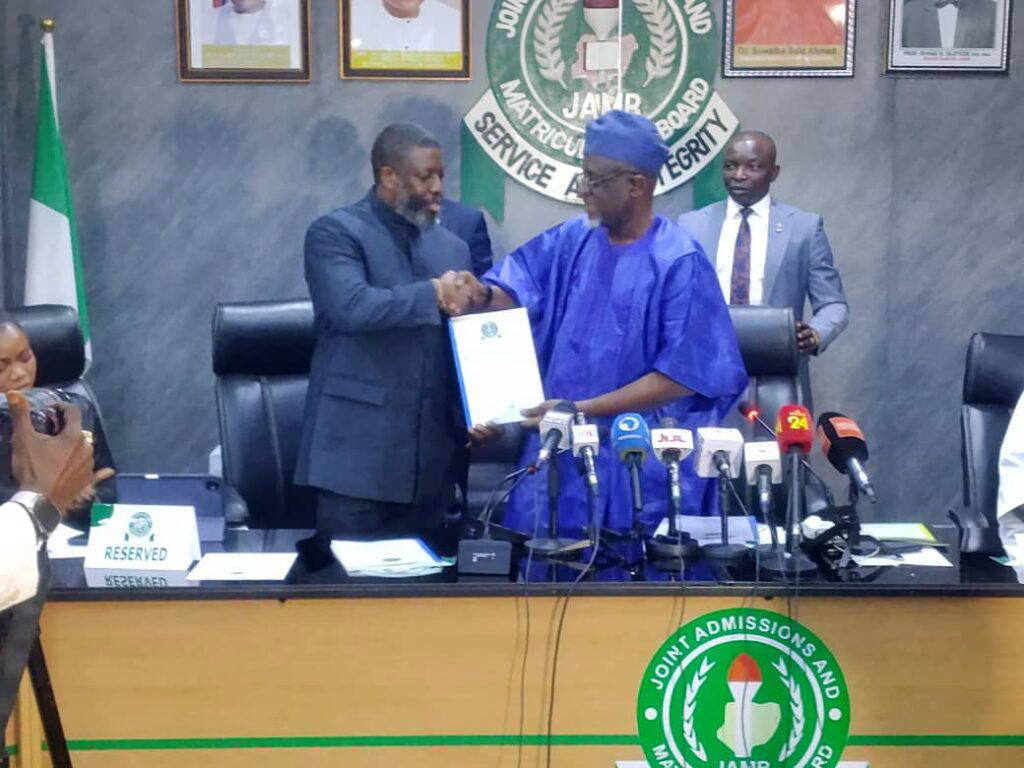
Senator Adams Aliyu Oshiomhole is currently caught in such a dilemma. He is confronting not an opponent but his own statements. The evidence against him comes from his own mouth, not from his enemies.
In May 2025, Oshiomhole stood in the Senate chamber and delivered one of the most enthusiastic endorsements a senator has ever given another. He praised Senator Godswill Akpabio’s leadership, claiming that opposition politicians were joining the APC voluntarily and that the Senate had become more cordial. He said the political climate was easing, defections were occurring without intimidation or conflict.
He then added a memorable line: “Mr Senate President, I thought that you would enter the Guinness Book of Records.”
Oshiomhole described Akpabio’s leadership as not only effective but profound, “truly uncommon and increasingly uncommon.” He praised Akpabio’s patience, warmth, and ability to win opponents by persuasion rather than pressure. He spoke admiringly of the Senate President’s smile and suggested that his style had succeeded where others had failed. This was more than routine courtesy; it was a lavish public endorsement and heartfelt praise.
Oshiomhole went further, reminding his audience of his reputation for speaking from conviction and that public figures must acknowledge success when they see it.
That was Oshiomhole speaking. That was Oshiomhole’s standard. That was Oshiomhole’s record. That was Oshiomhole being Oshiomhole.
Fast forward to June 2026.
On a podcast, the same Oshiomhole launched one of his strongest and strangest attacks on Akpabio. He alleged that the Senate President’s daughter had secured employment at the Nigerian National Petroleum Company Limited through improper influence and outside normal procedures. The claim was serious and, according to Akpabio’s colleagues, completely false.
The Senate President’s spokesperson said it is trite that whoever alleges must prove it. He added that none of Akpabio’s children work at NNPC or its subsidiaries. The issue shifted from Akpabio to a test of Oshiomhole’s integrity and conscience.
How does a former labour leader, former governor, former national chairman of the ruling party, and serving senator make such a damaging allegation without first establishing a basic fact: whether the person in question even works where he claims? More troubling was Oshiomhole’s own explanation: “Somebody told me.”
Those three words should worry every Nigerian. Not because politicians should never raise concerns about public institutions—they should. Not because powerful people should be shielded from scrutiny—they should not. But a democracy cannot function when public accusations are built on hearsay rather than evidence.
The low standards expected from a roadside gossip are not the standards expected from a senator of the Federal Republic. That is why this episode is disappointing and worrisome. Like the first Adam, this Adams gave Eve the apple of lies and digested it.
Adams should have known better. He is not an ordinary politician. His place in Nigeria’s political history compels him to be more circumspect in his communication. He rose through the labour movement to become one of the country’s most recognisable public figures. He challenged military rule, led workers’ struggles, governed Edo State, and chaired the APC at a critical period in its development.
Few public figures have accumulated such political capital. Yet the path he toed, which once made Oshiomhole formidable, now appears increasingly to be covered with indignity and less than noble motives.
For most of his career, he thrived on confrontation. There was always a cause to champion, an adversary to challenge, or an institution to hold accountable. That instinct served him well when anchored in facts and robed with decency.
The danger arises when confrontation becomes an end in itself. Then the need to fight outweighs the need to verify. Attention becomes more important than accuracy. The line between advocacy and recklessness begins to disappear. The contradiction in Oshiomhole’s treatment of Akpabio is therefore impossible to ignore.
A little over a year ago, he publicly suggested that Akpabio deserved a place in the Guinness Book of Records. Today, he paints him with a tar brush as a beneficiary of nepotism. A little over a year ago, he praised Akpabio’s leadership as a model of political inclusion and persuasion. Today, he portrays him as a leader whose conduct deserves public suspicion. A little over a year ago, he urged Nigerians to acknowledge what was working. Today, he is making allegations that appear incapable of surviving basic scrutiny and integrity tests.
What changed? Did new evidence emerge? Did Akpabio suddenly become a different person? Or is something else at work? Some observers point to Oshiomhole’s growing frustration with developments within the Senate, particularly debates around the chamber’s rules and leadership structure. Whether that explanation is accurate or not, it highlights an uncomfortable reality about Nigerian politics and politicians’ sweet descent.
Too often, political disagreements that should remain institutional become personal. Policy disagreements become personality conflicts. Procedural disputes become vendettas. Legitimate criticism becomes a vehicle for settling scores. And when that happens, truth is usually the first casualty.
That is where Senator Oshiomhole risks damaging something far more valuable than any political rivalry.
He risks damaging his credibility. Credibility is a strange asset. It takes decades to build and only moments to diminish. It is the reason people listen when a public figure speaks. It is the foundation upon which influence rests. Once it begins to erode, every future intervention becomes harder to take seriously.
That is the tragedy here. Oshiomhole does not need sensational allegations to remain relevant. He has already earned relevance. He does not need unverified claims to command attention. His record already guarantees attention. He does not need to manufacture controversy and peddle rumours. His experience alone should mean his voice would always matter in national conversations.
What he needs is the discipline that once distinguished him from countless others in public life. The discipline to verify before accusing. The discipline to separate evidence from rumour. The discipline to recognise that prominence carries responsibilities. History is often kinder to politicians than their contemporaries. It overlooks many mistakes and forgives many errors. But history is also unforgiving when it comes to patterns.
And a pattern appears to be emerging.
The labour leader who once built a reputation on speaking truth to power now risks becoming associated with speaking before establishing the truth. The politician who once demanded accountability now finds himself facing questions about his own standards. The man who urged others to “put a record” when things were going well now stands accused of abandoning the record altogether when it became politically convenient.
That is why this story is ultimately not about Godswill Akpabio. It is about Adams Aliyu Oshiomhole. It is about the danger of allowing ambition, frustration and ego to eclipse judgement. It is about how distinguished careers are rarely destroyed by a single scandal or a single defeat.
More often, they unravel through a series of avoidable choices. A careless allegation here. An unverified claim there. A growing willingness to sacrifice accuracy for effect. For a man of Oshiomhole’s stature, that should be the real concern. Because the greatest threat to his legacy is not Akpabio but ego and himself.
It is the possibility that, after spending decades building a reputation for courage and credibility, Adams Oshiomole may now be remembered for diminishing both with reckless falsehoods and needless ego of his own making.
.Harries is an Abuja‑based Development Communication Strategist




 English (US) ·