
.png) 1 hour ago
3
1 hour ago
3
ARTICLE AD BOX
By Osa Mbonu-Amadi
Against a backdrop of widespread violence in many countries, Nigerian painter and fine‑art photographer Tobiloba Awogbemila tackles themes that resonate with contemporary socio‑cultural issues.
His body of work, titled “Rhythms of Home – Musical Collection,” draws on music and law to entertain while urging viewers to focus on value‑adding virtues and cultural landscapes.
“Rhythms of Home – Musical Collection” is a vibrant composition that advocates the preservation and propagation of Africa’s cultural heritage. The artist uses visual narratives to mirror everyday experiences and social realities through painting and photography.
Drawing on his legal background, Awogbemila, who believes that “law and art are interconnected systems of observation,” creates an atmosphere reminiscent of a courtroom in the gallery. Titles such as “No Witness” feature paintings that employ legal language and mimic exhibits, testimonies, and cross‑examinations on canvas.
Through his work, he records socio‑cultural activities, intertwining law, language, and art into rhythmic ritual sounds that transcend visual representation. For example, trauma is depicted as evidence while culture recurs in images that include wearable objects.
The artist represents cultural heritage and identity through Yoruba‑specific imagery such as the talking drum, shekere, agogo, and bata.
By setting dark colours against light ones, Awogbemila creates a serene atmosphere that conveys solemnity, reverence, and devotion within the space.
The aesthetics of the collection go beyond surface appeal, challenging viewers to interrogate the work beyond the frame.
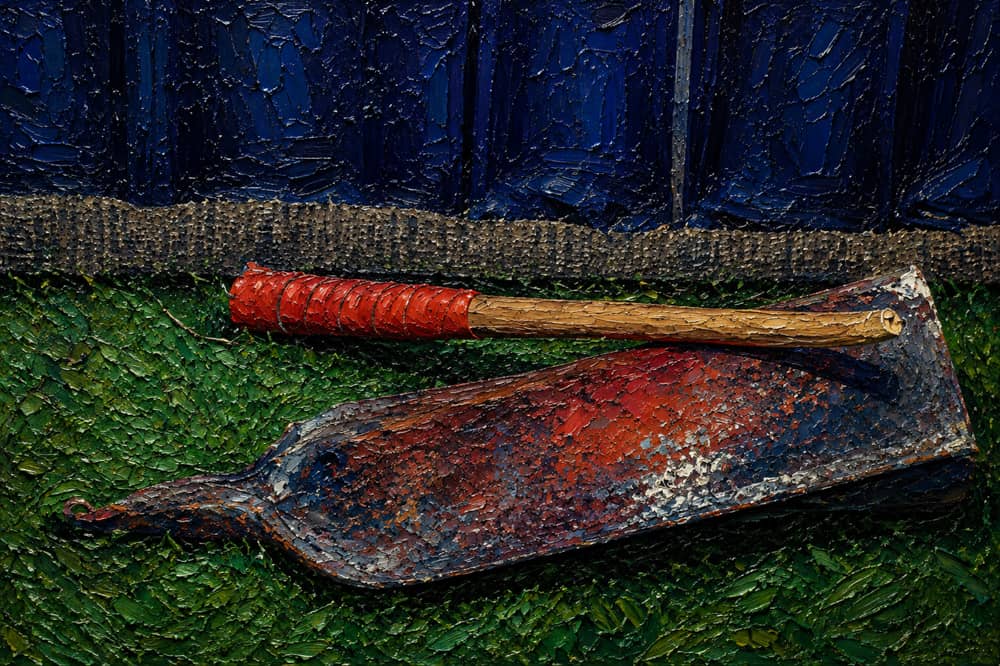
With thick layers of paint that function like layered time, hands on musical instruments, and imagined performances, the artist portrays memory on canvas, rendering it as irrepressible evidence of culture and communal existence.
The collection also evokes ancestral presence and nocturnal devotion through a deep blue ground that represents a sacred field filled with worship objects such as beads, ropes, gourds, and straps.
Across the series, Tobiloba depicts musical instruments as human beings, posturing as witnesses. Beadwork, ropes, straps, and other cultural relics are crafted as persons, playing agency roles in close‑up compositions that remember, communicate, and testify. Works featured include “Voice of the Shekere,” “Drums of the Heart,” and “Shekere Family Tree.”
In “Voice of the Shekere,” silence is depicted as a voice; the shekere is presented as a static image that vibrates visually. The texture suggests an aftertaste‑sound that lingers after the main performance, conveying the theme of the aftermath of a memorable event. The piece also reads as an elegy for traditional practices that are remembered but no longer performed by succeeding generations.
In “Drums of the Heart,” the artist animates the painting beyond rhythm and melody to a communal voice. Musical instruments like drums are grouped like family members engaged in conversation or festive celebration, creating a visual dialogue that invites the audience into the scene.
In “Shekere Family Tree,” Awogbemila portrays a familial order, conveying that the family, as an agent of socialisation and cultural transmission, is indispensable. The piece reflects melody, rhyme, and rhythm through diverse beads, colours, and ascending sizes of lineage footprints, reframing cultural heritage as a dynamic performance rather than a static possession.
“Rhythms of Home – Musical Collection” highlights cultural elements preserved in paintings. Rather than idealising an imagined past, the work documents musical objects and instruments, mirroring themes of interdependence, continuity, and social positioning.
The artist prioritises communal instruments rooted in common identity, suggesting that belonging, as an embodied phenomenon, is transmitted through feeling, touch, and bonding.
Artworks etched in legal framing include the “No Witness” series, which involves interrogatory descriptions, evidence, and testimonies. Awogbemila treats personal experiences such as trauma as exhibits, showcasing how culture is ingrained in objects, images, and repetitive patterns.
The blue paintings are deliberately troweled to arrest the viewer’s attention, with the palette knife treating each canvas alike and culminating in a striking masterpiece.
With dominant themes drawn from law, language, and art, the collection features pieces that will engage viewers from diverse strata of society.
Combining photographic finishing with a filmmaker’s view‑finding, Awogbemila builds each painting as a contested scene, staged recollection, and historical archive.
Traces of his background in law, filmmaking, and photography characterize each piece, weaving paintings that heighten the tension between staged memory and documented narratives, thematically reflecting divergent voices.
In “Rhythms of Home – Musical Collection,” Awogbemila captures emotive and vicarious experiences through materials he transforms into gestures and symbols of cultural identity. He creatively combines paints, colours, and texture to create musical rhythms that evoke salient voices of celebration.
Art enthusiasts and the general public will readily connect with the collection as it embodies socio‑cultural ethos that resonate with their present realities.
Awogbemila’s work thrives on melody, lineage, and nostalgia rather than temporal visual configurations.
Viewers who see art as an integral part of their culture and aesthetic emblem will find his paintings rich, textured, and engaging, as they combine sound and visuals to celebrate culture.
The post Voices in Tobiloba Awogbemila’s Rhythms of Home appeared first on Vanguard News.






/https%3A%2F%2Fmedia.afrik-foot.com%2Fen-ng%2F2026%2F06%2F1780746625640.png)





 English (US) ·