
.png) 4 months ago
31
4 months ago
31
ARTICLE AD BOX
• Defends UTME exemption for NCE candidates
The Minister of Education, Tunji Alausa, announced that the federal government has succeeded in returning more than one million children from the streets to classrooms over the past 30 months, as part of its strategy to tackle Nigeria’s out‑of‑school children crisis.
Speaking on Channels Television, Alausa said the widely cited figures from international bodies that place Nigeria’s out‑of‑school population at roughly 18.3 million are outdated and do not reflect the interventions undertaken by the Bola Tinubu administration.
He explained that the government has launched a state‑by‑state mapping and geotagging exercise to produce more accurate data on children who are currently outside the formal education system.
“Talking about data, this UNESCO data, UNICEF data, 18.3 million, is the same number that has been quoted for 10 years. We do not need to challenge it, and I do not need to get into rhetoric,” Alausa said.
“What we are doing is data mapping of our out‑of‑school children as we continue aggressive interventions to move children back to school. Today, I can tell you that we have moved over one million children on the streets back to school in the last 30 months,” he added.
The minister noted that the exercise involves physically locating and geotagging out‑of‑school children across the country to obtain precise figures and addresses, rather than relying solely on broad international estimates.
Preliminary results from Kaduna State, for example, have already shown a substantial gap between global estimates and the numbers obtained through the federal government’s verification process.
“UNICEF data says Kaduna has 1.8 million out‑of‑school children. We have completed the data mapping in Kaduna, and we found about 700,000 children who are out of school. Is that still high? Yes. But do we now have a more realistic number? Absolutely,” he stated.
Alausa affirmed that once the nationwide mapping is finished, Nigeria’s out‑of‑school population is expected to fall below eight million. “We are going to continue mapping all 36 states and then present our numbers. By the time we are done, we will have fewer than eight million out‑of‑school children,” he said.
A 2024 UNICEF report ranked Nigeria as the country with the highest number of out‑of‑school children worldwide, estimating 10.2 million primary‑school‑age children and another 8.1 million junior‑secondary‑age children were not in school.
The report also indicated that about 66 percent of the affected children are concentrated in the north‑west and north‑east regions.
President Tinubu has described the situation as unacceptable and pledged to prioritise education reforms, school reintegration and skills acquisition under his administration.
In the same interview, the minister defended the government’s decision to exempt colleges of education and non‑technology agricultural courses in polytechnics and monotechnics from the Unified Tertiary Matriculation Examination (UTME), arguing that the move will boost tertiary admissions and support national food‑security objectives.
Alausa said the policy could raise annual admissions to tertiary institutions to about 1.5 million, nearly double the figure recorded two years ago.
“Guess what, this year alone, with the changes we are making through eliminating UTME requirements for college of education and UTME requirement for non‑technology agricultural courses in our polytechnics and monotechnics would increase the number of people being admitted throughout tertiary institutions to about 1.5 million.
“That is literally doubling it from two years ago. This has created opportunities for young Nigerians,” Alausa added.
The minister argued that exempting students seeking admission into agriculture‑related programmes is essential to strengthen the country’s food‑production capacity.
“The exemptions are for people going into colleges of education and people going to monotechnics or polytechnics to study non‑technology agriculture courses and there is a reason for that. We need that to help food security in our country,” he explained.
Alausa also disclosed that the ministry has begun plans to overhaul agricultural curricula across universities, polytechnics and colleges of education to align them with modern realities and emerging farming technologies.
According to him, the proposed reforms will incorporate developments such as greenhouse farming and other modern agricultural practices that have emerged over the last decade.
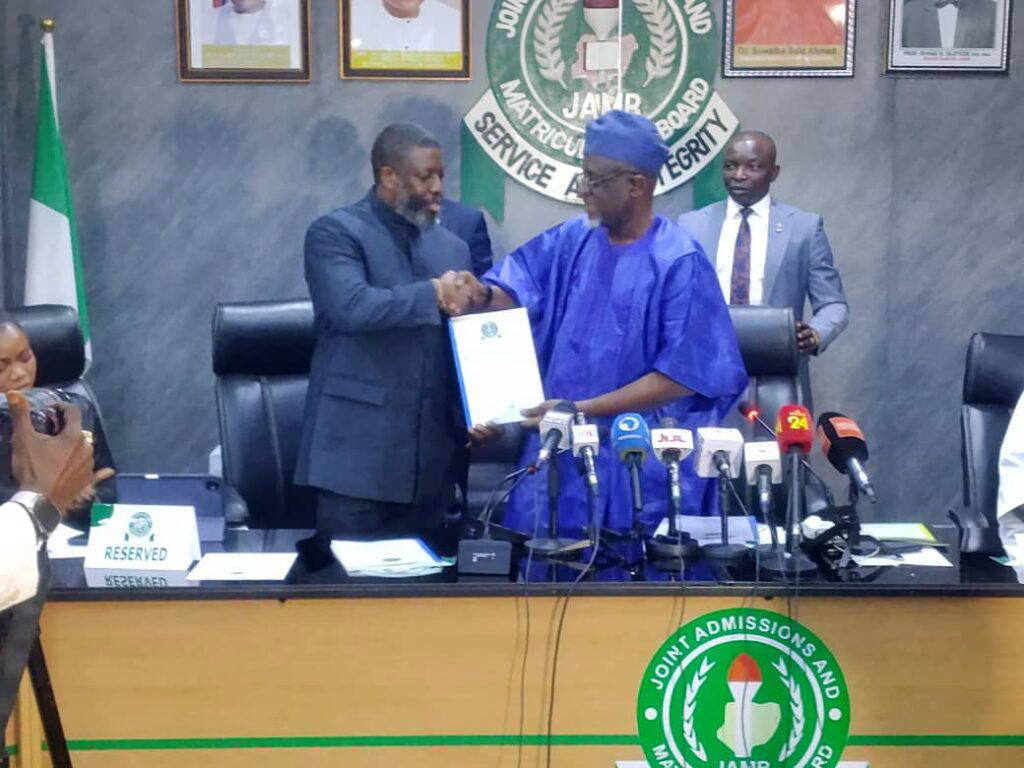
The minister announced the UTME exemption policy on Monday during the 2026 policy meeting of the Joint Admissions and Matriculation Board in Abuja.
Under the new arrangement, candidates seeking admission into colleges of education and non‑technology agricultural programmes will only be required to hold a minimum of four O‑level credits in their school certificate examinations.
Alausa said the policy is also intended to reduce administrative pressure on the examination body while encouraging more young Nigerians to pursue teaching and agriculture‑related careers.





 English (US) ·