
.png) 4 months ago
53
4 months ago
53
ARTICLE AD BOX
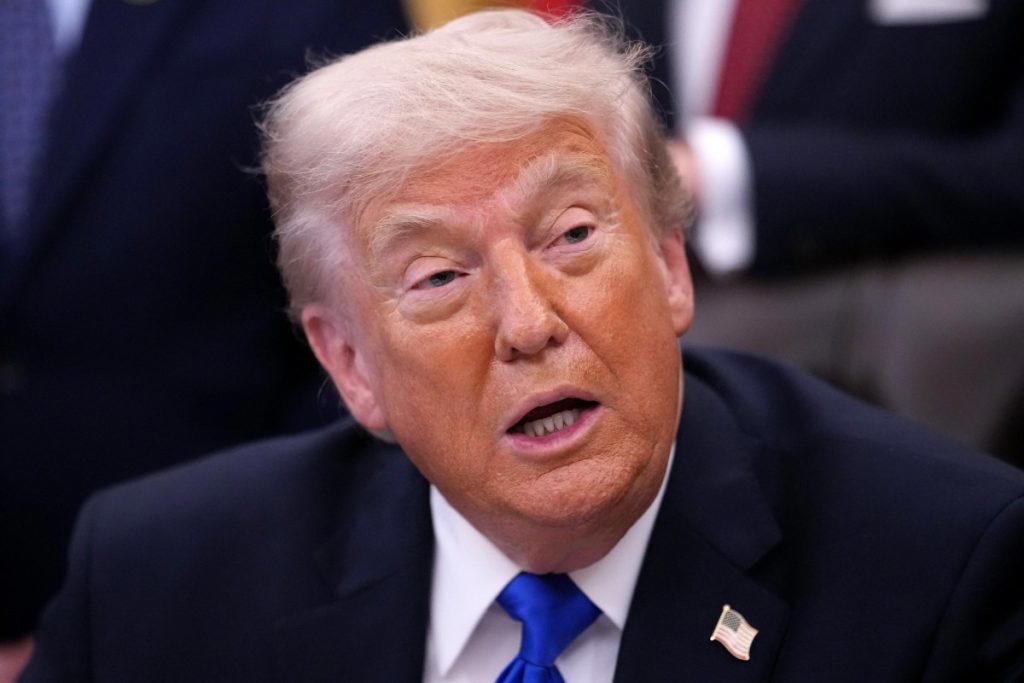
U.S. President Donald Trump said on Wednesday that Washington does not expect to need Beijing’s assistance to end the war with Iran and to reduce Tehran’s control of the Strait of Hormuz.
Trump is in China for a high‑stakes summit with President Xi Jinping.
Speaking before leaving Washington, Trump downplayed any role China might play in resolving the conflict, in which both sides have blocked maritime traffic through a waterway that normally carries one‑fifth of the world’s oil supplies.
“I don’t think we need any help with Iran. We’ll win it one way or the other, peacefully or otherwise,” he told reporters.
More than a month after a fragile cease‑fire took effect, U.S. and Iranian demands for ending the war remain far apart.
Washington has called for Tehran to abandon its nuclear programme and lift its chokehold on the strait, while Iran has demanded compensation for war damage, an end to the U.S. blockade and a halt to fighting on all fronts, including in Lebanon where Israel is battling Iran‑backed Hezbollah.
Trump dismissed those positions as “garbage.”
Iran, meanwhile, appears to be solidifying its control over the Strait of Hormuz, cutting deals with Iraq and Pakistan to ship oil and liquefied natural gas from the region, according to sources with knowledge of the matter.
Ship‑tracking data on Wednesday showed a Chinese supertanker carrying two million barrels of Iraqi crude attempting to sail through the strait.
If the voyage succeeds, it would be the third known passage by a Chinese oil tanker through the channel since the United States and Israel launched strikes on Iran on February 28.
Other countries are reportedly exploring similar shipping arrangements with Iran, sources said, potentially entrenching Tehran’s control of the waterway that normally carries fertilisers, petrochemicals and other bulk commodities vital to global supply chains.
The Trump administration said on Tuesday that senior U.S. and Chinese officials had agreed in April that no country should be able to charge tolls on traffic through the region, in an effort to project consensus on the issue ahead of the summit.
China, a major buyer of Iranian oil that maintains close ties with Tehran, did not dispute that account.
As the costs of the conflict rise, Trump said Americans’ financial struggles were not a factor in his decision‑making on the war.
Data released on Tuesday showed U.S. consumer inflation accelerated in April, with the annual rate posting its largest gain in three years as food, rent and airfares rose.
When asked whether the economic strain on Americans was motivating him to strike a deal, Trump replied: “Not even a little bit.”
“I don’t think about Americans’ financial situation. I think about one thing: We cannot let Iran have a nuclear weapon,” Trump said before leaving for China.
The remarks are likely to draw scrutiny as cost‑of‑living concerns remain a top issue for voters ahead of November’s midterm elections.
The International Energy Agency said the conflict is weighing heavily on global energy markets, with more than one billion barrels of Middle East supply already lost.
According to the IEA, global oil supply will fall by around 3.9 million barrels per day across 2026 and undershoot demand because of disruptions caused by the Iran war.
Brent crude futures edged down slightly to around 107 dollars per barrel after a three‑day rally driven by the Hormuz deadlock.
U.S. Central Command said the aircraft carrier Abraham Lincoln was in the Arabian Sea enforcing a maritime blockade, redirecting 65 commercial vessels and disabling four others.
The Pentagon put the cost of the war at 29 billion dollars so far, an increase of four billion dollars from an estimate provided in April.
Iran has demanded security guarantees for Lebanon as part of its proposal to end the wider war, but despite a U.S.–mediated cease‑fire announced in April, Israel has continued to strike Hezbollah.
Israeli airstrikes on a highway south of Beirut killed eight people, including two children, according to Lebanon’s health ministry.
In Tehran, Iranian officials remained defiant.
Iran had expanded its definition of the Strait of Hormuz into a zone stretching from the coast of the city of Jask in the east to Siri Island in the west.
In the capital, where a series of small earthquakes were reported overnight, the Guards held drills centred on preparation to confront the enemy.
(Reuters/NAN)
The post Strait of Hormuz: US doesn’t need China’s help – Trump appeared first on Vanguard News.



 English (US) ·