
.png) 3 months ago
48
3 months ago
48
ARTICLE AD BOX

By Emeka Anaeto and Babajide Komolafe
Before taking office on 29 May 2023, President Bola Tinubu promised to pursue two broad monetary policy objectives. In his campaign policy document he wrote: “Monetary policy must focus on the exchange rate, interest rate and price levels. This trio must serve the objective of fiscal policy, which is broadly shared prosperity. We can protect our exchange rate, guard against inflation and preserve foreign currency reserves by limiting our exposure to large debt obligations denominated in foreign currency. Our policy will be such that new foreign currency debt obligations will be linked to projects that generate cash flows from which the debt can be repaid.”
The Orthodox Monetary Policy Framework
During the first three years of the administration, the Central Bank of Nigeria (CBN), headed by Mr. Olayemi Cardoso, adopted an orthodox monetary policy approach. It relied on the Monetary Policy Rate (MPR), Cash Reserve Ratio (CRR), Liquidity Ratio and Open Market Operations (OMO) to influence money supply, interest rates and, to a limited extent, exchange rates.
CBN pursued a tight monetary stance, raising the MPR to curb rising inflation. It also carried out extensive foreign‑exchange reforms, chiefly eliminating multiple exchange rates to reduce arbitrage, increase transparency and boost investor confidence.
Exchange Rate Reforms and Naira Depreciation
The most prominent CBN policy under President Tinubu was the unification of exchange rates and the introduction of a willing‑buyer‑willing‑seller framework for determining the official market rate.
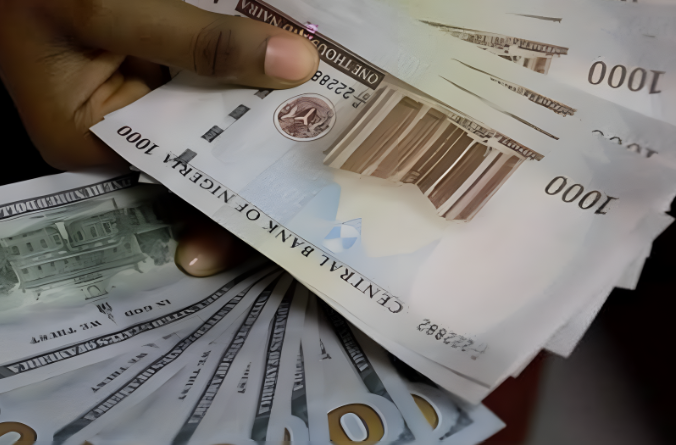
Consequently, the Naira depreciated sharply in the official forex market by 198 % to N1,373.65 per dollar as of 19 May 2026, from N464.67 per dollar at the start of the administration. In the parallel market it fell 80 % to N1,385 per dollar from N770 during the same period.
FX Market Confidence and Reserve Accretion
To restore confidence, the CBN cleared about $7 billion of foreign‑exchange obligations and introduced an FX market code of conduct, which, together with other reforms, increased foreign‑exchange inflows.
Since 2025, the Naira has remained relatively stable, with the rate stabilising below N1,400 per dollar despite global economic headwinds such as the tariff war and the US/Israel‑Iran conflict. The gap between the official and parallel market rates narrowed to N11.35 on 19 May 2026 from N305.33 per dollar in 2023.
Investor confidence helped foreign capital inflows rise for two consecutive years, reaching $23.21 billion in 2025, compared with a decline to $3.9 billion in 2023, from $21.3 billion in 2013.
External reserves grew steadily, hitting $50.027 billion on 11 March 2026 – the highest level in 13 years – from $33 billion at the end of 2023.
Inflationary Fallout of Reforms
The sharp Naira depreciation, coupled with the fuel‑subsidy removal announced on 29 May 2023, triggered widespread price increases and a persistent rise in the inflation rate. Major firms recorded N2.17 trillion in foreign‑exchange losses in 2024.
Price Stability and Tight Monetary Policy
Over the past three years, Nigerians experienced steady and sometimes sharp price rises. The Cost of a Healthy Diet (CoHD) increased 88 % between January 2024 and December 2025. According to the National Bureau of Statistics, the CoHD rose to N1,611 per adult per day in December 2025 from N858 in January 2024.
Annual inflation climbed to 34.8 % in December 2024, the highest in 28 years. To counter this, the Cardoso‑led CBN raised the MPR six times in 2024, reaching 27.5 % by November. The CRR for commercial banks was raised twice – to 50 % from 32.5 % in February and September 2024. The CRR for merchant banks increased from 10 % to 14 % early in 2024, then to 16 % in September, where it remained through 2025.
These measures lowered the inflation rate for 12 consecutive months to 15.06 % in February, before a resurgence in March and April 2026.
High Interest Rates Squeeze Businesses
The MPR hike triggered a high‑interest regime, with average bank lending rates rising by 8.55 percentage points to 35.17 % in March 2026 from 26.62 % in December 2023.
The cost of finance for 12 leading companies rose 81 % to N1.15 trillion in 2024 from N664.556 billion in 2023, despite a 6.4 % decline in their banks’ borrowing to N1.733 trillion from N1.852 trillion in 2023. The companies include Nestlé Nigeria, Cadbury Nigeria, Unilever Nigeria, Nigerian Breweries Plc, BUA Foods, Guinness Nigeria, Northern Nigeria Flour, Dangote Sugar, Honeywell Flour Mills, Flour Mills Nigeria, UAC Nigeria, and Golden Guinea.
Rising Debt Profile and Contradictions
Under President Tinubu, the total debt stock rose 219 % to N159.27 trillion at the end of 2025 from N49.85 trillion at the end of 2023, according to the Debt Management Office (DMO). Much of this increase was driven by the Naira’s depreciation to N1,435 per dollar at the end of 2025 from N460.35 at the end of March 2023, and by a surge in new foreign loans.
Foreign loans climbed 21.5 % to $51.85 billion at the end of 2025 from $42.67 billion in 2023, contrary to the President’s campaign pledge.
Debt Sustainability Indicators Improve
However, GDP rebasing and stronger growth in 2024 and 2025 improved debt sustainability indicators. The debt‑to‑GDP ratio fell to 36.9 % at the end of 2025 from 40.57 % in 2023, while the debt‑service‑to‑revenue ratio dropped to 65 % from 73.5 % in 2023.
Impact of Economic Growth
On the surface, Nigeria recorded a significant macroeconomic improvement. GDP grew 3.38 % in 2024 and 3.87 % in 2025, after a decline in 2023.
Cost of Living and Standard of Living Take the Hit
One major consequence of Tinubu’s reforms is the sharp rise in the cost of living. Estimates place the monthly cost of living for a single person at about ₦505,780 and for a family of four at ₦1,818,926, excluding rent. Before 2023, the average was ₦150,000 per person and ₦520,000 for a family of four.
These figures mean that over 75 % of Nigerians live below the required amounts, indicating a drastic decline in the standard of living for most of the population.
The quality of life in Nigeria is highly fragmented, with a stark divide between a small affluent elite and a majority facing severe economic pressures. While the country hosts a vibrant tech scene, rich cultural influence, and premium gated communities in cities like Lagos and Abuja, macroeconomic shifts—high inflation, currency devaluation, and fuel‑subsidy removals—have sharply reduced daily purchasing power and welfare for the general population.
Economic Welfare and Purchasing Power
Wage vs. Inflation Gap: The national minimum wage is ₦70,000 per month, yet a single urban resident requires over ₦505,000 monthly for basic expenses (excluding rent).
Income Allocation: Due to soaring food prices, the average Nigerian household spends roughly 60 % to 70 % of its total income on food, severely limiting disposable income for savings, leisure, or emergencies.
Middle‑Class Shrinkage: High inflation has pushed millions of former middle‑class citizens into lower economic brackets, driving a massive wave of professional migration (“Japa”) out of the country.
The post Tinubu’s Economic and Financial Reforms: Gains, Pains, and Missed Targets appeared first on Vanguard News.





 English (US) ·