
.png) 3 months ago
59
3 months ago
59
ARTICLE AD BOX
By Alex Olutunbosun
Political strategy can become a slippery slope when it erodes core principles. When the boundary between strategy and principle blurs, the result is not strength but a dangerous precedent that can outlast its creator and ultimately weaken the very structure it was meant to safeguard.
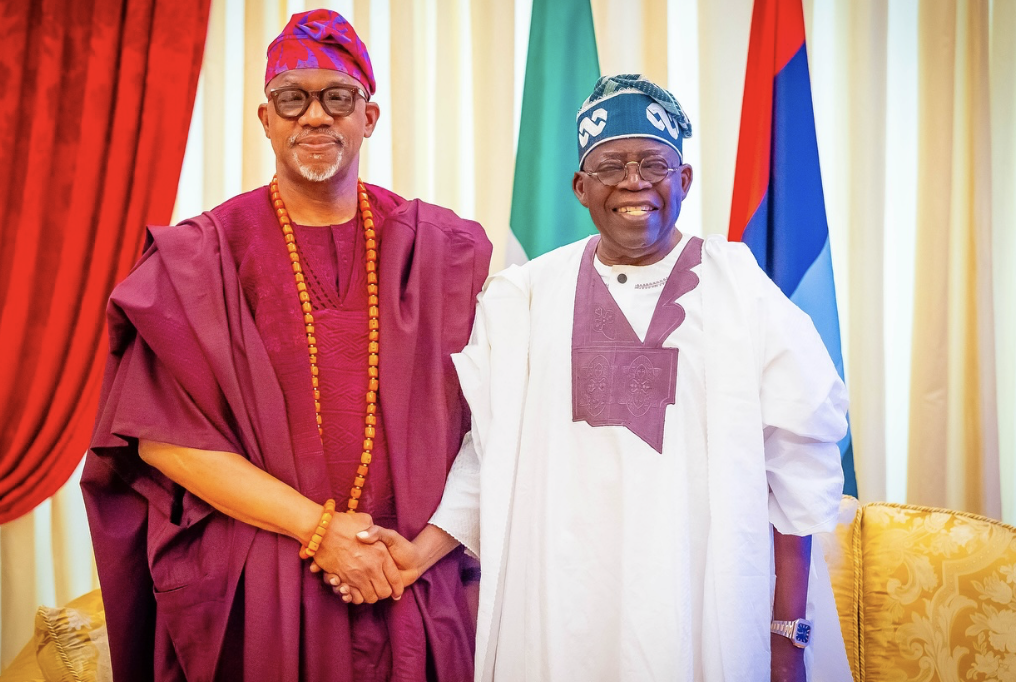
The recent quiet acknowledgment of Ogun State Governor Dapo Abiodun as a key figure in the South‑West political landscape of President Bola Ahmed Tinubu is one such anomaly that warrants close examination. It is not only perplexing; it signals a possible recalibration of power within the ruling party.
This is a path the President has trodden before, and history has not been kind to its outcomes. In the tense lead‑up to the 2023 elections, political lines were far less clear than public statements suggested.
Ironically, some who had long been seen as beneficiaries of Tinubu’s political goodwill grew hesitant, or even openly opposed, his presidential ambition. Among them were Rauf Aregbesola, a two‑term governor whose ascent was heavily shaped by Tinubu’s network, and Femi Ojudu, a long‑time associate from the pro‑democracy era.
Governor Abiodun has not publicly denied reports linking him to this circle of ambivalence, instead aligning more visibly with former Vice President Yemi Osinbajo, whose own presidential aspirations put him in direct competition with his political benefactor.
Yet while dissent existed, loyalty persisted. Figures such as Gbenga Daniel and other steadfast allies maintained their support when it mattered most. Senator Ibikunle Amosun even abandoned his own presidential bid to allow his brother from the Southwest to emerge as president.
These were individuals who did not hedge their bets or shift loyalties in moments of uncertainty, and they helped sustain the political momentum that eventually carried Tinubu to victory. It is against this backdrop that Abiodun’s current elevation becomes not only questionable but also instructive for all the wrong reasons.
The contradiction is stark. A leader once publicly diminished in Abeokuta, the Ogun State capital, through the now infamous “Eleyi” remark—a word that, within Yoruba sociopolitical context, conveys unmistakable condescension—is today being repositioned as a central figure in the President’s regional calculus. That reversal is not merely ironic; it exemplifies a deeper inconsistency that risks redefining the moral compass of party politics.
Illustratively, Aregbesola’s trajectory serves as a cautionary tale. What began as a relationship rooted in trust and political mentorship gradually deteriorated into one of the most consequential fractures within the progressive fold. The fallout strained personal ties, destabilised party cohesion in Osun State, and had scathing effects on Lagos, exposing the vulnerability of alliances built without enduring alignment.
The lesson should have been clear: loyalty, once discounted, is difficult to rebuild; rebellion, once normalised, is difficult to contain. Yet the current pattern suggests that lesson is being overlooked.
The attempt to elevate Abiodun above long‑standing loyalists—many of whom have been integral to the South‑West political structure since its formative years—risks institutionalising a troubling precedent. It is a precedent where strategic hesitation is forgiven, even rewarded, while consistency is quietly sidelined.
The implications are profound. First, it erodes internal morality within the party. Political organisations are sustained not just by power but by shared expectations. When those expectations are disrupted and loyalty is no longer the currency of advancement, trust begins to collapse.
Second, it incentivises opportunism. If political actors come to believe that alignment at critical moments is optional and that eventual reward is still guaranteed, discipline gives way to calculation. The party becomes less of a cohesive force and more of a marketplace of shifting allegiances.
Third, it heightens the risk of repeated betrayal. Political history, both within and beyond Nigeria, shows that individuals who ascend through ambiguous loyalty often retain that ambiguity.
The post Tinubu, Abiodun, and the cost of rewarding rebellion appeared first on Vanguard News.






 English (US) ·