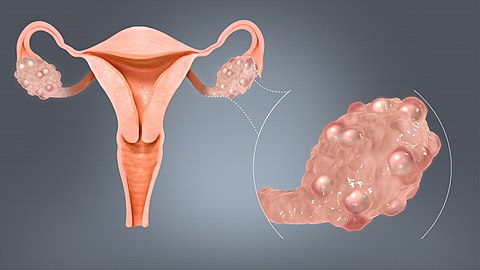
Polyendocrine metabolic ovarian syndrome
Polyendocrine metabolic ovarian syndrome, previously called polycystic ovary syndrome, is the most common hormonal disorder in women of reproductive age. PMOS is diagnosed when a woman has at least two of the following three features: irregular menstrual periods, high testosterone or related symptoms, or an excess of antral ovarian follicles on ultrasound; women with PMOS are not more likely than those without to have true ovarian cysts. A blood test for high levels of anti-Müllerian hormone can replace the ultrasound in the diagnosis. Other symptoms associated with PMOS are heavy periods, acne, difficulty getting pregnant, and patches of darker... Wikipedia
- Symptoms: Irregular menstrual periods, heavy periods, excess hair, acne, difficulty getting pregnant, patches of thick, darker, velvety skin
- Complications: Type 2 diabetes, obesity, obstructive sleep apnea, heart disease, mood disorders, endometrial cancer
- Duration: Long term
- Causes: Genetic and environmental factors
- Risk factors: Family history, obesity
- Diagnostic method: Based on irregular periods, high androgen levels, ovarian cysts
- Differential diagnosis: Adrenal hyperplasia, hypothyroidism, high blood levels of prolactin
- Management: Healthy lifestyle, medication
- Medication: Birth control pills, metformin, anti-androgens, fertility treatments such as letrozole
- Data source: DuckDuckGo