
.png) 1 hour ago
1
1 hour ago
1
ARTICLE AD BOX
By Gift ChapiOdekina
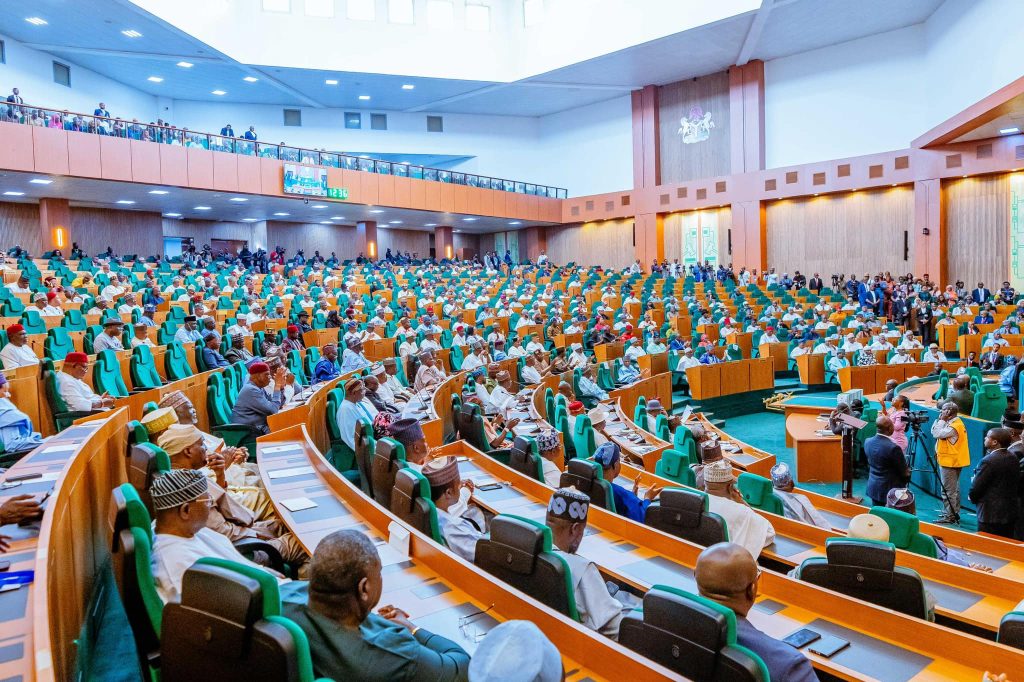
The House of Representatives adopted a formal interpretation of its Standing Orders on Wednesday, defining “cognate legislative experience” as the completion of at least one full four‑year term in the National Assembly. The ruling effectively bars first‑term lawmakers from holding principal offices.
The resolution was passed in a plenary session presided over by Speaker Tajudeen Abbas and carries significant implications for the contest to fill the vacant Minority Leader position, left open after Kingsley Chinda’s departure.
The move followed a motion introduced by Babajimi Benson, the representative for Ikorodu Federal Constituency in Lagos State, titled “Need for a Precise Definition of Order Seven, Rule 15 of the Standing Orders of the House of Representatives.”
Benson noted that the House Rules state that only members with cognate legislative experience may be appointed as principal officers, but the term had remained undefined. He argued that parliamentary democracies worldwide reserve key leadership roles for experienced legislators to strengthen institutional memory, legislative competence and stability.
According to Benson, best practices in other democracies generally discourage appointing first‑term legislators to principal offices, emphasizing that such positions require a deep understanding of legislative procedures, constitutional duties and parliamentary traditions.
He also cited a recent Senate interpretation that defines cognate legislative experience as the completion of at least one full four‑year term. The motion was seconded by Peter Uzokwe, the member for Nnewi North/Nnewi South/Ekwusigo Federal Constituency, and was adopted by a wide margin.
Following the motion’s passage, the House resolved that cognate legislative experience, as contemplated under Order Seven, Rule 15 of its Standing Orders, means members who have completed at least one full term in the House of Representatives. Lawmakers also declared that no alternative interpretation of the term exists beyond the definition adopted by the chamber.
Shortly after the resolution was adopted, Solomon Bob, the representative for Abua/Odual and Ahoada East Federal Constituency in Rivers State, expressed concern that the motion could unintentionally limit the Speaker’s authority to interpret the House Rules.
“This motion is not necessary. We are, in fact, restricting your powers to interpret our rules,” Bob said.
Speaker Abbas acknowledged the concern but reiterated that the House has the collective authority to determine the meaning of its rules. “I understand, but I cede that power to the House,” the Speaker replied.
The resolution is widely viewed as a pivotal development in the race to fill the Minority Leader’s office.
One potential aspirant affected by the new rule is Ikenga Ugochinyere, who is serving his first term in the House. Ugochinyere had recently secured the endorsement of a group of opposition lawmakers seeking his emergence as Minority Leader.
With the House now formally restricting eligibility for principal offices to ranking lawmakers who have completed at least one full term, attention is likely to shift to more experienced opposition members who meet the newly affirmed requirement.
The decision could significantly reshape the leadership contest within the minority caucus and narrow the field of potential contenders for one of the most influential positions in the Green Chamber.
The post Reps clarifies eligibility for principal offices, dims Ugochinyere’s minority leader ambition appeared first on Vanguard News.






/https%3A%2F%2Fmedia.afrik-foot.com%2Fen-ng%2F2026%2F06%2Fimago1078163607.jpg)







 English (US) ·