
.png) 2 months ago
30
2 months ago
30
ARTICLE AD BOX
By Chioma Gabriel, Editor Special Features & Steve Oko
For more than five decades, the loudest refrain from Nigeria’s South-East was one of neglect.
From the ruins of the civil war to the gully erosion sites swallowing entire communities in Anambra and Imo States, from crumbling federal highways linking commercial hubs to the absence of major federal investments, many in the region nurtured a common grievance: that the South-East had been left behind.
Successive administrations acknowledged the complaints. Political leaders campaigned on them. Civil society groups amplified them.
Yet little changed.
Then came what many considered a historic breakthrough.
In July 2024, President Bola Ahmed Tinubu signed into law the South East Development Commission (SEDC), a body conceived as the region’s equivalent of the North East Development Commission and the Niger Delta Development Commission. The commission was designed to tackle decades of infrastructural decay, ecological devastation, post-war reconstruction deficits and economic underdevelopment across Abia, Anambra, Ebonyi, Enugu and Imo states.
Expectations soared
By February 2025, the pioneer governing board was inaugurated. The symbolism was powerful: a commission demanded by the people of the South-East, managed largely by sons and daughters of the region, and entrusted with transforming an estimated $40 billion regional economy into a $200 billion economic powerhouse.
But barely sixteen months later, the commission finds itself confronting a crisis of confidence that threatens to overshadow its founding vision.
Instead of commissioning roads, erosion-control projects and industrial clusters, the SEDC is battling allegations of questionable spending, inadequate financial reporting and excessive administrative costs.
At the centre of the controversy is an Abuja office rent.
The N153 Million Question
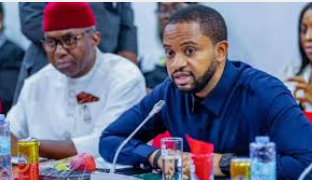
The storm which erupted during a heated session of the Senate Committee on the South East Development Commission chaired by Senator Orji Uzor Kalu is still smouldering.
Lawmakers scrutinising the commission’s finances had expressed shock over what they described as glaring discrepancies in financial records presented by management.
The most controversial item was a reported N153 million annual lease for the commission’s Abuja liaison office.
The revelation immediately ignited public outrage.
Many South-Easterners struggling daily with failed roads, erosion disasters and economic hardship found it difficult to understand why an agency created to drive development appeared to be spending such a substantial sum on office accommodation in the Federal Capital Territory.
According to figures presented during the hearing, the commission had received approximately N16.6 billion in allocations by December 2025. Yet records showed a balance of roughly N13 billion in its Central Bank account, leaving legislators demanding explanations for about N3.6 billion already committed or spent.
Even more troubling to lawmakers was an estimated N2.5 billion classified under expenditure headings that committee members considered insufficiently explained.
Senator Kalu, visibly irritated, challenged the commission’s management.
“You are dealing with people who know Abuja very well,” he told officials. “Every kobo must be accounted for.”
Senators Enyinnaya Abaribe, Victor Umeh and Austin Akobundu, who are members of the senate committee would insist that the commission provide comprehensive documentation to justify every expenditure.
For many observers, the hearing represented a remarkable reversal.
For decades, South-East leaders had complained that Abuja was starving the region of resources. Now, a commission established to correct those historical injustices was being accused of spending too much of its early resources within Abuja itself.
Mark Okoye’s defence
Standing at the centre of the storm was the Managing Director and Chief Executive Officer of the commission, Mark Okoye.
A former investment banker and economic planner widely regarded as one of the younger technocrats in public service, Okoye rejected suggestions of financial recklessness.
His argument was straightforward.
The commission, he said, was building an institution from the ground up.
According to him, establishing governance systems, staffing structures, procurement frameworks, information technology platforms and administrative offices was an unavoidable phase in creating a sustainable development agency.
“Our approach has been to ensure that available resources are directed towards priority projects while maintaining proper governance structures,” he told lawmakers.
Okoye insisted that the commission was deliberately avoiding the mistakes that had plagued many intervention agencies in the past—awarding contracts without adequate funding and accumulating liabilities that eventually crippled project implementation.
Yet the defence struggled to resonate with a public hungry for visible results.
For residents of erosion-ravaged communities in Anambra, traders navigating collapsed highways in Aba and manufacturers burdened by poor infrastructure across the region, institutional setup sounded dangerously close to bureaucracy for bureaucracy’s sake.
The clarification
Following widespread criticism, the SEDC moved swiftly to clarify its position.
In a detailed statement, the commission disputed claims that the ¦ 153 million expenditure was for a single-room office.
Officials explained that the amount covered a multi-floor operational facility located in Maitama, Abuja, including lease obligations, office fit-outs, operational utilities and boardroom facilities used for engagements with development partners and stakeholders.
The commission further argued that delayed releases of operational funds forced management to absorb significant startup costs, including staff salaries and ICT infrastructure, from available resources.
Regarding the controversial ¦ 2.5 billion expenditure, the agency stated that the money had not been spent but was earmarked for the rehabilitation of a permanent headquarters facility in Enugu reportedly provided by the Enugu State Government.
“To be precise, this money has not left the Commission’s accounts,” officials maintained.
The June 23 reckoning
Under mounting pressure, the Senate Committee issued a firm directive.
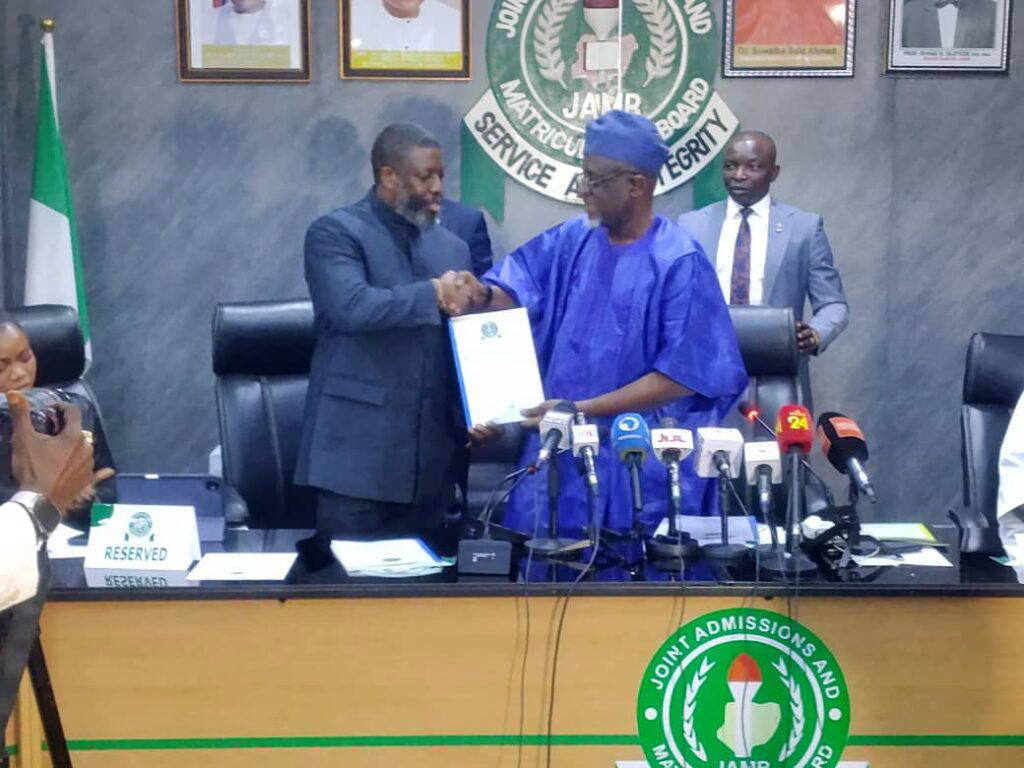
The commission was ordered to submit complete financial records, procurement documentation, bank statements and expenditure schedules by June 23, 2026.
When the deadline arrives, SEDC officials are expected to deliver extensive documentation aimed at addressing the committee’s concerns.
Sources familiar with the process say the submissions would include lease agreements, procurement approvals, project schedules and financial records intended to account for the questioned expenditures.
The documents would help clarify aspects of the disputed figures.
The Senate would likely place the commission under enhanced monitoring, signalling that future expenditures would receive intense scrutiny.
However, the Chairmen of the Senate Committee on SEDC, Senator Orji Uzor Kalu told Vanguard that investigation is still ongoing and conclusion should not be rushed.
“It is too early to speak on that now or call it anything. We have given them till June 23 to submit their report and afterwards, we will study the report and respond to that.”
Similarly, a member of the Committee, Senator Victor Umeh told Vanguard that the Committee has been asked to go back and smoothen its report.
“We asked the SEDC to go back and develop what they presented to us because it was not clear. The contracts were not explained. The figures were not clear and we need proper explanation.
So, we gave them June 23 to re-submit the report and clear gray areas. We will study their submission and meet again on June 30 to clarify the Senate Committee position.
“So right now, we are not judging the commission but on June 30, we will come out with a unified position which we will make public.”
Between promise and performance
The controversy surrounding the South East Development Commission reveals a deeper truth about governance in modern Nigeria.
The challenge facing development institutions is no longer merely securing funding. It is earning and sustaining public trust.
For the SEDC, that trust remains fragile.
The commission was born from a historic demand for justice, reconstruction and economic inclusion. It was envisioned as a vehicle to heal old wounds and create new opportunities.
Yet its first major national headline has not been about roads completed, erosion sites reclaimed, schools rehabilitated or industries revived.
Instead, it has been about rent, procurement documents and legislative probes.
The coming months will determine whether this episode becomes a temporary distraction or a defining stain.
For millions of South-Easterners waiting for evidence that the promises of development can finally become reality, the verdict will not be delivered in Senate hearing rooms or financial reports.
It will be delivered on roads rebuilt, communities protected, jobs created and lives transformed.
Until then, the question lingers:
Will the South East Development Commission become the engine of regional rebirth its founders promised, or merely another chapter in Nigeria’s long and expensive history of unrealised expectations?
SEDC should be probed thoroughly—Wabara
Reacting to the development, former Senate President, Adolphus Wabara, threw his weight behind the Senate Committee’s probe of the South East Development Commission (SEDC), insisting that the commission must account for every kobo entrusted to it and that alleged wasteful spending must not be allowed to go unpunished.
Wabara dismissed attempts to blame the Federal Government for inadequate release of funds to the commission, stressing that whatever resources made available should be prudently managed.
He said, “There is no sense in blaming the Federal Government for not releasing funds. Even if the money released was minimal, the commission should use it judiciously and account for every penny,” he said.
The former Senate President noted that the establishment of the SEDC was widely welcomed by Ndigbo as a long-awaited intervention in the development of the South-East, especially after years of what he described as neglect of the region.
“We thought the SEDC was a blessing to Ndigbo. We must commend this administration for remembering the Igbo and giving us this opportunity,” Wabara stated.
However, he expressed disappointment over allegations of financial recklessness against the commission’s management, saying such conduct could undermine the purpose for which the agency was created.
“What has it got to do with an office apartment of N153 million in Abuja? Is it Abuja or Enugu that should be its office? Which house would be rented for N153 million? Is it a high-rise building? Even if it is the United Nations building in Abuja, how will it cost N153 million just for rent?” he queried.
Wabara called for a thorough investigation into the expenditure, insisting that those found culpable should be made examples to discourage further misuse of public funds.
“They should be properly probed. They should be used as an example to deter others from wasteful spending of public funds. People should not allow this to go scot-free,” he said.
Senate probe premature —Ohuabunwa
However, former President of the Pharmaceutical Society of Nigeria (PSN) and Chairman of the Ohanaeze Council of Igbo Business Leaders, Mazi Sam Ohuabunwa, in his reaction, faulted the ongoing scrutiny of the SEDC, describing the action as premature and lacking moral authority.
Ohuabunwa said he had little confidence in the ability of the National Assembly to objectively investigate agencies when it had failed to address corruption allegations within its own ranks.
“I have no confidence in this unit or any National Assembly to investigate everybody. They should first investigate themselves, cleanse themselves, and punish themselves before they have the moral right to judge a new institution that is just building up,” he said.
Drawing from his experience while serving at the Subsidy Reinvestment and Empowerment Programme (SURE-P), Ohuabunwa alleged that some lawmakers often use investigations as a tool to pressure agencies that refuse to make financial concessions to them.
“When I was in SURE-P , we made it clear that we were not going to give any money to the National Assembly. They threatened not to appropriate funds for us and even raised allegations that money was missing, just to draw attention and create fear,” he alleged.
The elder statesman argued that the allegations against the SEDC should not be accepted at face value, insisting that the commission was too young to be subjected to what he described as destructive criticism.
“I think it is too early to judge the SEDC. They are a very young organisation. Anybody who genuinely cares should engage them, ask questions, and understand what they are trying to do,” he stated.
Ohuabunwa disclosed that as Chairman of the Ohanaeze Council of Igbo Business Leaders, he had held meetings with the commission’s leadership and found that it had strategic and innovative plans for the development of the South-East.
“They have very strategic, innovative plans, which are not the normal things people may be looking at. We can interrogate them better, understand what they are doing, and see how we can support them,” he said.
He also attributed the slow pace of implementation of projects by the commission to irregular releases of funds by the federal government, noting that the challenge was not peculiar to the SEDC but affected many agencies captured in the national budget.
“The release of funds has been sporadic. Even when they are released, it takes time before the agencies can access them. This makes implementation patchy and inconsistent,” he explained.
Ohuabunwa warned against using reports of the National Assembly as the ultimate basis for condemning the commission, insisting that any proven wrongdoing should be investigated through credible and impartial channels.
“If they have committed any crime, people can find a proper way to investigate. They should not use National Assembly reports as the signpost for destroying a regional institution,” he said.
The commission must not be destroyed — Chekwas
Prominent Igbo voice, Chief Chekwas Okorie, however, called for caution, warning that the commission should not be destroyed.
“You know that they were not given an allocation for over one year, but when I began to see activities of the commission like them having a summit and all of that, I made inquiries, and I heard that they had been given some allocation, I didn’t know how much. So for me, it’s like better late than never. Let’s see what they would want to do with it”, he said.
According to him, the team, made up of their management and the board, visited practically all five governors to find out areas of collaboration when they will start implementing their projects, and they talked so much about so many things that we would want to hear.
“Areas like infrastructural development, resuscitating the old farm settlements that the Okpara government set up. And so on and so forth, bringing in foreign direct investments in areas of technology and a start-up program for our youths who want to start something for themselves. I was excited.
“Before they got this money, I also watched that the young man, the Managing Director of the commission, Mark Okoye Jr., went to the President and presented a blueprint of how the commission would bring in investment from outside and develop the place, and the president approved this blueprint for the needed money to take off. So when they now take off, between March and now, not up to three months. So if in three months, they were expected to have performed so much and they have not met the expectations, I think that the method of inquisition is wrong, because what I saw was not an oversight function. It was more like an inquisition, and the method adopted, to me, was a bit on the hostile side, because this is what the Igbo people suffer all the time. Most of our problems always come from the inside.”
Okorie called for caution to achieve the aim for which the commission was set up.
“I appealed to our politicians, when we first got this thing, to allow this commission to succeed, and I was basing it on what happened to NDDC and how trillions of Naira were wasted in NDDC, and they all went into private pockets. Some people have been sent to jail already because of NDDC. So it is good to do oversight. But it’s good to also be a little bit charitable in that oversight.
“It was when there was news that they hired a room, one room for over ¦ 150 million came out from that inquisition, as I call it, that I was startled. I became more than just interested. I decided to dig into it a little bit more. So it turned out that it was not one room after all. It was a duplex in Maitama, and that duplex had been equipped with a certain state-of-the-art technology. Whether the figure is bloated or commensurate with what is there. I believe that those in oversight function ought to have visited the place themselves if they were that concerned.
“I believe that to nip an impending fraud in the bud is better than allowing it to occur first. So I have no problem with the Senate committee going directly to find out what information they have or the petition they may have received. But bringing these people on television, I mean, having it covered in the manner it brought up, only to discover that it is a duplex and people have gone away with the story that one room had been hired for 153 million. Who will come back now, except the commission itself; do they have to start snapping photographs of the office and equipment inside to clear their names?
“I thought that the committee overseeing the commission would have asked them to come within one week for a fuller explanation, if they didn’t have data, and that would have been more like it. But all of these things have gone in the open, and I don’t know the extent to which this altercation will affect this beautiful commission we are all expecting, which will be helpful in addressing the long alienated region of the southeast.”
He, however, questioned the need for an office in Abuja by the commission.
“But does the commission need an office in Abuja, when the Enugu state government has already given them an office here in Enugu? Wouldn’t that ¦ 150 million have been used to put the Enugu office in order?
“You see, the thing is that need or not of citing an office in Abuja is, again, what the oversight committee will be able to look into and make the appropriate recommendations. That is the whole essence of oversight. If there is anything about the Enugu office, they look at it. It is one of the new Secretariat buildings constructed by the Sullivan Chime administration, which is not yet in use.
That is the aspect that they need to answer to the public.
“All I am saying is that in the course of putting them in check, in the course of making them know that all attention is the focus of them, you do not create the impression that they have already become criminals.
I thought that is part of what the committee should have done, and if need be, to intervene through the Senate president on why the commission that they generated so much interest in was left starved for one year after its inauguration. That was what created the impression that the people were not doing anything.”
Our hope shouldn’t be dashed – Archbishop Opoko
The Archbishop of Umuahia Methodist Diocese, Chibuzor Opoko, warned that hope raised by the establishment of the commission should be dashed, saying its lack of impact after one year risks being seen as political hype.
He criticized the failure to fund the Commission, alleging marginalisation.
The Archbishop added that the manifest neglect of the South East was the reason for the renewed agitation for Biafra. and call for a referendum by Mazi Nnamdi Kanu.
The cleric advised that the SEDC should prioritise rail connectivity, inland waterways, agriculture, and seaport development to drive economic growth and food security.
“If you create a commission like this, it should be funded. Why should our own be different? I have always said it: if you don’t want Igbos, allow them to go their separate way! Mazi Nnamdi Kanu has been calling for a referendum because of injustice.
“Why is it that the oil from this region belongs to the federal government, yet nobody accounts for the gold mined in the North? Some people from the North own oil wells here, but nobody from here owns a gold mine there.
“Do they think our children don’t see these injustices? When you suppress their fathers today, tomorrow they may become fierce and decide that enough is enough. So, don’t push people to the wall.”
Setting the agenda for the commission, he said, “When the funds begin to come, connect all the states in the Southeast by rail to boost commerce. Dredge Oguta Lake and Azumini Blue River to give the region access to the sea. Igbo land deserves a seaport.
“They should promote massive agriculture for export and food security. Only those who produce their own food will withstand the global uncertainties ahead.
We ‘re still sceptical about SEDC’s true motive – Igbo women
Igbo Women Assembly (IWA), led by its National President, Lolo Nneka Chimezie, expressed scepticism over the true intent of SEDC, citing the continued delay in releasing its take-off funds as validation of IWA’s concerns.
The group accused the APC-led federal government of unfair treatment toward the Igbo, suggesting the commission may be a politically motivated effort to create false hope and strengthen ties with the Southeast. Chimezie noted that many in the region did not fully embrace the SEDC due to poor consultation and exclusion of key stakeholders.
She argued that the commission’s leadership should not be blamed if it remains unfunded, warning that such a situation could fuel internal divisions and pitch the management against the people. Chimezie also questioned the lack of media attention on the funding delay and urged Southeast leaders to push for proper financing.
She challenged the federal government to show a genuine commitment by adequately funding the SEDC, stressing that raising expectations without delivery risks deepening frustration in the region.
Igbo group calls for investigation, prosecution, refund if found guilty
Igbo elite think tank, The Alaigbo Development Foundation (ADF), called for indepth investigation over the alleged corruption and misappropriation of funds in the Commission.
The Secretary General of ADF, Chief Abia Onyike, in his reaction, said that the Management of the Commission should account for the funds allegedly misappropriated.
He said: “The Management of the South East Development Commission should account for the funds allegedly misappropriated. They should be thoroughly interrogated, investigated, and made to face the full wrath of the law.
“Mocking the people of the South East for allegations of corruption is neither here nor there. Corruption is rampant in Nigeria, and nothing makes the case of the South East unique. Those found guilty should refund the money and go to jail,” he stated.
Commission’s leadership should be sacked if allegation is proven – INC
The Igbo National Council (INC), on its own, said the leadership of the commission should be sacked if the allegation is proved.
National President of INC, Chilos Godsent, stated that the leadership of the commission does not mean well for the South East and hasn’t carried out any meaningful project.
“The leadership of the commission should be sacked. They have not been able to do any project. You cannot be expending on conferences and consultations.
“If the leadership is not changed, it’s going to be too bad for the South East. The leadership lacks understanding and commitment.
“The North East Development Commission and the Niger Delta Development Commission will be laughing at us.
“The governors and political leaders of the South East have not also done enough in their oversight function on the commission”, he submitted.
The post PIPELINE OF APATHY: How South-East Devt Commission, stumbled into Abuja rent scandal appeared first on Vanguard News.




 English (US) ·