
.png) 4 months ago
44
4 months ago
44
ARTICLE AD BOX
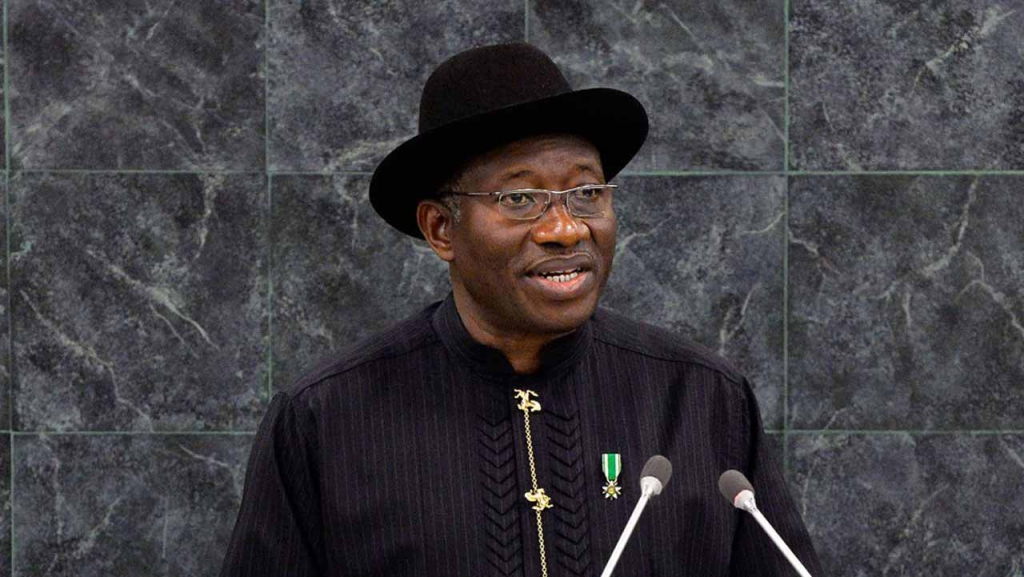
By Henry Umoru
As Nigeria prepares for the 2027 presidential and general elections, former President Goodluck Jonathan has called for focused leadership to address the country’s mounting challenges.
During a speech on the prevalence of insecurity, mass killings and widespread property destruction, Jonathan expressed concern that many Nigerians have come to accept violence as a normal part of life. He warned that this trend signals a gradual erosion of moral values and humanity in the nation.
Jonathan spoke on Saturday at the opening session of the 13th Synod of the Anglican Diocese of Abuja, held at St James Anglican Church in Asokoro. The theme of the synod was “The Priesthood of All Believers: Equipping God’s People for the Work of Ministry.” He urged national reflection, spiritual renewal and responsible leadership amid worsening social and security issues.
“As someone who has spent many years in public life and politics, I must confess that moments like this provide an opportunity for sober reflection on the state of our society,” Jonathan said. “When we look around today, particularly at the challenges confronting our country, it is easy to become discouraged. Violence, insecurity, moral decline, and the loss of human values have become deeply troubling realities.”
He added, “What is even more painful is how society sometimes appears to normalise these tragedies as though they are ordinary occurrences. In times past, such incidents would shake the conscience of the nation.”
“Today, people are killed, communities are destroyed, and life seems to continue as though nothing has happened. This ought not to be so. It is a reminder that society desperately needs moral direction, spiritual guidance, and a restoration of values,” Jonathan continued.
Emphasising the Church’s role in shaping society and upholding moral standards, Jonathan urged religious leaders to speak truth and defend righteousness. He warned that the influence of modern technology and information systems can spread negative values, sometimes glorifying harmful behaviours. “This is not the future we should desire for our children and generations yet unborn,” he said.
On leadership and nation‑building, the former President highlighted the importance of integrity and courage in public service. “Leadership matters greatly in moments like this. Society progresses when men and women of integrity, courage, and vision stand in the right places and speak the truth. We must continue to pray for our leaders, encourage one another, and work collectively for peace, justice, and national renewal,” Jonathan said.
He thanked the organisers for the invitation and prayed for continued divine guidance for the Church and the nation.
In his presentation, Archbishop, Metropolitan and Primate of All Nigeria, Anglican Communion, Henry Ndukuba, addressed the Chairman of the Independent National Electoral Commission (INEC), Professor Joash Amupitan, and his Resident Electoral Commissioners. He called for neutrality in the forthcoming 2027 elections and encouraged Nigerians, especially Christians, to participate actively in politics and nation‑building.
Ndukuba criticised politicians for prioritising power struggles over governance and citizens’ welfare, and warned that the persistent weaponisation of ethnicity and religion remains a major driver of insecurity across the country. “Responsible participation by people of integrity is necessary for national transformation,” he said, adding that the Church would continue to pray for peace, justice, and prosperity in Nigeria.
He also criticised the federal government’s large borrowing, noting the public debt of N159.28 trillion and unstable electricity supply. “Transparency and policies that directly benefit citizens are essential,” Ndukuba said. “Nigeria is bleeding following repeated cases of terrorism in the country.”
“The Monetary Policy and Impact of Nigerian Debt Burden: The naira has stabilised around N1,380 per US dollar as of the end of April 2026, and external reserves now stand at $48.65 billion as of mid‑April 2026. The gap between the official and parallel foreign exchange markets has narrowed significantly due to recent policy actions. However, public debt at N159.28 trillion is a concern. We urge fiscal authorities to exercise discipline and ensure the timely release of capital budget funds. Although the Monetary Policy Rate was cut slightly from 27 % to 26.5 %, lending rates remain high, hurting productivity and growth. Power supply is still a major bottleneck. Without reliable electricity, Nigeria’s $1 trillion economy target is out of reach.”
“While policymakers argue that the 2023 reforms, subsidy removal, foreign‑exchange unification, and monetary tightening are finally yielding results, the reality for most households and ordinary citizens feels different. With 133 million out of 220 million Nigerians in multidimensional poverty, macro gains have not reached the citizens on the streets. The link between macroeconomic stability and household relief remains disconnected.”
“Crude Oil Politics: Global oil prices have spiked due to the Iran‑US‑Israel conflict, pushing up the costs of goods and services in Nigeria. Unlike other oil producers, Nigeria has not benefited from the windfall because the regime of its pre‑sold crude. Secondly, one considers that the politics surrounding crude oil sales and Dangote’s refinery should be handled in the interest of Nigerians. Thirdly, the recent handover of the National Refineries to China must be reconsidered so that some are given to competent Nigerians who will plough back their gains into Nigeria, rather than allow China to loot our oil, as they have done in the Solid Minerals sector.”
The cleric condemned the continued killings, attacks and displacement of communities in parts of the country, especially in Plateau State, Benue State, Kaduna State and other affected states. He commended the efforts of the Nigerian Armed Forces, the Nigeria Police Force and local security groups but stressed that security strategies must be improved. “Nigeria is bleeding, and innocent lives continue to be lost daily,” he warned against the misuse of ethnic and religious differences to fuel




 English (US) ·