
.png) 2 months ago
29
2 months ago
29
ARTICLE AD BOX
For Nigerians, the time for excuses is over. The new Power Minister, Joseph Tegbe must let performance speak, writes
Festus Akanbi
For millions of Nigerians, the appointment of Joseph Olasunkanmi Tegbe as Minister of Power has triggered a familiar mix of hope and scepticism. Hope, because electricity remains the single most critical ingredient required to unlock Nigeria’s economic potential. Scepticism, because Nigerians have heard too many promises from too many power ministers over too many years, only to remain trapped in darkness.
In truth, few ministries carry the weight of public expectation like the Ministry of Power. Every market woman, factory owner, barber, welder, student, hospital, farmer, and technology entrepreneur depends on electricity.
Power is not merely another sector of the economy; it is the engine room of national development. When electricity works, businesses flourish, jobs are created, production costs decline, and investment follows. When it fails, everything else struggles.
Analysts said that is why Nigerians are not asking the new minister for eloquent speeches, impressive PowerPoint presentations, or media campaigns. They are asking for results.
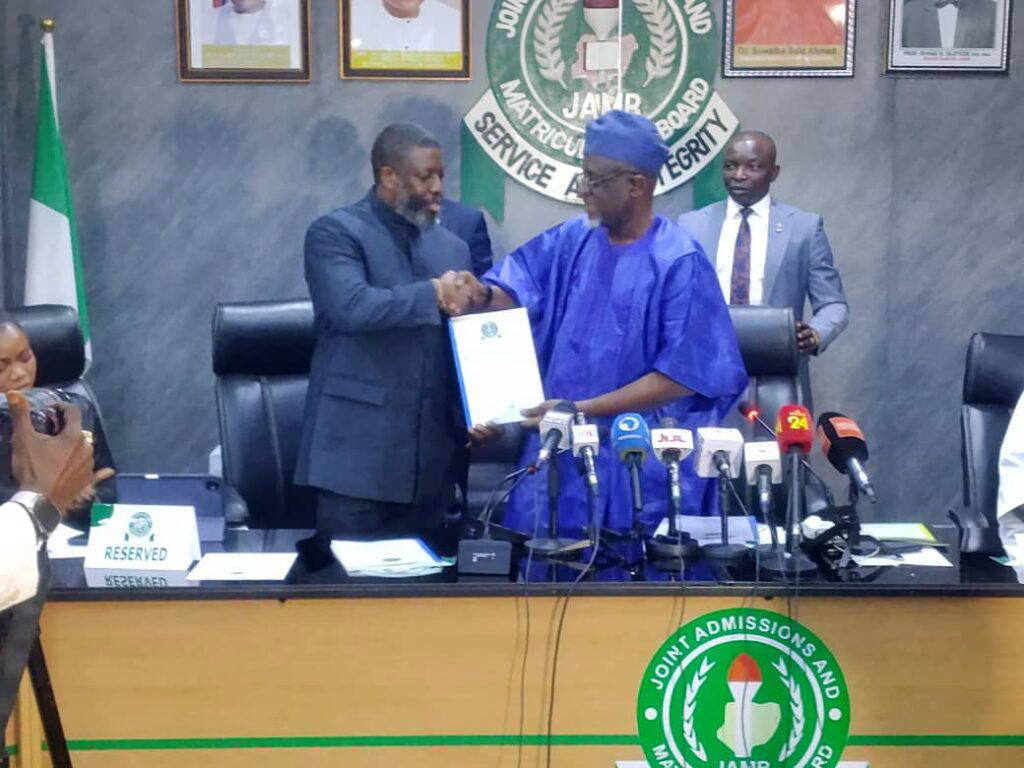
To his credit, Tegbe appears to understand the enormity of the task before him. Shortly after his swearing‑in, he struck a cautious note.
“I am not promising a magic wand. I am not promising twenty‑four‑hour, seven‑days‑a‑week power. We will get there ultimately.”
It was perhaps an honest statement. Yet honesty alone will not satisfy a nation exhausted by decades of electricity shortages.
Nigerians have listened to similar explanations from successive administrations. They have heard about gas constraints, liquidity crises, vandalised pipelines, weak transmission infrastructure, inadequate tariffs, poor metering, ageing equipment, and market inefficiencies. Most of these explanations are valid. The problem is that citizens no longer want explanations. They want electricity. The statistics tell a troubling story.
Despite having installed generation capacity exceeding 13,000 megawatts, Nigeria struggles to consistently deliver less than 5,000 megawatts to over 200 million people. The country’s peak generation record remains only about 5,801 megawatts. By comparison, South Africa, with a far smaller population, has historically generated several times that amount. The consequences are visible everywhere.
Small businesses spend a large share of their earnings on diesel and petrol for generators. Manufacturers battle rising production costs. Hospitals operate under constant uncertainty. Students struggle to study. Digital businesses lose productivity. Rural communities remain isolated from economic opportunities.
The situation has become even more painful following recent increases in fuel prices, which have made alternative power sources increasingly unaffordable for households and businesses alike.
Indeed, one of the greatest tragedies of Nigeria’s electricity crisis is its contribution to rural‑urban migration.
If reliable electricity were available in rural communities, countless young Nigerians would not feel compelled to abandon their villages and small towns for already overcrowded cities. Small‑scale industries would emerge closer to farms. Agro‑processing businesses would thrive. Employment opportunities would be more evenly distributed.
Electricity has the power to transform rural Nigeria more effectively than many intervention programmes. Yet vast communities remain outside the power equation.
Those fortunate enough to be connected to the grid often face another frustration: estimated billing.
For many consumers, the monthly electricity bill arrives with remarkable consistency even when electricity does not. The result is widespread anger and distrust.
Industry data indicate that the metering gap remains around 44 per cent, meaning millions of customers are still subjected to estimated billing. For many Nigerians, ending this injustice would be one of the most tangible demonstrations that reform is genuinely underway. This is where Tegbe’s reputation as a reform strategist will be tested.
His credentials are impressive. A first‑class Civil Engineering graduate of the then University of Ife, Fellow of the Institute of Chartered Accountants of Nigeria, former senior partner at KPMG, and a professional with more than three decades of experience in institutional reform, Tegbe certainly possesses the intellectual pedigree required for the job.
But Nigerians are not suffering from a shortage of qualifications among public officials. What they have suffered from is a shortage of execution.
The new minister must therefore resist the temptation that has trapped many public office holders before him: the temptation to govern through explanations.
Power sector watchers said Nigerians do not want another minister who spends more time appearing on television than fixing transformers.
They do not want another minister who attributes every setback to decisions made by predecessors.
They do not want another minister who celebrates marginal improvements while citizens continue to endure darkness. They want measurable outcomes.
The good news is that the agenda before him is already clear. First, he must address grid stability. Repeated system disturbances and collapses have undermined confidence in the sector for years.
Second, he must accelerate metering nationwide and drastically reduce estimated billing.
Third, he must tackle gas supply constraints that continue to limit generation output.
Fourth, he must improve market liquidity to encourage investment across the value chain.
Fifth, he must deepen rural electrification and expand off‑grid solutions to underserved communities.
Sixth, he must ensure that electricity reforms translate into better service delivery rather than simply higher tariffs.
These are not easy tasks. Yet they are not impossible either. There are already encouraging signs.
The revival of the 450‑megawatt Alaoji Power Plant after years of inactivity, improvements in transmission infrastructure at Katampe, Ayede, and Abeokuta, and increased engagement with sector stakeholders suggest that movement is occurring. However, Nigerians have seen isolated successes before. What they need now is consistency.
The new minister should recognise that public patience is rapidly diminishing. Across social media, marketplaces and business circles, the dominant sentiment is no longer optimism but fatigue. Citizens have grown weary of timelines that keep shifting into the future.
This is why Tegbe’s greatest asset may not be his technical competence or his extensive professional experience.
It may be his willingness to let performance speak louder than promises. The Ministry of Power does not need another public relations campaign.
It needs transformers that work. It needs meters in homes. It needs stable grids. It needs reliable power for industries. It needs electricity that reaches forgotten communities.
Ultimately, history will not judge Joseph Tegbe by the number of meetings he holds, the conferences he attends, or the speeches he delivers. History will judge him by a simpler standard. Did Nigerians receive more electricity under his watch? If the answer is yes, he will earn public respect regardless of the obstacles he encounters. If the answer is no, no volume of explanations will rescue his legacy.
For a country desperate to industrialise, reduce poverty and compete in a modern global economy, electricity is no longer a luxury. It is a necessity.
The new minister has been handed one of the most difficult portfolios in government. But he has also been handed a rare opportunity to make a transformative difference. Nigerians are tired of excuses. They are tired of promises. They are tired of hearing why things cannot be done.
What they want now is power, regular, affordable, and reliable power.
And if that cannot be delivered, many would argue that those unable to do the job should make way for those who can. The time for explanations is over. The time for performance has arrived.




 English (US) ·