
.png) 2 months ago
36
2 months ago
36
ARTICLE AD BOX
…139 suspected deaths were recorded as infections spread across DRC, Uganda
By Chioma Obinna
The World Health Organization (WHO) on Wednesday raised fresh fears over a rapidly spreading Ebola outbreak in the Democratic Republic of Congo (DRC) and Uganda, warning that the deadly virus strain behind the epidemic currently has no approved vaccine or treatment.
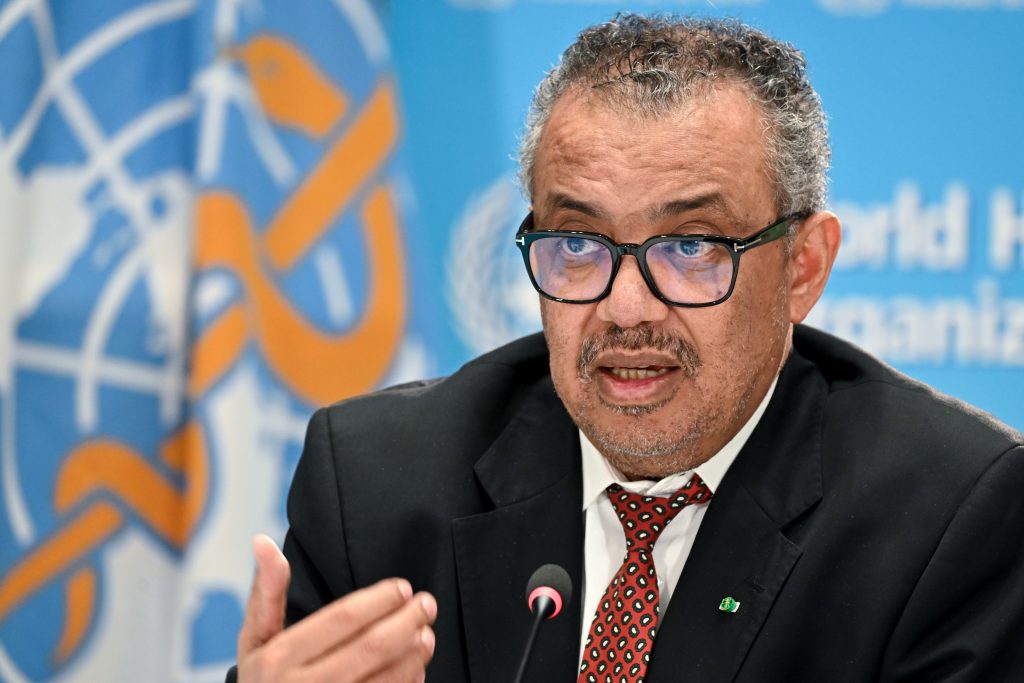
Speaking during an ongoing emergency press conference, WHO Director-General Tedros Adhanom Ghebreyesus said the outbreak had become a major regional threat, forcing the organisation to declare a Public Health Emergency of International Concern, or PHEIC.
According to him, the outbreak is caused by the Bundibugyo strain of the Ebola virus, for which no licensed vaccines or therapeutics currently exist.
“And fifth, this epidemic is caused by the Bundibugyo virus, a species of Ebola virus for which there are no approved vaccines or therapeutics,” Tedros warned.
He said the absence of vaccines and treatment options has heightened concerns about the ability of health authorities to quickly contain the outbreak, especially as infections continue to spread across urban centres and among frontline health workers.
“In light of all these risks, I decided it was urgent to act immediately to prevent more deaths and mobilise an effective international response,” he stated.
WHO said 51 confirmed Ebola cases have so far been recorded in the DRC’s Ituri and North Kivu provinces, including in the cities of Bunia and Goma.
Uganda has also confirmed two infections in Kampala, including one death linked to travellers from the DRC.
He said an American national who worked in the DRC also tested positive and has since been transferred to Germany for treatment.
However, health authorities warned that the actual scale of the outbreak may be far worse than confirmed figures indicate.
“Beyond the confirmed cases, there are almost 600 suspected cases and 139 suspected deaths,” Tedros disclosed.
“We expect those numbers to keep increasing, given the amount of time the virus was circulating before the outbreak was detected.”
The WHO chief identified several factors driving fears of wider transmission, including rising urban spread, infections among health workers, mass displacement and insecurity in eastern DRC.
“Deaths have been reported among health workers, indicating healthcare-associated transmission,” he said.
Tedros noted that conflict in Ituri province has intensified sharply since late 2025, with more than 100,000 people displaced over the past two months alone.
“The area is also a mining zone, with high levels of population movement that increase the risk of further spread,” he added.
WHO currently assesses the risk of the outbreak as high at both national and regional levels, although the global risk remains low for now.
Tedros said the WHO took the unusual step of declaring the emergency before formally convening its Emergency Committee because of the urgent need for rapid international action.
“This is the first time a director-general has declared a PHEIC before convening an emergency committee,” he explained.
“I took this step in accordance with Article 12 of the International Health Regulations after consulting the ministers of health of the DRC and Uganda.”
The WHO boss commended Uganda for postponing its annual Martyrs’ Day celebrations, an event that usually attracts millions of pilgrims, to reduce the risk of mass transmission.
“I also thank the Government of Uganda for postponing the annual Martyrs’ Day celebrations, which can attract up to two million people, because of the risk posed by the epidemic,” he said.
WHO disclosed that emergency response teams, supplies, equipment and funding have already been deployed to affected areas.
“To support our response, I have approved an additional US$3.4 million from the Contingency Fund for Emergencies, bringing the total to US$3.9 million,” Tedros said.
The chair of the WHO emergency committee, Lucille Blumberg, said the committee agreed that the outbreak now constitutes a global public health emergency because of the growing risk of regional spread and the worsening humanitarian situation in affected areas.
The post New Ebola outbreak has no approved vaccine, WHO warns appeared first on Vanguard News.







![Keyamo clashes with Seun Akinbaloye during live TV over airport drama involving Peter Obi [VIDEO]](https://dailypost.ng/wp-content/uploads/2025/08/Festus-Keyamo.jpg)





 English (US) ·