
.png) 5 hours ago
2
5 hours ago
2
ARTICLE AD BOX

Microsoft has called on Nigeria to shift its focus from developing Artificial Intelligence (AI) policies to actively implementing the technology in ways that produce measurable benefits for the government, industry, and society.
Mrs Nonye Ujam, Director of Government Affairs for West Africa at Microsoft, made the statement on Tuesday during the AI Summit Nigeria, which took place in Abuja.
The summit, themed “From Policy to Progress: Accelerating Responsible AI Adoption for Nigeria’s Digital Decade,” was organized by Microsoft in partnership with the National Information Technology Development Agency (NITDA) and MTN.
Stakeholders from both the public and private sectors gathered to discuss strategies for scaling responsible AI adoption across the country.
Ujam highlighted Nigeria’s leadership in accelerating AI adoption through initiatives such as the National AI Strategy, data governance frameworks, and regulatory reforms. She said the country is positioning itself not only to participate in the global AI economy but also to help shape it.
“As the focus shifts from strategy to implementation, the priority is to translate ambition into impact by operationalising AI in ways that deliver real and measurable outcomes,” Ujam said. “This requires the right systems, governance frameworks, infrastructure, and institutional capacity to enable AI adoption at scale.”
She emphasized that AI innovations must be grounded in fairness, reliability, safety, privacy, security, inclusiveness, transparency, and accountability to build public trust.
According to Ujam, AI offers an opportunity to strengthen national capabilities while enhancing Nigeria’s long‑term competitiveness in the global digital economy. She added that AI could drive inclusive growth by improving public service delivery, expanding access to knowledge, increasing productivity, and unlocking opportunities at scale.
“Trusted AI must be built collaboratively, grounded in local realities, aligned with national priorities, and guided by public interest,” she said.
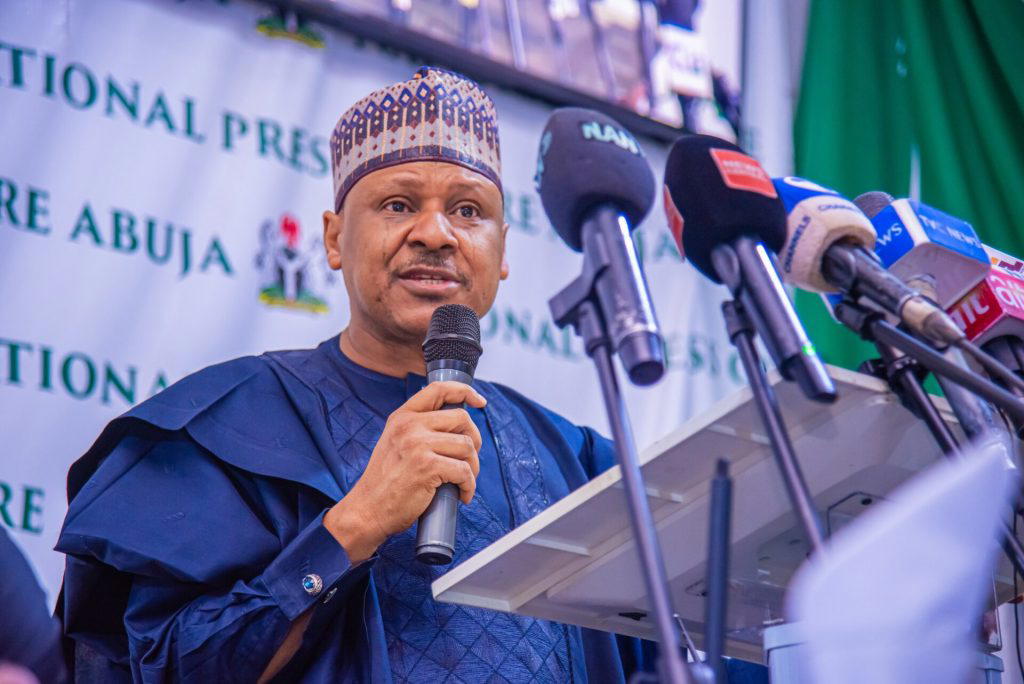
Malcolm Kashifu Inuwa, Director‑General of NITDA, also spoke at the event. He described AI as a general‑purpose technology that is transforming all sectors and noted that Nigeria has the talent and capacity to lead Africa’s AI economy.
Represented by Mr Emmanuel Edet, Acting Director of Regulation and Compliance, Inuwa said trust remains the foundation for sustainable AI adoption. “Without public trust, AI adoption will be stalled. Without accountability, innovation will not scale sustainably, and without transparency, citizens will lose confidence in the systems designed to serve them,” he said. “This is why Nigeria’s approach is centred on responsible AI.”
Inuwa also stressed the importance of digital sovereignty, arguing that Nigeria should not remain merely a consumer of intelligence developed elsewhere. “We must become creators of intelligence rooted in our realities and responsive to our aspirations. We must build local talent, strengthen research ecosystems, and create an enabling environment where Nigerian and African solutions can thrive,” he said. “The future of AI should not simply happen in Africa; Africa must shape it.”
The summit featured discussions on regulatory clarity for government AI, digital sovereignty, and balancing control, collaboration, and innovation in Nigeria and West Africa. Participants included representatives from the Nigeria Customs Service, National Identity Management Commission, Galaxy Backbone, and other public and private sector organisations.
The post Microsoft tasks Nigeria on operationalising AI for tangible impact appeared first on Vanguard News.










/https%3A%2F%2Fmedia.afrik-foot.com%2Fen-ng%2F2024%2F12%2Fimago1010661315h.jpg)



 English (US) ·