
.png) 3 months ago
61
3 months ago
61
ARTICLE AD BOX
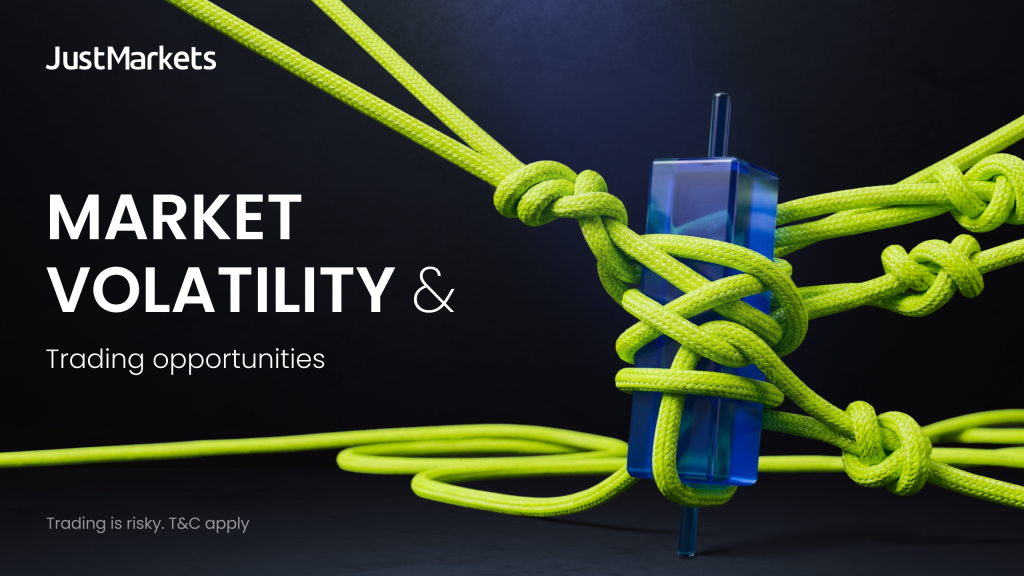
The global financial markets in 2026 are experiencing a more dynamic phase, with heightened volatility across all asset classes—including foreign exchange, commodities, indices, and digital assets. Unlike calmer markets that move within narrow ranges, traders now see rapid reactions to economic data, monetary policy statements, political events, and shifts in sentiment.
Volatility is often viewed as a risk indicator, but it simply reflects market movement. Without movement, trading opportunities vanish; with movement, prices accelerate, trends form faster, and technical signals become more relevant.
Modern traders face the challenge of not avoiding volatility entirely but of understanding how it operates within a system designed to handle such fluctuations.
Why Volatility Has Returned in 2026
Several macro and structural trends are driving volatility today.
- First, market prices no longer follow a single clear narrative. Investors must continually adjust expectations as new information arrives.
- Second, inflation remains a key variable in many economies. Even if headline inflation has eased in some regions, persistent services inflation, wage pressures, and energy costs create uncertainty about future monetary policy.
- Third, growth prospects are uneven. Some economies are slowing while others continue to grow, leading to differences in interest rates, capital flows, and currency strength.
- Fourth, geopolitical events retain high relevance for financial markets. Trade disputes, regional conflicts, sanctions, and logistical challenges can quickly influence commodity prices, safe‑haven assets, and overall market sentiment.
Liquidity dynamics play a crucial role. When market liquidity is low, even modest order flows can trigger large price swings. Thus, volatility depends not only on headline news but also on the liquidity conditions present when that news is released.
How Volatility Creates Trading Opportunities
Uncertainty fuels volatility, and volatility, in turn, creates opportunities. Markets need volatility to develop patterns, trends, reversals, and intraday ranges.
With higher volatility, traders can expect:
- Wider daily price ranges
- Stronger momentum after significant breakouts
- More pronounced reactions at resistance and support levels
- Increased frequency of trend continuation or reversal patterns
- Greater participation across different asset types
In foreign exchange, shifting interest‑rate forecasts can drive substantial moves in pairs such as EUR/USD and USD/JPY. Gold may react to falling real rates and geopolitical tensions, while oil can be affected by changes in supply and demand expectations. US100 and US500 index prices may experience volatility around earnings releases, inflation data, and central‑bank meetings.
Why Execution Quality Matters More During Volatile Markets
Under normal conditions, execution discrepancies may be negligible. In volatile markets, they become critical. A slight delay, widened spread, or unstable software can alter entry points, stop‑loss placement, and overall trade efficiency.
Consequently, many traders now focus not only on strategy but also on infrastructure. During high volatility, a trader needs:
- Fast and reliable order execution
- Stable price feeds
- Effective stop‑loss and take‑profit tools
- Low latency for chart and order access
- Platform stability during peak load times
When markets move rapidly, speed becomes secondary to stability and consistency.
Built for Volatility: The JustMarkets Trading Environment
A modern trader requires an ecosystem that can handle volatile dynamics. The JustMarkets platform is built with this purpose.
- Fast execution enables traders to act when prices shift quickly after economic releases or breakout points.
- Risk‑management tools—stop loss, take profit, and position management—allow traders to set exposure limits before volatility escalates.
- Advanced analytics, including live charting, multiple timeframes, drawing tools, and over 100 technical indicators, help traders assess momentum, structure, and reaction points.
- Multi‑asset capabilities let traders pivot between asset classes based on where volatility is highest.
Many traders find this flexibility valuable when shifting focus between industries or asset classes.
Risk Management in a High‑Volatility Environment
Volatility rewards preparedness but punishes emotional reactions. In a volatile environment, traders may feel tempted to chase trades, over‑leverage, or act without proper planning.
Effective risk‑management practices include:
- Reducing position sizes when ranges widen
- Avoiding overexposure through correlated assets
- Confirming trades before acting
- Setting stop‑loss levels in advance
- Preserving capital before taking risks
Consistency over time cannot be achieved by a single large move.
Conclusion
The return of volatility in 2026 stems from shifts in monetary policy, geopolitical tension, uneven growth trends, and fluctuating liquidity. Volatility presents both risks and opportunities. Success now hinges on knowledge, execution capability, real‑time analysis, and disciplined risk management.
With global markets still active, a platform like JustMarkets helps traders operate effectively through fast execution, advanced tools, and access to multiple markets.
Risk Warning: Trading financial instruments involves significant risk and may not be suitable for all investors. Market conditions can change rapidly, and losses may exceed deposits. This article is for informational purposes only and does not constitute investment advice.
The post Market Volatility and Trading Opportunities appeared first on Vanguard News.





 English (US) ·