
.png) 4 months ago
51
4 months ago
51
ARTICLE AD BOX
By Prince Osuagwu
Nigeria’s data‑centre market is already valued at nearly $300 million, and analysts predict rapid growth over the next five years. Yet much of the country’s digital infrastructure remains located thousands of kilometres away, forcing Nigeria to pay an invisible cost in latency, lost revenue, data sovereignty and strategic dependence when AI requests are processed abroad.
Existing facilities were largely built for an earlier era of the internet and later adapted for cloud services, rather than being designed from the ground up to meet the intense demands of artificial intelligence. That context has made the emergence of Kasi Cloud a notable event in Nigeria’s technology scene.
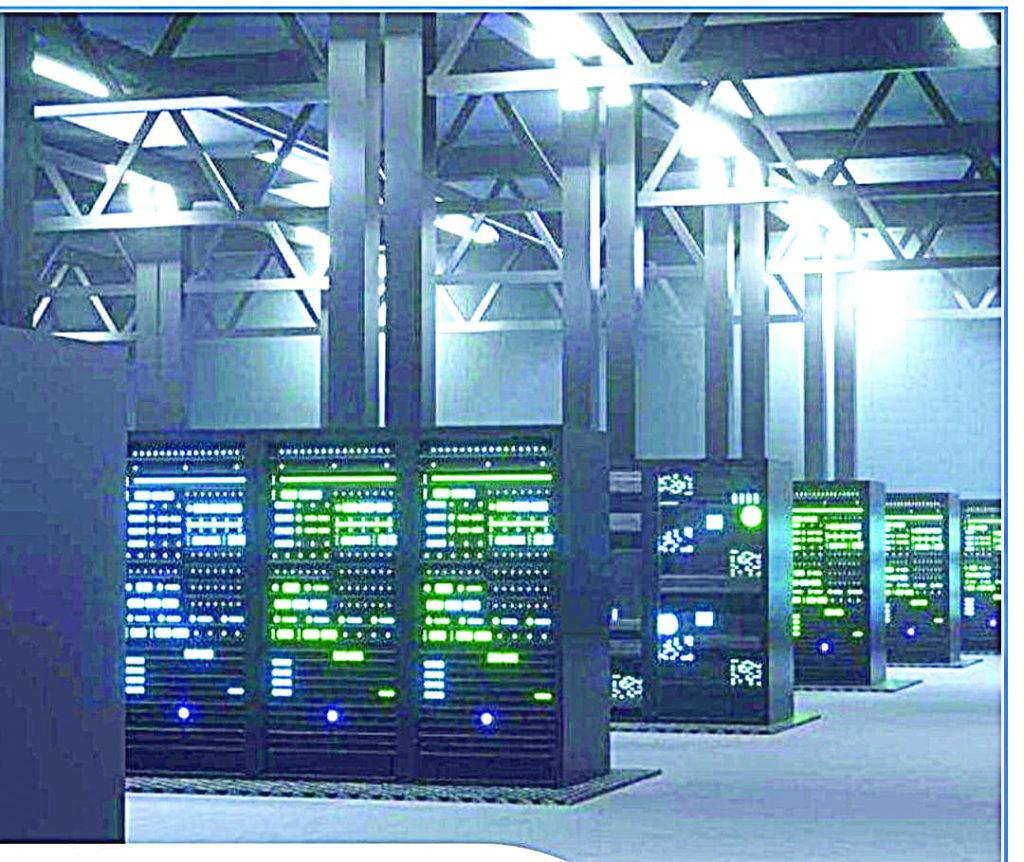
The company is constructing what could become West Africa’s first truly AI‑ready hyperscale data campus, situated on a 100‑megawatt site in Lekki, Lagos. Unlike conventional data centres that focus mainly on storage and enterprise hosting, Kasi Cloud claims its infrastructure is purpose‑built for high‑density AI computing, machine learning workloads and hyperscale cloud operations.
The facility was officially commissioned on 19 May with the support of the Lagos State Government, raising a provocative question across Africa’s tech industry: can the continent genuinely compete in the global AI economy without owning the infrastructure that powers it?
For many observers, Kasi Cloud may represent the first serious attempt to answer that question. Lagos State Governor Babajide Sanwo‑Olu said, “For too long, African innovation has depended on infrastructure built elsewhere. Our startups were built here, but they were hosted abroad. Our businesses generate data here, but they process it elsewhere.”
The timing of the project is significant. Around the world, governments and businesses are racing to secure local AI computing capacity as artificial intelligence reshapes finance, healthcare, media, telecommunications, security and manufacturing. At the same time, stricter data‑sovereignty regulations are forcing countries to reconsider where their citizens’ data lives and who controls it.
Against that backdrop, Kasi Cloud positions itself not merely as another data‑centre operator but as a digital‑infrastructure platform designed for Africa’s AI future. The company’s Chief Executive Officer, Johnson Agogbua, has become a vocal advocate for Africa owning a stronger position within the global AI value chain.
A hyperscale ambition
Kasi Cloud’s flagship facility, LOS1, sits along the Lagos‑Calabar Coastal Road corridor in Lekki and covers roughly 42 hectares. The company also plans a second campus in Eket, Akwa Ibom State, signalling ambitions beyond Lagos.
The project is estimated at about $250 million and is being rolled out in phases. According to Agogbua, the campus will deliver 100 MW of total capacity—a scale rarely seen in Nigeria’s data‑centre market, where many existing facilities reportedly operate below 20 MW.
The initial operational phase is expected to provide 5.5 MW, while the first building alone is projected to support roughly 32 MW. Beyond sheer size, the engineering architecture attracts serious attention. Kasi Cloud says the facility is designed to support GPU‑intensive AI computing with rack densities ranging from 10 kW to 100 kW, liquid cooling capability for advanced AI chips, multiple high‑voltage power feeds, carrier‑neutral connectivity and sustainability‑focused infrastructure.
These specifications are more commonly associated with the new generation of AI campuses emerging in the United States, Europe and parts of Asia than with traditional African data facilities.
Why the industry is watching closely
Industry stakeholders believe the implications could extend far beyond technology circles. If successful, the project could help Nigeria reduce dependence on overseas cloud infrastructure, improve local internet speeds and latency, strengthen support for fintechs, telecom operators, streaming platforms and AI startups, and help the country retain more digital revenue within Africa instead of exporting it abroad.
The development also places Kasi Cloud in direct competition with some of Nigeria’s biggest data‑infrastructure players, including MainOne, Rack Centre, MDXi and Equinix. Yet analysts say its biggest differentiator may be philosophical as much as technical: while many African facilities evolved from legacy enterprise hosting environments, Kasi Cloud is attempting to build specifically for the AI age from inception.
The distinction matters. Artificial intelligence infrastructure is no longer simply about storing information; it is about compute power, vast processing capability delivered with speed, energy efficiency and reliability. Countries that fail to build that capacity risk becoming consumers in the AI economy rather than creators.
For Nigeria, the launch of Kasi Cloud may ultimately represent more than the addition of another data centre. It could become the beginning of a larger battle over where Africa’s digital future will rest.
The post Kasi Cloud: Has Nigeria’s first AI Data Centre landed? appeared first on Vanguard News.





 English (US) ·