
.png) 2 hours ago
2
2 hours ago
2
ARTICLE AD BOX
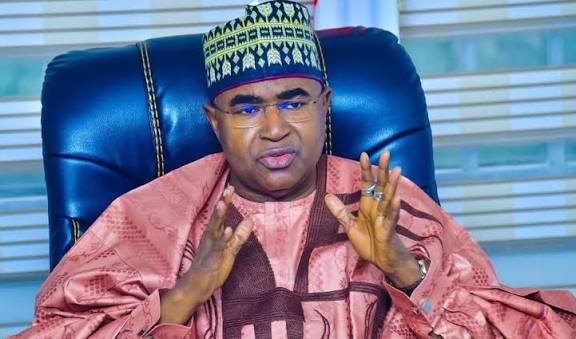
The Emir of Kano, Muhammadu Sanusi II, has disputed remarks made by Vice President Kashim Shettima, arguing that Kano—not Lagos—provided the foundational environment for Africa’s richest man, Aliko Dangote, and billionaire industrialist Abdul Samad Rabiu.
Sanusi made the statement while speaking to members of the Institute of Chartered Secretaries and Administrators of Nigeria (ICSAN). He highlighted Kano’s long‑standing reputation as a commercial center and a breeding ground for entrepreneurial talent.
According to the Emir, both Dangote and Rabiu grew up within Kano’s deep‑rooted trading culture before expanding their businesses across Nigeria and beyond.
“These businessmen went to Lagos to expand their businesses and learn from the commercial environment there, not to learn how to do business from the beginning,” Sanusi said.
He added that Kano has historically produced generations of successful merchants and entrepreneurs, and that the state’s commercial heritage has played a significant role in shaping some of Africa’s most prominent business figures.
The Emir’s comments appear to be a response to remarks made by Shettima during the Invest Lagos Summit 3.0 on Monday.
At the summit, the Vice President praised Lagos State’s economic environment and leadership, stating that Lagos was responsible for producing Africa’s richest individual.
“Lagos produced Africa’s richest man, not Kano. Aliko Dangote is a Lagos boy. Likewise, it was not Kano that produced Africa’s second‑richest man, Abdul Samad Rabiu,” Shettima said.
The Vice President made the statement while emphasizing Lagos State’s contribution to Nigeria’s economy and its role in fostering private‑sector growth and wealth creation.
Sanusi’s response has since sparked renewed debate over the respective contributions of Kano and Lagos to the development of some of Nigeria’s most influential business leaders, reflecting a broader discussion about the country’s commercial history and economic identity.







/https%3A%2F%2Fmedia.afrik-foot.com%2Fen-ng%2F2026%2F06%2F1780746625640.png)
![Peller engaged Jarvis, hints at wedding amid pregnancy rumours [VIDEO]](https://dailypost.ng/wp-content/uploads/2026/06/447497.jpg)


 English (US) ·