
.png) 4 months ago
59
4 months ago
59
ARTICLE AD BOX
By Omeiza Ajayi
The playground of SMUTUNS in Warri, Delta State, was alive with the colours, rhythms and raw political energy of a proud nation-within-a-nation on Thursday, May 14, 2026. Thousands of Ijaw sons and daughters — traditional rulers, politicians, elders, youth leaders, women and diaspora representatives — converged on the sprawling venue to witness the inauguration of the 9th National Executive Council NEC of the Ijaw National Congress INC, the apex sociocultural and political body of the Ijaw people.
It was a gathering that announced itself. High Chief Government Tompolo Ekpemukpolo, revered across the Niger Delta as the “eye of the Ijaw nation,” was present. So was Dumo Lulu-Briggs, top officials of the Delta State government, the Speaker of the Delta State House of Assembly, traditional rulers’ councils from Delta, Bayelsa, Edo, Ondo and Rivers states, and a retired justice of the Supreme Court, His Royal Majesty Justice F.F. Tabai. Lawmakers from the Niger Delta states dotted the high table. The occasion had the weight of a constitutional moment.
And in many ways, it was one
By the time the ceremonies concluded — with outgoing president Prof. Benjamin Ogele Okaba handing over the symbolic gavel to incoming president High Chief Macdonald Igbadiwei — the Ijaw nation had served notice that it was done waiting.
The agenda the new leadership has been handed is nothing short of revolutionary: the creation of two new states, a quadrupling of local government areas in Bayelsa State, enforcement of a Supreme Court judgment, and the pursuit of an Ijaw republic. The message from Warri was unmistakable — the Ijaw people are no longer content to petition; they intend to deliver.
Five years, a transformation
Prof. Okaba, who led the INC for five years alongside 13 other NEC members, used his valedictory address to paint a picture of institutional rescue. “We met INC in comatose seven years before we came on board and we made remarkable progress,” he told the gathering.
Through what he described as a deliberate “paradigm shift from lamentation to constructive engagement,” his administration repositioned the INC as an internationally recognized body — securing membership of the United Nations Unrepresented Peoples’ Council and conducting diplomatic engagements with the European Union and partner organizations in France and Britain.
But it was his political candour that drew the sharpest attention. Warning unnamed individuals against what he called attempts to “plan a coup” to seize control of the organization, Okaba was blunt: “The process is simple — go and buy the form and go and contest election. Passing through the back door is not permitted.”
He reminded his audience that the April 13 election that produced the new NEC was sanctioned by over 600 delegates drawn from across the Ijaw nation, lending it a democratic legitimacy he said could not be wished away.
He left his successor with clear marching orders. “I want to charge you to consider the Ijaw quest for additional states and more local government areas in Bayelsa State as a major concern — it is a battle you must continue,” Okaba said. Then, with a gravity that drew audible murmurs from the crowd, he declared: “The Ijaw Republic has gone beyond the level of being a dream. It is now a destination.”
New president, loaded inheritance
High Chief Macdonald Igbadiwei, who takes the helm as the 9th INC president, struck a tone that blended historical consciousness with urgent purpose.
He noted with evident pride that the first INC congress — where pioneer president Joshua B. Fumudoh was elected in November 1991 — also took place in the Western Zone, making Thursday’s event a full-circle moment for that geopolitical bloc within the Ijaw nation.
“Leadership is not about power, but about service. Not about personal ambition, but about sacrifice for the collective destiny of our people”, Igbadiwei told the crowd
But the new president quickly made clear that sacrifice, in his administration’s vocabulary, would be married to aggression — strategic, lawful and unyielding — on the political and resource fronts.
Acknowledging that the Ijaw homeland contributes over 80 per cent of Nigeria’s foreign exchange earnings, he catalogued a litany of contradictions: environmental degradation, political exclusion, youth unemployment despite education, the gradual erosion of the Ijaw language, and the persistent marginalisation of Ijaw communities within states where they are minorities.
“These are not mere accusations. They are a call to action”, he said.
Two states, 24 LGAs and a S’Court battle
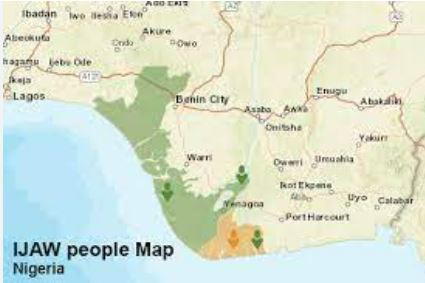
At the core of the new INC agenda are demands that cut to the core of Nigeria’s federal structure. Igbadiwei’s administration has committed to pursuing the creation of two new states — Toru-Ebe State and Oil Rivers State — to “create more political space and address the marginalization of Ijaw people, especially in Edo and Ondo states.” The creation of these states would bring the number of Ijaw-majority states to three, alongside existing Bayelsa State.
On Bayelsa, the INC’s position is equally uncompromising. The state currently has just eight local government areas — a figure the congress has long regarded as a gross injustice given the size and population of the Ijaw nation.
Consequently, the 9th NEC is demanding that number be expanded to not fewer than 24. Igbadiwei said; “Kano State has 44 local governments. The local governments we are demanding to be approved should be up to, and not less than, 24 local governments in Bayelsa State.”
Cries from the margins
Beyond the structural demands, Igbadiwei turned his gaze to Ijaw communities experiencing what the congress regards as active suppression within their home states. He singled out Ibeno in Akwa Ibom State — host community to Mobil Producing Nigeria Unlimited, Conoil Producing Limited (now Seplat Energy Plc) — as a community in quiet agony.
“We hear your cries, we hear your worries, we know that you are passing sleepless nights at Ibeno,” he said.
Speaking further, he said; “We are aware of the challenges you face, particularly the use of government institutions to subjugate your people by refusing to recognize your status as host communities.”
He pledged to “explore all lawful means to seek redress and ensure that justice, fairness and your rightful recognition are achieved.”
Similar concerns were raised about the treatment of Ijaw communities in Edo and Ondo states, underscoring the congress’s view that the struggle for Ijaw rights is not confined to Delta, Rivers and Akwa Ibom, but extends across the coastline of southern Nigeria.
Buses, ballots and a bigger dream
In a moment that crystallised both the symbolic and practical dimensions of his presidency, Igbadiwei fulfilled a campaign pledge on the spot. He donated three 30-seater coaster buses — one each to the Western, Central and Eastern zones of the INC — as well as four 18-seater buses to the Lagos, Abuja, Akure and Benin chapters of the congress. “Not that they are coming tomorrow,” he told the crowd with a grin. “They are here now.”
The electoral committee that oversaw the transition, chaired by retired Supreme Court Justice F.F. Tabai and represented at the event, described the April 13 election as a “peaceful and successful” exercise in Ijaw democracy.
The committee acknowledged the support of former President Goodluck Ebele Jonathan, Bayelsa State Governor Senator Douye Diri and Rivers State Governor Sir Siminalayi Fubara, among other stakeholders.
As the celebrations wound down with slight showers under the Warri sky, the symbolism of the occasion lingered. A congress born in 1991 to give voice to a people long overlooked by Nigeria’s federal architecture was, 35 years on, demanding not just a seat at the table — but a republic of its own.
Whether Nigeria’s political establishment is listening may well define the next chapter of the Ijaw story.
The post Ijaw republic, two states, 24 LGs: INC sets fierce agenda for next 5 years appeared first on Vanguard News.




 English (US) ·