
.png) 2 months ago
40
2 months ago
40
ARTICLE AD BOX
There was a story about a political activist who was deemed an enemy of the state and sentenced to death. When given a final chance, his last act was to hug his mother. The question that follows is why he did not hug his wife, a child, or his comrades instead. The point is not the choice of his mother but that no one can truly know our last wish until we act on it.
We cannot accurately predict our final testament unless we speak it aloud or write it down. Many of us understand the need to settle our earthly affairs, yet few take decisive action. Some view it as morbid, others believe there is still time, or both. Only a few—whether lucky or unlucky—receive a premonition of imminent death. The rest of us are caught off‑guard.
One moment we are making long‑term plans, the next we are gone—like the rich man in the Bible who was preparing larger barns for a forthcoming harvest only to have his soul taken that very night. A few days before I began writing this column, our cleaning lady arrived at the house, tearful. Her cousin, with whom she was very close, had died the night before. They had spoken in the morning and had promised to stay in touch after work.
By the afternoon, her calls to her cousin went unanswered. She was later informed that her cousin had collapsed in her shop and was pronounced ‘dead on arrival’ at the hospital. She was 35, left two children behind, and was divorced. A couple of days earlier, an obituary had been announced in a church. The name did not mean much to me until her photograph appeared on the screen. That woman had sat beside me two Sundays earlier and had actively participated in all the Sunday worship rituals.
It was a wake‑up call for me, and for many of us. We procrastinate or vacillate, thinking there is always time. But no one knows when the last hug, the last phone call, or the last visit will come. We should start the projects we have been delaying—those reconciliatory calls we have been reluctant to make because of pride, the warm hug that would reassure our partners that we still love them, the trip we have been dreaming of but keep deferring until a ‘more convenient time.’ The greatest mistake we make is thinking we control time. We do not. Time does not serve our bidding; rather, our use of time gives us a measure of control. A day that has passed can never be replicated. Only the memories of our activities remain for us to replay. We do not even know how much of our time has been used up. One minute we are going about our chores; the next minute we are in the other world. C’est la vie, as the French would say.
A more poignant, more insistent wake‑up call occurred a couple of Sundays ago on the Third Mainland Bridge at about 7.30 PM. My mind was at ease as I headed home. I had missed the Finals of the Rome Masters and was thinking of catching the replay. Then I saw what looked like a foreign object on the road. I slowed down to discern it in the semi‑darkness. They were mattresses that had been either deliberately or inadvertently dropped on the road. Mattresses on the Third Mainland Bridge? I slowed further to see how I could navigate and make a safe detour.
But I did not consider those who had made the Third Mainland Bridge a race track. I heard the screeching of brakes followed by a loud bang. I had been hit badly from the rear. In that instant, I thought my time was up. Two thoughts came up as I fought for control—the fear of colliding with another speeding car or the car stuttering to a stop in the middle of the highway. Neither happened. I said a little prayer of thanks to God and gave a little thought of appreciation for the resilience of German cars.
Driving slowly home with a now malfunctioned seatbelt, an open boot blocking the rearview, and an automatically activated hazard sign, I could not help but think of what could have been had the accident been fatal. I thought morbidly about how long a definitive identification would take if the car had been crushed with me inside. In all probabilities, scavengers would have descended on whatever remained of the car in minutes to fight over valuables, including my phone, and in the process misplace other means of easy identification. I thought about how long it would take for me to be missed, knowing that I was ‘home alone’ and the driver was unlikely to disturb me in the morning, especially if I did not pick up calls.
As I travelled the usual route home—signposts I had always taken for granted now assumed an ominous importance—it is amazing how one looks at things differently after a near‑death experience. My thoughts turned to important things I needed to tidy up and had been postponing. I thought of the office I had used for years and the documents only I could reach easily. I even thought of my locker at the club and the ‘private’ things locked within. I realized gratefully that I have been given another chance. Here is hoping that those of us who have another chance at life use this new lease with the knowledge that life is a gift. While I do not think I can ever be like St. Paul and say at any time, that ‘I have fought a good fight. I have finished my race,’ I do hope that I can use whatever time remains to push myself to a level of accomplishment—spiritually and emotionally—that makes transiting to the next stage, or the next world, less daunting or even more accepting.
About thirty years ago, a much older friend—more like a mentor—said on his deathbed, ‘another stage starts with the Lord tomorrow.’ He was smiling. I found that quiet acceptance of the final moments very courageous for someone who had led an active and successful life. He was under 65. Lord, teach us to number our days so we can apply our hearts to wisdom (Psalm 90).
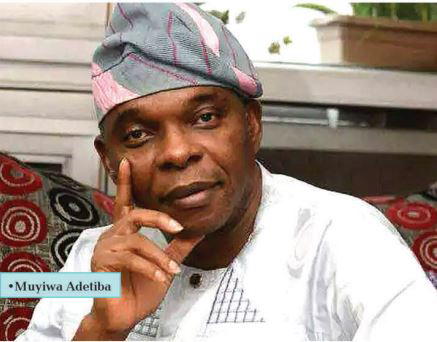
The post How much time do we really have left? It’s a question that hangs in the air, by Muyiwa Adetiba appeared first on Vanguard News.





 English (US) ·