
.png) 4 months ago
58
4 months ago
58
ARTICLE AD BOX
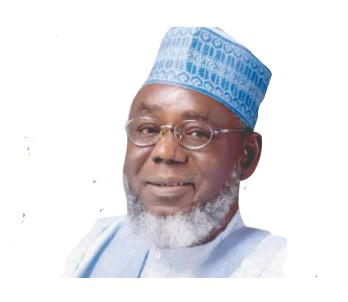
By Chioma Gabriel, Editor Special Features
After taking his seat in the Senate in June 1999, Saidu Mohammed Dansadau was appointed to committees on Public Accounts, Health, Labour, Commerce (chairman), National Planning, and Internal Affairs. For several years, he was secretary-general of the Northern Senators’ Forum. In March 2005, Dansadau was a strong opponent of then President Olusegun Obasanjo’s alleged third term ambition. As a member of the National Assembly Joint Constitution Review Committee, in February 2006, he said he would boycott a public hearing on the review of the 1999 Constitution, which would allow this change. As Chairman of the Publicity Committee of the 2007 Movement, he said that Nigeria would break up if the move to allow a third term succeeded.
Dansadau left the Senate in May 2007, and in October 2008 announced that he was resigning from the ANPP and from partisan politics in general. Dansadau, who had previously been a large-scale farmer, became the promoter of the Maslaha Seed Firm in Gusau, Zamfara State
In 2010, Dansadau was appointed Chairman of a 12-person Committee on Repositioning Land Administration in the Federal Capital Territory, FCT. The committee was set up to verify all land allocations from 2007 and all mass housing allocations from 2004. The goal was to find and prevent multiple allocations, forgery, and abuse of records at the Land Registry and the Abuja Geographic Information Systems. In this encounter, he talks about religious differences and how religion should not be used to destabilise Nigeria.
Religion has been a dividing factor in Nigeria; intra and inter-faith issues have caused divisions among us and between us. What is your take on this?
In both Islamic and Christian moral traditions, political power is never ethically neutral. Authority is understood as a trust entrusted to leaders for the advancement of justice, the protection of human dignity, and the restraint of oppression. When governance persistently departs from these purposes, scripture does not treat the outcome as a technical or managerial failure alone; it names it as a moral disorder with public and spiritual consequences.
Islam and Christianity converge on a crucial insight: injustice advances not only through abstract evil, but through human agency expressed in policies, institutions, and enduring patterns of rule. One of the clearest moral tests of leadership in both scriptures is economic justice.
Under the current administration, Nigerians have experienced severe cost-of-living pressures following abrupt policy shifts, alongside multiple and overlapping taxation regimes that disproportionately affect small and medium-scale enterprises. These outcomes have produced a governance posture widely perceived as fiscally extractive rather than socially protective.
In theological ethics, perceived injustice is not trivial; it fractures the social covenant and weakens legitimacy. Authority that repeatedly communicates imbalance through appointments risks becoming what scripture describes as a fitnah—a trial that destabilises communal peace.
Appointments are not merely administrative decisions; they are moral statements encoded in power. They tell citizens who belongs, who is trusted, and whose interests count. When such signals accumulate in one direction, they deepen division and invite suspicion, even in the absence of explicit sectarian rhetoric.
How would you assess the legislature?
Where the legislature appears subordinated to executive will, through pressure, inducement, or procedural dominance, democracy is hollowed out. This is not merely a constitutional concern; it is a theological violation of entrusted authority. Legislative independence exists precisely to restrain power and preserve truth through accountability.
When institutions lose their autonomy, truth itself becomes administratively managed. Debate is reduced to formality, dissent is reframed as disloyalty, and oversight becomes symbolic rather than substantive. .
Nigeria seems to be moving towards a one-party state and that is coming strong ahead of 2027 election
Political thought recognises pluralism as a safeguard against tyranny. The dispersion of power, the legitimacy of opposition, and the protection of dissent are not inconveniences to governance; they are moral restraints against abuse.
Attempts real or perceived to weaken opposition, co-opt dissent, or collapse political diversity into dominance raise serious ethical alarms. Monopoly of power is consistently associated with Pharaoh-like governance: control without accountability and order without justice.
As the Qur’an observes, “Pharaoh exalted himself in the land and divided its people into factions, oppressing one group among them” The danger is not merely authoritarianism, but moral inversion where stability is valued over justice and control over truth.
If governance persistently exploits rather than protects, concentrates power rather than restrains it, normalises hardship rather than alleviating it, and weakens institutions rather than strengthening them,this trajectory clearly serves moral disorder, regardless of intent.
Scripture insists that leadership is not validated by dominance, efficiency, or control, but by justice. Where justice is absent, power however sophisticated becomes an instrument of harm. Such harm is never morally neutral, and silence in the face of it is itself a failure of public responsibility.
In Nigeria, religion has been an instrument of division rather than cohesion. What is your take on that?
When sacred authority is corrupted, religion is emptied of its ethical core and transformed into ideology. Political ambition, ethnic rivalry, and personal grievance are recast as divine struggles, rendering injustice immune to moral scrutiny.
In Nigeria, the corruption of sacred authority is not an abstract theological problem; it is a lived national crisis. From the mobilisation of religious sentiment during elections to the moral silence of influential clerics in the face of violence and injustice, the consequences have been profound. Communities fracture, violence is sanctified, and accountability is displaced by religious rhetoric.
Nigeria does not lack religion; it suffers from a deficit of moral courage within religious leadership. Too often, injustice is tolerated when it benefits one’s group, violence is excused when it targets the “other,” and corruption is overlooked when perpetrators share religious or ethnic identity. This selective morality represents the very essence of corrupted sacred authority.
Both Islam and Christianity impose grave responsibility on those who speak in God’s name. The Qur’an condemns the exploitation of religion for worldly gain, while the Bible warns that judgment begins with those entrusted with teaching and leadership. These warnings are especially urgent in a country where sermons, fatwas, and prophetic declarations can mobilise millions.
Religious divides have created problems in the country which affects lives and citizens. What is the solution to this?
The solution is neither hostility to religion or competition between faiths. It lies in internal moral reform, a return to the prophetic tradition of speaking truth to power, defending the vulnerable, and resisting sectarian manipulation.
Authentic religious authority is measured not by proximity to political power or the intensity of rhetoric, but by fidelity to justice, compassion, and truth. Where religious leaders defend oppression, legitimise violence, or prioritise personal gain, sacred authority has been forfeited—regardless of how frequently God’s name is invoked.
For Nigeria, national renewal depends not only on political reform but on the moral reawakening of religious leadership. Until sacred authority is reclaimed as a trust rather than a weapon, the nation will continue to pay the price of religious hypocrisy disguised as piety. The critical question, therefore, is not whether Nigeria is religious enough, but whether its religious voices are courageous enough to confront evil, especially when it speaks in familiar accents and prays in familiar language.
The Sultan said recently that there is no plan to Islamise Nigeria or wipe out Christianity even when many people are claiming same
I will use prominent business and political leaders to answer that question. Aliko Dangote stands today as Africa’s most prominent industrialist. Yet his rise to continental and global business prominence was neither sudden nor accidental. It was shaped by a formative early life in Northern Nigeria, modest entrepreneurial beginnings in Kano, and a strategic migration to Lagos in search of a more enabling commercial environment. Beyond scale and capital, his career offers an important lesson for plural societies: that sustained business success in multi-religious contexts depends on disciplined neutrality, institutional meritocracy, and restraint in the use of power.
Three features of Dangote’s management approach are particularly significant for interfaith relations:
First, faith-neutral recruitment and promotion. Corporate disclosures consistently emphasise non-discrimination irrespective of religion, ethnicity, or nationality.
Second, a multinational and multi-religious workforce. Operating across diverse African regions requires a corporate culture that prioritises competence and discipline over identity.
Third, the separation of private piety from public obligation. Although Dangote is personally
known as a practicing Muslim, this faith identity has not translated into sectarian corporate behaviour. This distinction mirrors a shared ethical principle in both Islamic and Christian traditions: personal belief does not justify public exclusion.
In contrast to politicised and sectarian uses of religion in both state and market institutions, Aliko Dangote’s business legacy demonstrates how large-scale African enterprise can function as a site of practical interfaith coexistence. The evidence lies not in declarations or symbolism, but in structures workforce composition, governance norms, and the sustained absence of faith-based exclusion across multiple jurisdictions.
Similarly, General Danjuma is an embodiment of ordained interfaith relations
If there is any Northern Christian leader who has been and continues to be most harshly criticised as an enemy of Muslims and Islam by Northern Muslims, it is General Theophilus Yakubu Danjuma. Most of these criticisms are as parochial as they are sentimental. An objective assessment of the General, however, reveals quite the opposite.
It is an undisputed fact that the philanthropic activities of General Yakubu Danjuma in Northern Nigeria cut across religious and ethnic lines. The provision of potable drinking water to rural communities in the North through his Foundation has never been skewed in favour of Christians or Christian-dominated areas.
Perhaps the most remarkable demonstration of General Danjuma’s commitment to peace in Northern Nigeria was his benevolent gesture toward me on the eve of the 2019 Zamfara State governorship election, in which I was a candidate.
On the Tuesday preceding the election, Senator (Mrs.) Daisy Danjuma called me and asked where I was. I replied that I was in Zamfara, preparing for the election scheduled for Saturday. She explained that for seven years, whenever reports of killings in Zamfara appeared in national newspapers, she would lament and tell her husband how much she wished I would become governor, believing that my leadership would end the insecurity in the state.
She informed me that the General had asked about me the previous night and, upon learning that I was contesting, instructed her to request that I send one of my children for a token assistance. I complied the next day. By noon, my son Aliyu, whose mother is coincidentally from Taraba State called to inform me that Senator Daisy Danjuma had given him half a million US dollars ($500,000) to deliver to me. I was overwhelmed with emotion and momentarily lost consciousness from sheer astonishment and gratitude.
What are you saying in effect?
What I’m saying is that religious issues can be managed without using it against the polity. Dr. Olusegun Obasanjo occupied a distinctive position in Nigeria’s political history. He governed the country under two fundamentally different political systems, irst as a military Head of State (1976–1979) and later as a democratically elected President (1999–2007). Across both eras, however, a consistent pattern emerges in his exercise of authority: a disciplined ethic of interfaith restraint.
In a society where religious identity often precedes civic identity, and where political power is frequently interpreted through sectarian lenses, Obasanjo’s statecraft represents a counter-tradition. His approach acknowledged religious plurality without exploiting it, and managed difference through institutional balance rather than religious proclamation. Faith, in his governance, was present but not weaponised.
This analysis treats interfaith relations not as theology articulated from pulpits, but as authority expressed through institutions. Its central argument is that Obasanjo consciously employed political appointments as a language of interfaith coexistence. In the Nigerian context, power communicates meaning long before laws are debated or speeches delivered. Who is appointed, to which office, and alongside whom often conveys inclusion or exclusion more forcefully than rhetoric. Obasanjo understood this grammar of power and applied it with notable consistency.
From the tense aftermath of General Murtala Mohammed’s assassination in 1976 to the fragile democratic transition of 1999, Obasanjo governed at moments when sectarian imbalance could easily have hardened into national fracture. Rather than responding with religious symbolism or slogans of unity, he chose structural balance. His cabinets functioned as lived texts, demonstrating how authority could be shared across faiths without diluting competence or legitimacy.
In this sense, Obasanjo may be described as a model of ordained interfaith governance, not ordained in a clerical sense, but in the ethical understanding of power as trust and stewardship. His leadership reflected convergent moral insights found in both the Qur’an and the Bible: justice without partiality, authority without proselytism, and governance without sectarian speech.
Why then are we having religious issues in Nigeria?
In Nigeria, power speaks before it legislates. Appointments are never neutral; they are sentences written in authority, conveying trust or suspicion, dignity or marginalisation. Obasanjo’s record suggested that he treated appointments as a deliberate grammar of interfaith governance, translating religious pluralism into lived political reality.
When Obasanjo assumed office on 13 February 1976, the nation stood at a precarious intersection of grief, fear, and potential religious suspicion. His response was not rhetorical reassurance but institutional balance. Key appointments reflected a careful distribution of authority:
No single faith monopolised coercive power; no religious identity was marked as state-favoured. Titles replaced sermons, and structure replaced slogans.
When Obasanjo returned as a civilian president on 29 May 1999, the interfaith challenge intensified. Democracy amplifies symbolism: every appointment is publicly interpreted. His early civilian cabinet communicated a clear interfaith message through balance.
No single faith controlled security, law, the economy, or diplomacy. This was interfaith governance without religious vocabulary.
Obasanjo’s cabinets operated as an implicit rejection of such thinking. Christians were never framed as outsiders, Muslims were never coded as security risks, and public offices were not treated as religious territories. By refusing sectarian speech in action, Obasanjo weakened sectarian speech in language.
This ethic of interfaith restraint does not end with political authority. It reappears, in different institutional forms, in the military professionalism and post-service philanthropy of Theophilus Danjuma, and in the faith-neutral corporate governance of Aliko Dangote. Together, these cases suggest that Nigeria’s most durable interfaith models emerge not from theological convergence, but from disciplined restraint in the exercise of power.
The post How leaders can manage religious differences to stabilise Nigeria — Dansadau appeared first on Vanguard News.





 English (US) ·