
.png) 2 months ago
44
2 months ago
44
ARTICLE AD BOX
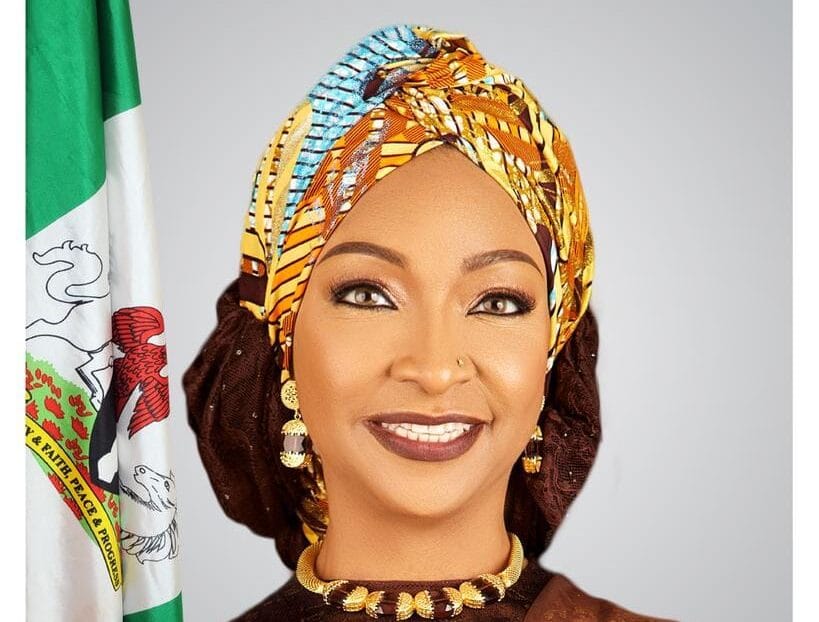
By HANNATU MUSAWA
On Tuesday, 4 June 1996, at about 3:05 pm, a shocking event unfolded that altered the course of Nigeria’s struggle for democracy. Kudirat Abiola was shot dead as her car slowed near the 7‑Up Depot/Bus Stop in Ikeja, Lagos State. She, her chauffeur, and her assistant were killed instantly.
Those who knew her said her death cut short a life that was bright, bold, and full of promise. Her passing marked a new chapter in Nigeria’s political history, making her one of the most prominent martyrs in the fight for a truly democratic nation.
The outspoken wife of Chief M.K.O. Abiola gave her life for this country and, even in death, remains a symbol of Nigeria’s struggle for democracy. She is among the many Nigerians who paid the ultimate price in pursuit of a freer, more democratic Nigeria.
Another martyr was Gen. Shehu Musa Yar’Adua. After serving in the military and during the Third Republic, Yar’Adua and his colleagues formed the People’s Front of Nigeria. Its members included President Bola Tinubu, Babagana Kingibe, Atiku Abubakar, Magaji Abdullahi, Ango Abdullahi, Ahmadu Rufa’i, Rabiu Musa Kwankwaso, Tony Anenih, and Chuba Okadigbo. The People’s Front later merged into the Social Democratic Party (SDP). About two years after the 1993 elections, Yar’Adua, along with Olusegun Obasanjo, Lawan Gwadabe, and others, was arrested on allegations of plotting a coup to overthrow the military regime. He was sentenced to death by a military tribunal the same year after calling on the military government and the Provisional Ruling Council to re‑establish civilian rule. The sentence was commuted to life imprisonment, but he died in captivity on 8 December 1997.
Five days after Nigeria celebrated its independence on 1 October 1995, a prominent pro‑democracy activist and businessman was murdered at his Ikeja residence. Alfred Rewane, a major financier of the National Democratic Coalition (NADECO) and close associate of Obafemi Awolowo, hosted political meetings that led to NADECO’s formation. He was one of the few pro‑democracy activists who openly opposed the military regime and paid the ultimate price. He is remembered as one of the great Nigerians who “gave their yesterday for the liberty that is ours today.”
Democracy Day, crystallised for annual celebration on 12 June by former President Muhammadu Buhari in 2018, remains a reminder to honour those who championed the struggle and made extraordinary sacrifices for democratic rule in Nigeria.
On 12 June, an estimated 14 million Nigerians set aside ethnic, religious, class, and regional affiliations to elect their president, hoping to end years of military dictatorship. In the Third Republic, only two parties contested: the SDP and the National Republican Convention (NRC). The candidates were M.K.O. Abiola of the SDP and Alhaji Bashir Tofa of the NRC, both regarded as patriotic leaders.
Abiola was believed to have won the majority of votes, including in states such as Kano where Tofa also had strong support. However, the election was annulled before results were declared, breaking the hearts of millions and fracturing the trust that had united Nigerians beyond sectional loyalties. The day, like Fela’s 1977 album title, was marked by “Sorrow, Tears, and Blood.”
That day represented a moment that transcended ethno‑religious sentiments and shunned differences. It was one of the most significant moments in Nigeria’s democratic history because it united the nation beyond divisions.
Nigerians from various regions, religions, and cultures overwhelmingly supported the presumed winner, Chief Moshood Abiola, not because of his ethnicity but because they believed in his vision and leadership. 12 June offered a powerful glimpse of a united Nigeria where competence, hope, and shared aspirations mattered more than tribe or religion. Though the election was annulled, its legacy endures as a reminder that Nigerians can reject division, embrace inclusiveness, and strengthen democracy through unity of purpose.
12 June brought together the democratic aspirations of all Nigerians with a single purpose: to exercise their power without ethnic, religious, or tribal bias.
In light of the example set by democracy’s heroes, every Nigerian can contribute to advancing our democracy. Each person has a constitutional right to participate. Democracy thrives when citizens actively engage in its progress. While not all sacrifices mirror those who died for June 12, participation itself is vital. It is not about party affiliation but about every citizen’s voice and vote. The right to be part of our democracy is a responsibility that empowers us to influence the nation’s direction.
We must rise above ethnic, religious, and regional divisions and recognise that our shared identity as Nigerians is greater than the differences that seek to separate us. The sacrifices of the heroes who fought for our democracy demonstrate this truth.
The future of Nigeria is not something that simply happens; it is built together, one responsible citizen at a time. This is exactly what the heroes of democracy did. Through courage, resilience, sacrifice, and unwavering commitment, they fought for a Nigeria where every citizen’s voice matters.
Our democracy will continue to flourish when we honour the sacrifices and embrace the values exemplified by Kudirat Abiola, Mallam Aminu Kano, Alfred Rewane, Alex Ekwueme, Solomon Lar, Chuba Okadigbo, Shehu Musa Yar’Adua, Prof Wole Soyinka, Chief Ayo Adebanjo, Frank Kokori, Dr Beko Ransome‑Kuti, Gani Fawehinmi, and many other democratic heroes—men and women who were vigilant, responsible, and willing to make sacrifices for Nigeria’s progress.
On Tuesday, 4 June 1996, at about 3:05 pm, something unbelievable happened that shook the core of the struggle for democracy in Nigeria. We lost a great Nigerian heroine who fought for the spirit of 12 June. May the loss of Kudirat Abiola serve as a continuous reminder to Nigerians about the imperative of improving our democracy. And despite our challenges, we can improve it by honouring her legacy, not merely with words, but by emulating the dedication to the common good above personal, ethnic, or partisan interests.
•Musawa, Minister of Art, Culture and the Creative Economy, wrote from Abuja.
The post Honouring heroes of June 12 appeared first on Vanguard News.




 English (US) ·