
.png) 4 months ago
80
4 months ago
80
ARTICLE AD BOX
By Esther Onyegbula
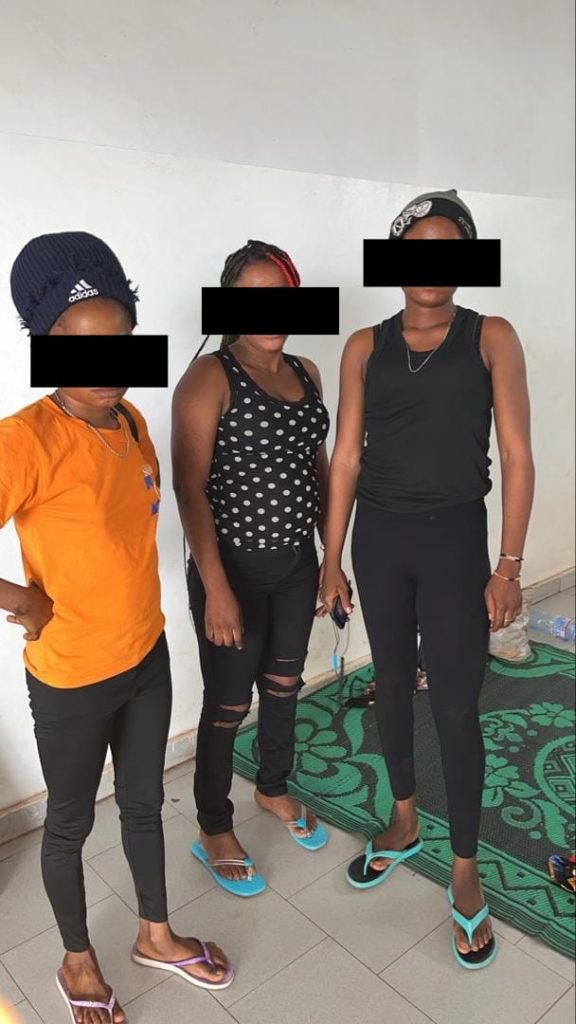
What began as a desperate search for survival ended in tears, torture and sexual exploitation for 35-year-old Becky, 24-year-old Blessing, and 23-year-old Miracle, three young Nigerian women trafficked across borders under the false promise of decent jobs in Lagos.
For weeks, the women endured beatings, threats and forced prostitution in Mali after traffickers deceived them into believing they were travelling for legitimate work opportunities.
Now back in Nigeria after their rescue through the intervention of the Global Anti-Human Trafficking Organisation, GAHTO, the survivors are speaking out, not only to recount their painful experiences, but to warn other vulnerable young women against falling prey to trafficking syndicates exploiting poverty and desperation across the country.
For Becky, a widowed mother of three from Jos, Plateau State, the journey began with hope.
“The journey was not sweet,” she said quietly, fighting back tears as she recounted the ordeal.
“They told us we were coming to Lagos to work. But when we reached Lagos, the driver suddenly said we were going to Cotonou. Before we knew it, we found ourselves there. If we refused to work, we faced serious attacks.”
Becky explained that a man from her community had approached her with what appeared to be a life-changing opportunity.
“He said there were jobs for us in Lagos. They connected me to one madam who promised I would work in her shop. She said there were many opportunities there. I believed her.”
Driven by the harsh realities of raising children alone after the death of her husband, Becky ignored warnings from her sister and embarked on the journey.
“My sister warned me not to go, but I refused because I wanted a better life for my children. I promised her I would send money home.”
Instead, she found herself trapped in a nightmare.
“I didn’t know the job was prostitution disguised as legitimate work,” she cried. “I didn’t know it meant sleeping with different men. Anytime I refused, they beat me.”
Stretching out an injured hand scarred from repeated assaults, Becky said: “This injury came from the beating I received when I initially refused to work.”
According to her, the traffickers subjected them to constant violence and intimidation, making escape nearly impossible.
“I stayed over a month in Mali. It was hell.”
For Blessing, a 24-year-old mother of two, the decision to travel was also fuelled by economic hardship.
“I travelled on April 26 from Jos,” she said. “The woman who sponsored our trip told me she had jobs for me. I left my children and my aged father at home because I wanted to earn a living.”
Her father, she said, approved the journey because he believed it was genuine employment.
“He never knew it was prostitution.”
Miracle Yakubu, the youngest among them, said she joined the trip after hearing about the supposed Lagos job opportunity from Blessing.
“It was Blessing who told me about the work in Lagos, so I followed her,” Miracle recalled.
But confusion began almost immediately.
“When we reached Lagos, our handler said we were going to Cotonou. Later, we ended up in Mali. When we arrived, my madam told us to start working.”
Miracle said she was shocked when she discovered the real nature of the “job”.
“I asked her what kind of work because they told me I would work in a shop. She said it was prostitution.”
Determined not to surrender to the exploitation, Miracle and Blessing attempted to escape.
“We tried to flee, but I was caught,” she said.
Her voice trembled as she recounted the brutal punishment that followed.
“They stabbed me with a broken bottle and beat me mercilessly. They accused me of trying to run away with the money they spent bringing me to Mali.”
Blessing, however, managed to escape and contact authorities.
According to Miracle, the traffickers panicked after her photograph was circulated publicly.
“When my madam saw that authorities were looking for me, she became scared and ordered me to return to Nigeria.”
Before leaving Nigeria, Miracle said she had worked at an orthopaedic hospital and never imagined she would become a victim of trafficking.
“Prostitution is not a job,” she declared firmly.
“I want young girls to be careful about strangers promising jobs outside the country. Stay in your hometown and look for something genuine.”
The women were eventually rescued and returned to Nigeria through the intervention of GAHTO, which has raised alarm over the growing menace of cross-border human trafficking targeting vulnerable young girls.
Upon their arrival in Lagos, the victims were received by officials of GAHTO and subsequently handed over to the Financial Secretary of the BIROM Association community in Lagos, Naomi Badu, who coordinated efforts for their safe return to Plateau State.
Badu disclosed that the association was alerted after the victims were brought back into Nigeria from Mali through Ghana. According to her, members of the group immediately mobilised to receive the traumatised women and make arrangements for their transportation back home and reunion with their families.
“We always respond whenever our people are in distress, whether they are sick, stranded or trafficked,” she said.
“We ensure they are safely brought home and reunited with their loved ones.”
Reacting to the growing trend, human rights advocate, Toma Maker, expressed concern over the increasing cases of human trafficking and labour exploitation involving young Nigerian girls, particularly from Plateau State.
According to her, many victims are deceived with false promises of jobs in cities and foreign countries such as Mali and Ghana, only to end up trapped in prostitution rings and abusive environments.
Maker attributed the vulnerability of many young women to worsening poverty, insecurity, family breakdown and discrimination against girls.
She noted that ignorance and economic hardship have also pushed some families into supporting illegal migration, wrongly believing prostitution abroad is no different from commercial sex work in Nigeria.
“Some of these girls are forced to sleep with several men daily, while others are beaten or tortured for refusing prostitution,” she said.
The advocate further warned that some former victims who returned home with wealth acquired abroad now recruit other unsuspecting girls into trafficking networks.
She called for stronger community participation in tackling trafficking, including the establishment of community by-laws to sanction traffickers and negligent parents aiding illegal migration.
Maker also criticised Nigeria’s anti-trafficking laws, describing them as weak and insufficient to deter offenders. She urged the government to strengthen penalties against traffickers and provide improved funding and operational support for the National Agency for the Prohibition of Trafficking in Persons, NAPTIP.
Meanwhile, President of the Global Association for Human Trafficking Offences, GAHTO, Comrade Prosper, also raised concerns over rising cases of labour exploitation involving Nigerians trafficked to Egypt.
According to him, several traffickers and sponsors allegedly confiscate the international passports of victims upon arrival and subject them to exploitative labour for periods ranging from 18 to 24 months without payment.
“We will forward the names of those involved to the appropriate security agencies so they can be placed on watchlists and arrested,” he stated.
He further revealed that members of the Yoruba community had repeatedly complained about sponsors and agents who seize the passports of trafficked Nigerians and subject them to harsh and inhumane conditions in Egypt.
For Becky, Blessing and Miracle, survival itself has become a second chance.
But even as they attempt to rebuild their lives, the scars of betrayal, violence and exploitation remain painfully fresh, a haunting reminder of the hidden dangers behind promises of greener pastures abroad.
The post Harrowing journey of 3 Nigerian women lured into sex slavery in Mali appeared first on Vanguard News.



 English (US) ·