
.png) 3 months ago
67
3 months ago
67
ARTICLE AD BOX
Funmi Ogundare
Olatoun Gabi‑Williams, founder of the Living Sustainably project, urged greater African participation in global sustainability discussions. She stressed that Africans must speak more loudly on international issues that affect the continent.
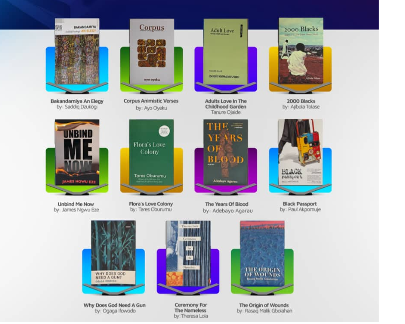
During a press conference and preview of the anthology “Living Sustainably Here: African Perspective on the SDGs” in Lagos on Wednesday, Gabi‑Williams highlighted the significance of the Nigerian book industry convention.
The multi‑volume sustainability project, which is currently focused mainly on Nigeria, will soon expand across Africa and ultimately aim at a global audience.
She said the initiative examines sustainability from cultural, social and developmental angles and is built on the conviction that knowledge is the foundation of human development.
“We need to speak with much louder voices into global conversations,” she told journalists. “I want to talk more into global affairs from a local perspective, an Africa looking at global affairs and making commentary about local affairs and making it available to the wider world.”
Gabi‑Williams described the convention’s location at the National Theatre in Lagos as symbolic, noting that cultural sustainability and knowledge infrastructure are essential to national development.
“Knowledge is huge. It cuts across the arts, cognition and human development. It is infrastructure in itself,” she said.
She also highlighted the role of the book industry in driving sustainable development, describing publishers, authors and other stakeholders as part of the knowledge‑production sector.
She advocated for interdisciplinary learning in schools, arguing that students should be equipped to solve real‑world problems rather than be confined to isolated academic disciplines.
“We need more interdisciplinary teaching activity where students solve real‑world problems and understand the world they are living in, not just books,” she added.
Addressing the challenge of out‑of‑school children and educational development in Nigeria, she called for stronger collaboration between government and civil society organisations through participatory governance.
According to her, the government must actively engage citizens and stakeholders in identifying and solving problems at the grassroots level.
She said, “There is probably not enough talking between government and civil society. Participatory governance is very important because communities can pool resources together to solve local problems.”
Gabi‑Williams dismissed concerns that Nigeria’s reading culture was declining, pointing instead to the growing popularity of book clubs and reading communities.
“I get the impression people are hungry for knowledge and hungry to read,” she noted, adding that curated reading platforms and book clubs were helping readers engage more meaningfully with literature.
She further revealed that discussions had begun with institutions and agencies interested in translating the Living Sustainably volumes into other languages as part of efforts to deepen the project’s continental and global reach.
The programme included a panel session where participants discussed topics such as “The Role of International Schools in Advancing the SDGs,” “The Role of 21st Century Booksellers in Realising SDGs 4 – Inclusive and Equitable Quality Education,” “Access to Knowledge for Sustainable Development,” and “Leveraging the UN’s OER and Open Science Recommendations.”



 English (US) ·