
.png) 2 months ago
27
2 months ago
27
ARTICLE AD BOX
Ndubuisi Francis in Abuja
The Nigerian Institute of Quantity Surveyors (NIQS) has pledged to offer forensic cost‑auditing expertise to ministries, departments and agencies (MDAs) of the Federal Government. The goal is to curb contract inflation, value misrepresentation and procurement irregularities, and to support pre‑appropriation and Medium‑Term Expenditure Framework (MTEF) review stages where fiscal risks are greatest.
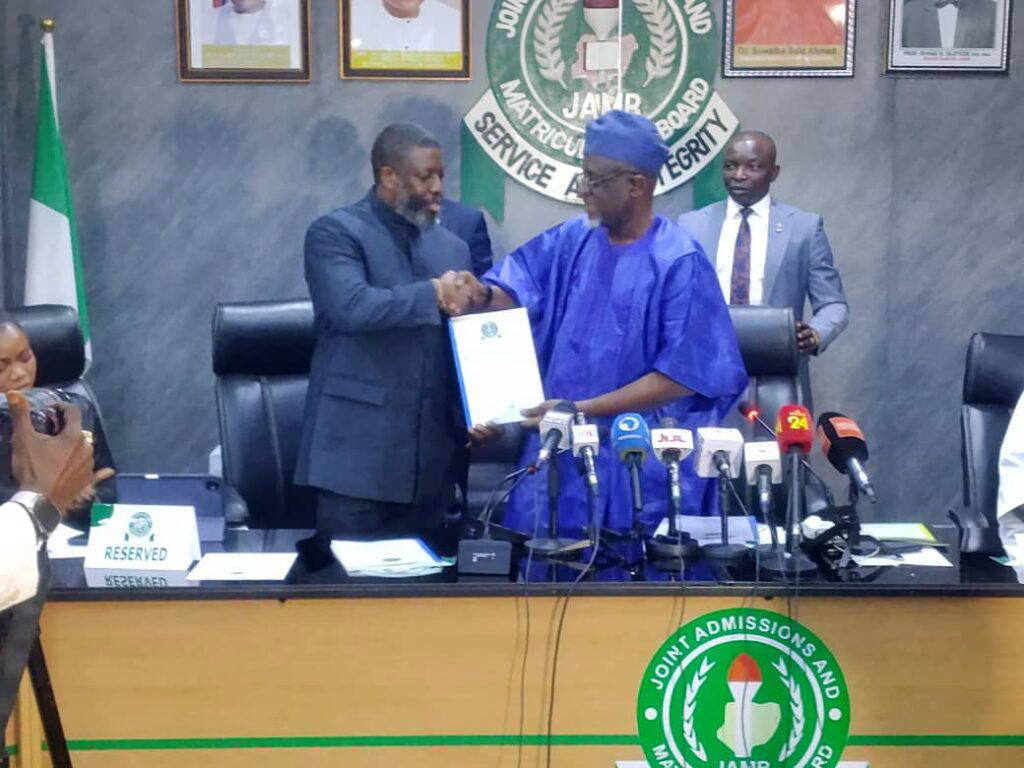
During the signing of a Memorandum of Understanding (MoU) between NIQS and the Fiscal Responsibility Commission (FRC) in Abuja over the weekend, NIQS President Dr. Aminu Mohammed Bashir expressed this commitment.
The FRC is a federal agency created by the Fiscal Responsibility Act of 2007. Its primary mandate is to promote macroeconomic stability, ensure transparency and accountability in public finance, and enforce prudent management of the nation’s resources.
According to a statement issued by Deputy Director, Strategic Communications Directorate Bede Ogueri Anyanwu, the NIQS president highlighted the need for prudent and transparent public expenditure, noting that this cannot be fully achieved without professional cost intelligence on capital projects.
Bashir described the relationship between the FRC and NIQS as founded on a shared conviction that public resources must be managed with discipline, transparency and professional rigor.
He explained that the first MoU, signed on 22 October 2021, institutionalised this conviction. The current engagement is intended to renew and deepen the collaboration.
Bashir praised the FRC for its strong institutional track record in advancing fiscal discipline and accountability across Nigeria’s public sector, describing the commission’s legacy of commitment as the foundation of a meaningful partnership.
He underscored the critical role of quantity surveyors as Nigeria’s foremost construction cost managers, overseeing project costs from conception through procurement, contract administration and final account settlement.
According to him, quantity surveyors operate at the precise intersection where public funds are either protected or lost. They measure costs, verify values, detect inflationary practices and provide forensic evidence where contracts have been manipulated, thereby supporting accountability and transparency.
Bashir reiterated that the FRC’s mandate of ensuring prudent and transparent public expenditure cannot be fully achieved without professional cost intelligence on capital projects, describing the collaboration between the two institutions as a functional necessity rather than a matter of convenience.
The NIQS remains committed to supporting the commission’s mandate through joint physical verification exercises to ensure that projects reported in MDAs’ budgets and expenditure returns accurately reflect realities on the ground.
He added that the Institute will also provide expertise in forensic cost auditing to detect contract inflation, value misrepresentation and procurement irregularities, and will contribute during pre‑appropriation and MTEF review stages where fiscal risks are highest.
Bashir further pledged the Institute’s support in delivering specialised capacity‑building programmes for FRC staff in areas such as construction economics, capital project cost management, procurement integrity and forensic analysis of infrastructure expenditure.
Earlier in his remarks, Acting FRC Chairman Mr. Charles Chukwuemeka Abana, a lawyer, expressed appreciation to the leadership of the Institute for the goodwill extended to him following his recent appointment as acting head of the commission.
He underscored the cordial and productive relationship that has existed between the two institutions over the years while congratulating Bashir on his recent election as President of NIQS.
Abana described his emergence as a reflection of his professional competence, wealth of experience and the confidence reposed in him by members of the Institute.
According to him, the partnership between the FRC and NIQS has remained mutually beneficial and strategically important in promoting transparency, accountability, prudence and value‑for‑money principles in public financial management.
He noted that the first MoU signed between the two institutions on 22 October 2021 significantly strengthened the commission’s capital projects verification exercises through the technical expertise and professional support consistently provided by the Institute.
He commended NIQS for nominating competent professionals to participate in verification exercises across the country, thereby enhancing the quality, credibility and effectiveness of the process.
Abana further acknowledged the Institute’s contributions to capacity building through specialised training programmes for commission staff involved in project verification assignments, noting that such interventions had deepened technical knowledge and improved operational efficiency.
He stated that the renewed MoU represented not only the continuation of an existing partnership but also a reaffirmation of the shared commitment of both institutions to promoting fiscal discipline, accountability, professionalism and the efficient utilisation of public resources.
Abana disclosed that NIQS had already submitted a list of its nominees to participate in the commission’s 2026 capital projects verification exercise scheduled to commence next month, expressing optimism for another successful exercise and sustained collaboration in the years ahead.
He assured the NIQS of the commission’s continued support and readiness to work closely with the Institute in advancing their common objectives for national development.





 English (US) ·