
.png) 2 hours ago
2
2 hours ago
2
ARTICLE AD BOX
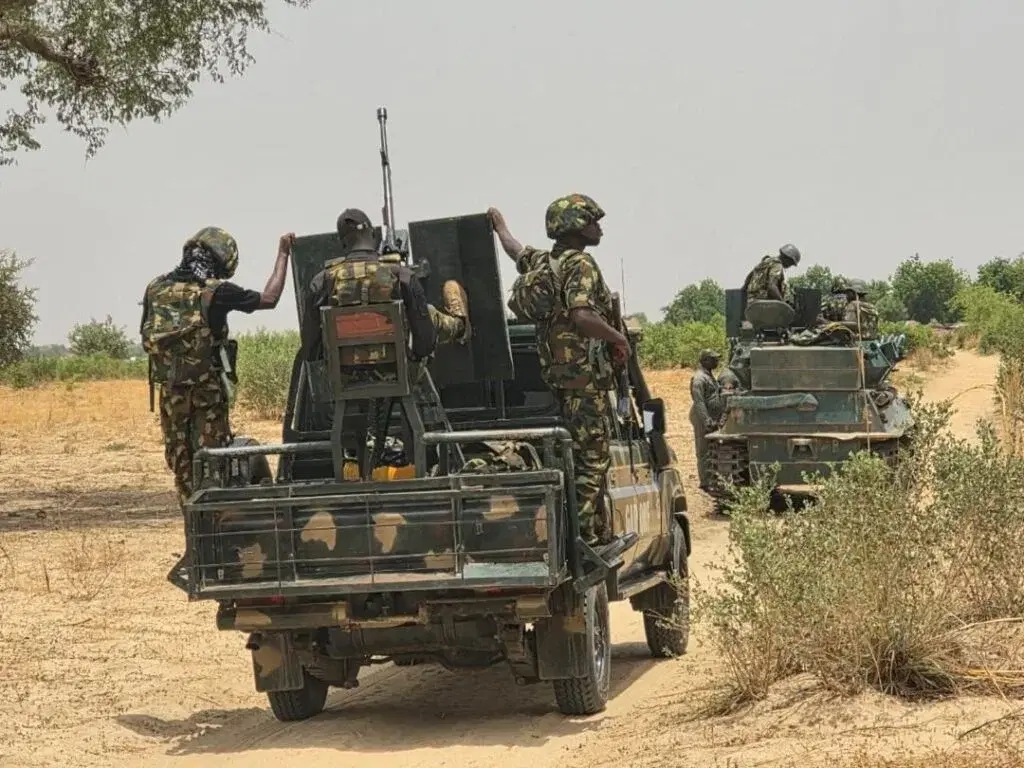
In response to growing security concerns in the country’s extensive forest areas, President Bola Tinubu launched the Presidential Forest Guards Initiative less than a year ago. About 7,000 trained guards have been stationed in the northern states of Borno, Sokoto, Yobe, Adamawa, Niger, Kwara, and Kebbi to protect forest reserves and eliminate terrorist and kidnapping threats. After a fresh wave of kidnappings that involved more than 80 schoolchildren and teachers in Borno and Oyo States, the President announced the recruitment and deployment of an additional 1,000 forest guards to target criminals operating in Oyo forests. Yet questions remain about the operational effectiveness of these units.
Established under the strategic direction of the National Security Adviser in partnership with the Ministry of Environment, the Nigerian Forest Guard’s mandate is to safeguard forests from criminal activity. Unlike traditional forest rangers who focus on conservation, the guards are intended to be well‑trained, armed, and to work in tandem with other security agencies, including the Nigeria Security and Civil Defence Corps (NSCDC). “The forest guards are not merely individuals in uniform,” said National Security Adviser Nuhu Ribadu at the graduation ceremony last December. “They serve as first responders, community protectors, and crucial elements of Nigeria’s security framework. Their role will be pivotal in ensuring safety, gathering intelligence, and assisting other security agencies in reclaiming territories seized by criminals.” To carry out these tasks effectively, they also collaborate with the Nigerian Hunter and Forest Security Service (NHFSS), now renamed the Nigerian Forest Security Service (NFSS), to draw on the expertise of local hunters familiar with the terrain.
Despite being in its infancy, the impact of the forest guards has been limited across the country. Many of Nigeria’s 1,129 forest and reserve areas remain under the control of terrorists and kidnappers, who continue to use them as bases to launch attacks on homes, travelers, and schools. As security forces intensify pressure on reserves in the northwest and northeast, militants are shifting to forests in the north‑central and southern regions, using them to conduct operations day and night. They have set up camps in places such as Kainji National Park, Old Oyo National Park, and others.
Today, Nigerians live in constant fear, as no time or place feels truly safe. Last week, former military spokesman Major General Rabe Abubakar (retired) died after two weeks in captivity, possibly in the Rugu Forest along the Katsina–Zamfara axis, one of the bandit‑infested strongholds in the northwest.
In the wake of severe rural insecurity and the Oriire kidnapping incident in Oyo, several states are establishing localized forest guard units to curb criminal gang activity. Kaduna State, where communities in the Birnin Gwari, Chikun, Kajuru, Giwa, and Kachia local government areas have suffered devastating bandit attacks, has embraced the initiative. Kwara State has also deployed guards in Kaiama, Edu, Patigi, Ifelodun, and Ekiti local government areas—security flashpoints where residents have repeatedly faced threats from kidnappers and other armed groups. The deadliest incident occurred in September 2025 when armed attackers invaded Oke‑Ode in Ifelodun, killing 12 forest guards and vigilantes.
There is no doubt that the forest guards’ initiative, in collaboration with security agencies, can help contain the pervasive security challenge. Kenya’s wildlife and forest rangers significantly disrupted Al-Shabaab’s access to forested border corridors, while Indonesia’s forest police units played a critical role in neutralising extremist cells in dense terrain. If well‑equipped, the forest guards can make a difference.








/https%3A%2F%2Fmedia.afrik-foot.com%2Fen-ng%2F2024%2F12%2Fimago1010661315h.jpg)



 English (US) ·