
.png) 2 hours ago
2
2 hours ago
2
ARTICLE AD BOX

Nigeria is not represented in the FIFA World Cup 2026, which is being staged in Mexico, Canada and the United States. The fact that the national team is absent is widely known, and it cannot be alleviated by temporary excitement or euphoria at a tournament that has already earned the status of the biggest footballing event, with 48 national teams competing across three countries.
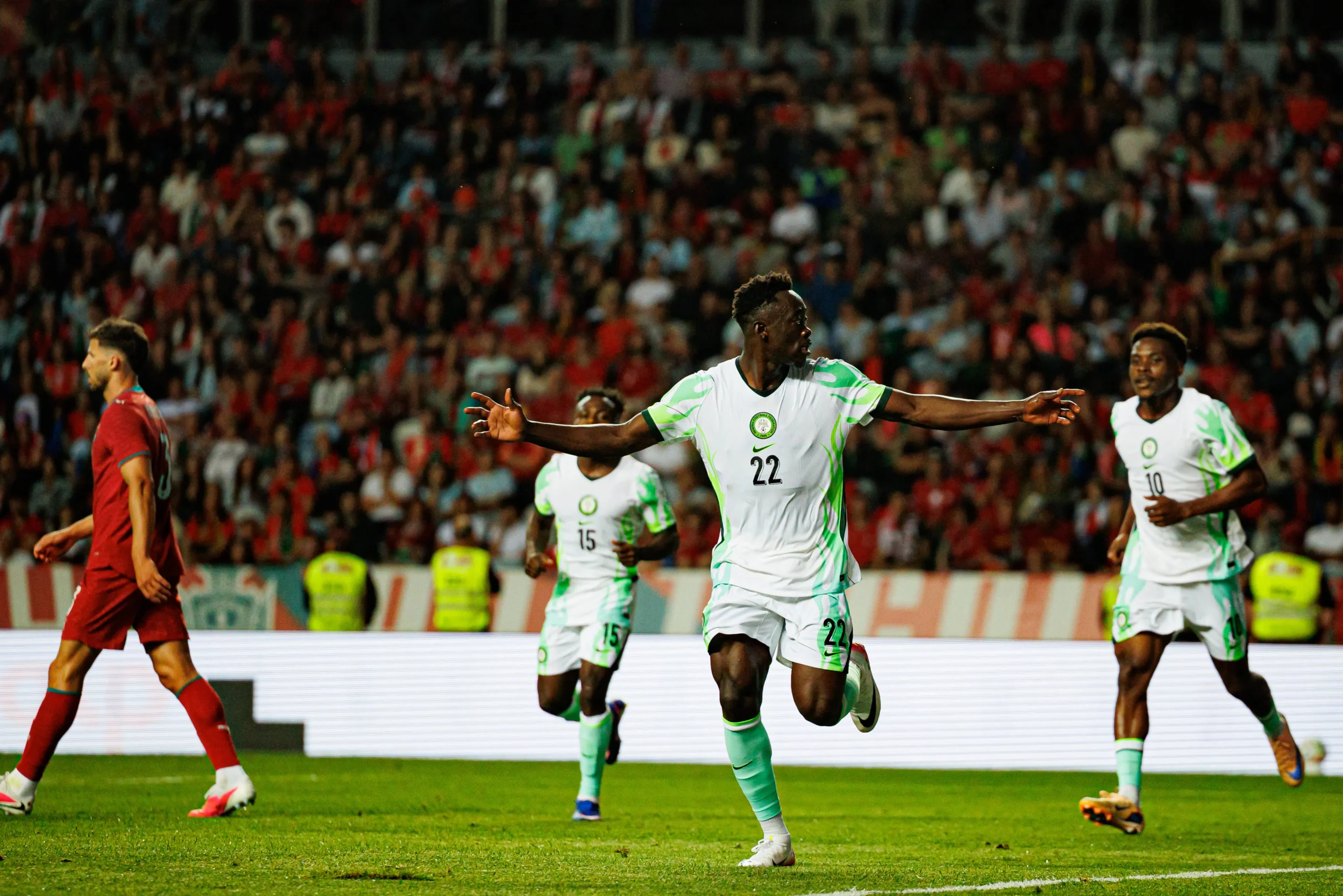
Nevertheless, Nigerians are involved in the World Cup, playing for other nations that have organised themselves to claim a share of global pride. Nigerian players are scoring goals for foreign teams, while those who understand the meaning of national pride at home lament the missed opportunity for greatness.
Marshall McLuhan’s 1964 concept of the global village, outlined in “Understanding Media, The Extensions of Man,” predicted a period in which electronic technologies would homogenise the world and enable real‑time sharing of actions and activities. At that time there was no Internet, television was evolving, and mobile phones were not yet common. Television has since evolved, crystallising McLuhan’s foresight.
When the World Cup opened last Thursday at Estadio Azteca in Mexico, an estimated 1.2 billion viewers watched the match in which Mexico defeated South Africa, who had chosen to play rugby instead of football. The game produced two goals and two red cards. In the United States alone, 12.1 million viewers tuned in across various platforms, setting a record for the most watched opening match. The global village is evident, yet Nigeria remains absent from the event, a fact that has left the nation feeling ashamed of its lack of participation in high‑profile competitions where giants showcase their dominance.
Despite this, Nigerians are still present at the World Cup in other ways. Burna Boy performed the World Cup theme song “Dai Dai” with Shakira, blending Colombian gyration with Nigerian Afro‑beat. Their performance combined intricate cross‑cultural choreography that resonated with audiences of all ages. Shakira’s signature hip waves and Burna Boy’s stage presence added to the spectacle.
During the performance, the lyrics highlighted resilience: “You knew from the day you were born / That here in this place you belong / You been this brave all along / What broke you once made you strong.” Those who govern football in Nigeria, however, have failed to provide the conditions for such expressions of national pride, leaving many young people broken and making the path to recovery more difficult.
Nigeria’s absence from the World Cup is not due to player negligence but to the shortcomings of the country’s football management. The managers’ personal interests are often prioritised over national success, and the public is left to bear the shame as criticism pours in from around the world. This normalisation of failure prevents progress and leads to missed opportunities.
Broadcasting does not conceal the truth: the global audience knows that Nigeria is not represented in Mexico, Canada or the United States, and they miss seeing players such as Victor Osimhen, Alex Iwobi, Ademola Lookman and other Nigerian stars. They long to see Nigeria on the world stage.
Rema added to the sense of national pride by headlining the opening ceremony in Los Angeles alongside Lisa and Annita. The song “Goals” served as an open metaphor for the optimism of the younger generation, despite global challenges. The performance at SoFi Stadium attracted a record 24.9 million U.S. viewers.
Rema’s lyrics reflected the ambition of Nigerian artists: “From Nigeria to Monaco / Anywhere the mission dey tell me I / go show, I go show / Original baller, no dagbo / Take a trip into my mind, you go / see I’m all about the ego / Run, run, run, run, run, run, run / ‘Cause I’m coming like the Titan / Everybody, they know I’m the one champion.” The world watches through global television, as McLuhan had predicted.
The author reflects on personal disappointment when national flags were introduced, feeling diminished by the presence of small nations such as Curaçao and Cape Verde, whose populations are 158,000 and 529,000 respectively—smaller than Lagos’s Festac and Abuja’s Gwarinpa districts.
Earlier, a friend argued that the issue is not population size but strategic focus. Countries that invest wisely in human and natural resources can compete on the world stage, whereas others squander their potential.
The author also recalls the Norwegian child prodigy Tius Luka, who sang the opening and closing lines of Katy Perry’s “Wonder” at the Los Angeles ceremony with a childlike innocence that highlighted the plight of Nigerian children kidnapped by bandits and herdsmen. Luka, ten years old, sang about preserving innocence and looking forward to the future.
The global television audience is unforgiving. Nigeria’s absence from the World Cup raises questions about the nation’s ability to address the systemic failures that have led to repeated setbacks. The world awaits Nigeria’s emergence on the global stage, while the author urges readers to enjoy the World Cup.
For Uncle Sam Amuka and Prof Femi Osofisan
Two respected figures are contributing significantly to the nation. Born a few days apart and a decade apart in seniority, both are known for their kindness and attention to the plight of others. Prof Femi Osofisan celebrated his 80th birthday on June 16, while Uncle Sam Amuka celebrated his 91st on June 13.
Osofisan taught the author at the University of Benin, along with other professors such as Prof Muyiwa Awodiya, who has since retired. They emphasized the multifaceted value of a university degree and its potential to open global opportunities.
Beyond teaching, Osofisan guided many students virtually, offering support and encouragement. He treated everyone with equal respect, regardless of tribe or ethnicity, and his desire to help others succeed was evident even after losing his father at a young age.
The author could not attend a gathering in Ibadan to celebrate Osofisan’s birthday but writes from elsewhere, continuing the work that Osofisan has trained and empowered him to do.
Uncle Sam, as the publisher of Vanguard, has provided a platform, training ground and pathway for many. Despite his advanced age, he remains humble, kind and welcoming, earning the respect of all who encounter him.
The author expresses gratitude to both men, thanking them for their influence and wishing them continued blessings.
The post “FIFA World Cup 2026, it’s glory days for global television” by Okoh Aihe appeared first on Vanguard News.

/https%3A%2F%2Fmedia.afrik-foot.com%2Fen-ng%2F2026%2F06%2F1781644812492.png)




/https%3A%2F%2Fmedia.afrik-foot.com%2Fen-ng%2F2024%2F12%2Fimago1010661315h.jpg)


 English (US) ·