
.png) 3 months ago
55
3 months ago
55
ARTICLE AD BOX
By Prince Osuagwu
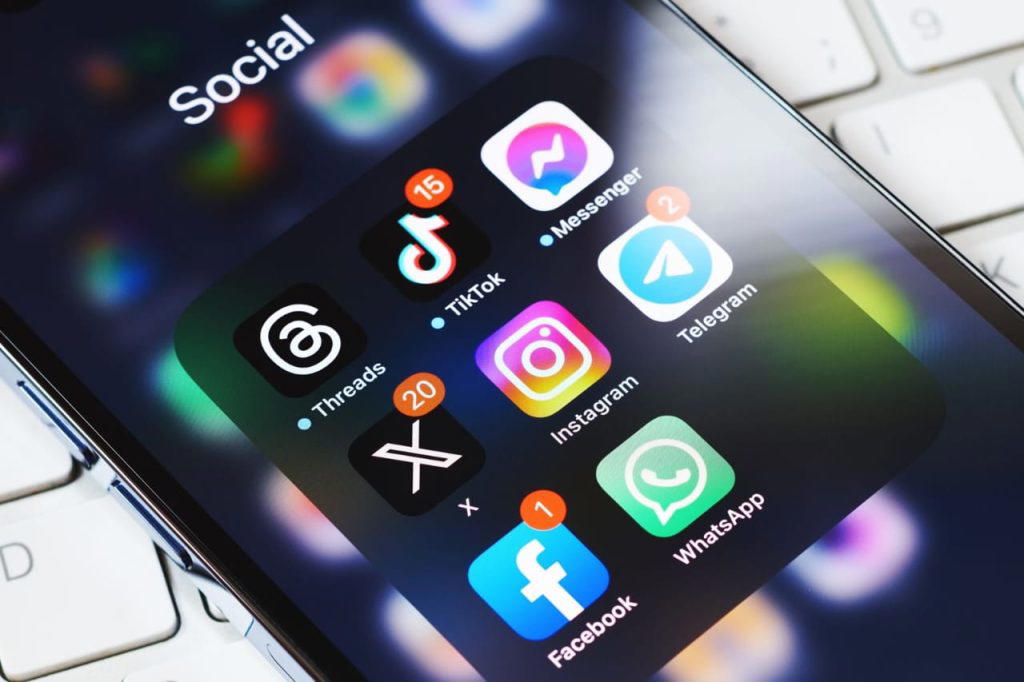
For most Nigerians, Facebook, WhatsApp and Instagram are simply social media platforms used for networking and instant messaging.
However, Meta Platforms play a much larger role in the Nigerian economy.
They have become essential economic infrastructure, quietly generating billions of naira in commerce, entrepreneurship and digital connectivity across the country.
According to a new independent report by research firm Public First titled “Nigeria’s Digital Economy,” Meta contributes an estimated $820 million annually to Nigeria’s economy. The report also projects that artificial intelligence (AI) powered largely through Meta platforms could add up to $22 billion to Nigeria’s gross domestic product (GDP) by 2035.
The report shows a nation where social media has moved beyond entertainment to become a backbone for business operations, customer acquisition, digital advertising and e‑commerce.
Huge user base
Nigeria remains one of Africa’s largest social media markets, and Meta’s dominance is evident in user numbers across its platforms.
Industry estimates indicate that Facebook has more than 38 million active users in Nigeria; Instagram has over 12 million users; and WhatsApp remains the country’s most dominant messaging platform with more than 51 million active users.
Combined, Meta’s ecosystem reaches tens of millions of Nigerians daily, making it one of the country’s most influential digital infrastructures.
For many Nigerians, especially small business owners, WhatsApp functions as a virtual shop, customer care centre, payment coordination tool, advertising platform and business communication hub.
Instagram has become Nigeria’s digital marketplace for fashion, beauty and food vendors, helping creators, influencers and lifestyle entrepreneurs manage their businesses. Meanwhile, Facebook continues to have a wide reach among SMEs, community groups, advertisers and digital marketers nationwide.
It was therefore unsurprising that the report disclosed that about 14 million Nigerian small and medium enterprises (SMEs) used Meta’s family of apps—including Facebook, Instagram, WhatsApp, Messenger, Threads and Meta AI—in 2025 to start, run and expand their businesses.
According to the findings, activities enabled through Meta’s ecosystem contributed nearly $2 billion to Nigeria’s GDP while generating an estimated $640 million in productivity gains through easier communication and instant messaging tools.
The report added that, under the right policy environment and increased digital adoption, Meta’s overall contribution to Nigeria’s economy could rise to $2 billion yearly.
Meta’s Director of Public Policy for Sub‑Saharan Africa, Balkissa Ide Siddo, described Nigeria as one of the world’s most entrepreneurial and digitally engaged economies. For her, Meta’s platforms are helping to remove traditional barriers that once limited business expansion.
She said: “From a tailor in Lagos reaching customers across the country through Instagram, to a small business owner in Kano taking orders on WhatsApp, to a creator in Abuja building a global audience on Facebook, Meta’s platforms are unlocking real economic opportunity.”
One of the report’s strongest revelations is WhatsApp’s growing role in Nigeria’s AI adoption. According to the findings, 93 percent of Meta AI prompts across Sub‑Saharan Africa are now made through WhatsApp, showing that Africans are increasingly accessing AI services through familiar messaging platforms instead of standalone AI applications.
The report said this trend could significantly accelerate AI penetration across Nigeria because WhatsApp already enjoys deep market penetration even in semi‑urban and informal sectors.
It further revealed that 87 percent of online Nigerians believe AI products developed within Africa would play a major role in shaping the continent’s economic future.
Meta argued that open‑source AI systems could help Nigerian developers and startups build local solutions tailored to indigenous languages and local market realities.
SMEs as greater beneficiaries
The report also found that 81 percent of online businesses surveyed said Facebook, Instagram and WhatsApp helped them expand beyond their immediate geographical locations.
For many small businesses, Meta platforms now provide access to national and even global audiences without requiring expensive physical infrastructure.
A fashion seller in Aba can now market products nationwide through Instagram reels. A food vendor in Lagos can receive orders directly through WhatsApp Business. A content creator in Abuja can monetise audiences on Facebook.
The study said Meta’s platforms have significantly lowered customer acquisition costs while democratising digital advertising opportunities for small businesses.
The report also found that 93 percent of online adults surveyed said Meta’s platforms helped them feel more connected to broader communities, underscoring the social influence of digital connectivity in Africa’s largest economy.
Director at Public First, Alison Neyle, said Nigeria’s rapidly expanding digital economy is creating new opportunities for businesses and creators.
“The findings show that Meta’s platforms are helping Nigerian firms grow across both formal and informal sectors while strengthening participation in one of the world’s fastest‑growing digital economies,” Neyle stated.
The post How Facebook, Instagram, WhatsApp pump $820 m into Nigeria’s economy yearly appeared first on Vanguard News.





 English (US) ·