
.png) 3 months ago
57
3 months ago
57
ARTICLE AD BOX
Sunday Ehigiator
Corporate Accountability and Public Participation Africa (CAPPA) premiered a new 20‑minute documentary titled Sweet Poison, highlighting the growing health and environmental risks associated with sugar‑sweetened beverages (SSBs) in Nigeria.
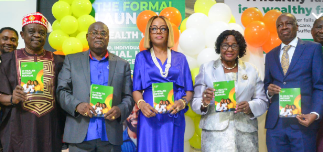
The film was shown during a media presentation held over the weekend in Lagos, where CAPPA urged the government to adopt stronger policies to curb the rising consumption of sugary drinks and to address the increasing burden of non‑communicable diseases (NCDs) across the country.
CAPPA Executive Director Akinbode Oluwafemi spoke at the event, describing the issue as a public‑health, media, environmental and policy challenge.
He noted that sugary drinks have become deeply embedded in everyday Nigerian life through aggressive advertising, celebrity endorsements and widespread market penetration.
“Across Nigeria today, sugary drinks have become deeply woven into everyday life. They are in our homes, schools, markets, offices, social gatherings, and even spaces where access to clean drinking water is difficult,” Oluwafemi said.
He warned that behind the “bright labels, catchy jingles and colourful campaigns” of beverage companies lies a growing public‑health crisis marked by increasing cases of type 2 diabetes, hypertension, obesity, stroke, kidney disease and cardiovascular complications.
“Sweet Poison is an attempt to connect the dots. It combines medical evidence, lived experiences and on‑the‑ground realities to show how growing dependence on sugary drinks is quietly reshaping the nation’s health profile,” he added.
The documentary features medical experts, policymakers, students, traders, fishermen, consumers and people living with NCDs, illustrating the impact of unhealthy diets and ultra‑processed beverages on Nigerian communities.
CAPPA also used the screening to draw attention to the environmental impact of the sugary‑drinks industry, particularly plastic pollution and waste from single‑use packaging.
“The film also explores another dimension that is often ignored: the environmental footprint of the sugary drinks industry. From plastic pollution choking our drainage systems and waterways to waste generated by single‑use packaging, communities are increasingly paying the environmental price for corporate profit,” Oluwafemi stated.
At the heart of the advocacy campaign is Nigeria’s Sugar‑Sweetened Beverage Tax, introduced under the Finance Act 2021, which imposes a N10‑per‑litre excise duty on sweetened and carbonated drinks.
While acknowledging the policy as a step in the right direction, CAPPA argued that the current tax framework remains too weak to significantly reduce consumption or discourage harmful industry practices.
The organisation calls for a revised tax structure, including a 50 percent excise tax on the retail price of sugary drinks, or at minimum 20 percent, with revenues earmarked for health‑promotion and nutrition programmes.
“With the burden of non‑communicable diseases rising and healthcare costs climbing, Nigeria cannot afford half‑measures. A stronger SSB tax is a fiscal tool, and a necessary public‑health intervention,” Oluwafemi said.
He further stressed that the documentary is not intended to demonise consumers but to encourage conversations about the systems and commercial interests that shape food choices.
“Sweet Poison is not an attack on personal choice. Rather, it is an invitation to confront the systems, policies and commercial interests shaping those choices,” he said.
The screening attracted health experts and stakeholders, including Dr Saheed Balogun, Chairman of the Nigerian Medical Association; diabetes advocate Ronke Opaleye; Founder of the Diabetes & Limb Salvage Foundation, Osarenkhoe Chima‑Nwogwugwu; Chief Executive Officer of Stradev Nigeria, Dr Leslie Adogame; and publisher of Nigeria Health Online, Sam Eferaro.
CAPPA disclosed that the documentary premiered on TVC News on May 5 and is currently airing on multiple media platforms nationwide, while also being available on CAPPA’s YouTube and social‑media channels.


 English (US) ·